
How to Identify High-Intent SaaS Users From Product Behavior

Most SaaS teams are still relying on the wrong signals to identify potential customers.
Form submissions, demo requests, and signup volume are easy to track but they often show up too late, and they rarely reflect whether someone is actually adopting the product. By the time a lead raises their hand, the decision is usually already made.
The stronger signals happen earlier, and they happen inside the product.
Why product behavior reveals intent better than marketing metrics
An account that completes onboarding, sets up tracking, invites teammates, and uses core features consistently is usually far more valuable than an account that submits a form and goes quiet.
The problem is that most teams have no reliable way to connect those in-product behaviors to a clear picture of account quality. Event logs exist, but they are hard to interpret. Dashboards show activity, but not intent.
To identify high-intent users early, teams need to shift from tracking activity to tracking meaningful business events.
Start with a small set of meaningful events
One of the most common mistakes in product analytics is tracking too many things. Teams end up with hundreds of UI interactions that create noisy dashboards and unclear signals.
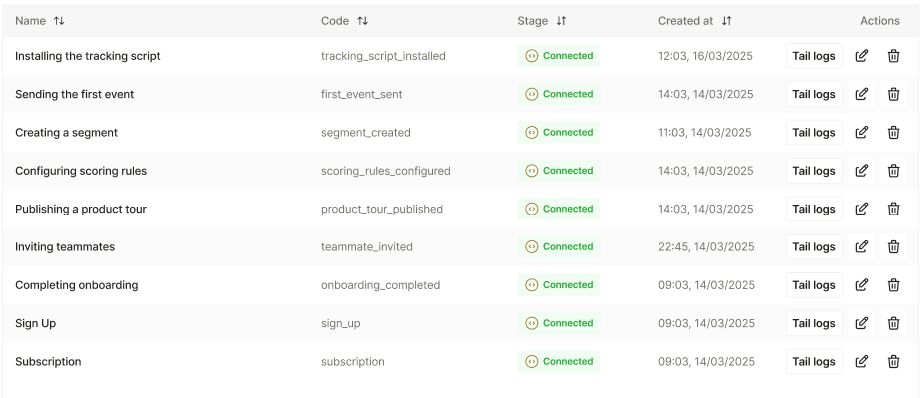
In practice, most SaaS products only need 10 to 20 meaningful business events to understand the full onboarding and activation journey. These might include:
User completed onboarding setup
User invited a teammate
User connected a data source
User published their first flow or report
User returned within 7 days
Each of these events is small, but together they reveal a lot: how users adopt the product, where friction happens, and which accounts are showing serious intent.
Connect events into an onboarding funnel
Once you are tracking the right events, the next step is understanding how they connect across the user journey.
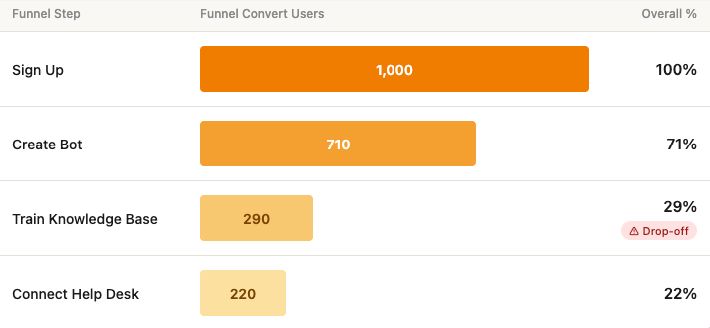
An onboarding funnel turns isolated events into a progression. Instead of knowing that users completed certain actions, you can see:
How users advance through onboarding
Where momentum slows down
Which milestones are most strongly connected to activation
How long activation typically takes
This moves onboarding from something anecdotal into something measurable and fixable.
Turn behavior into account quality scores
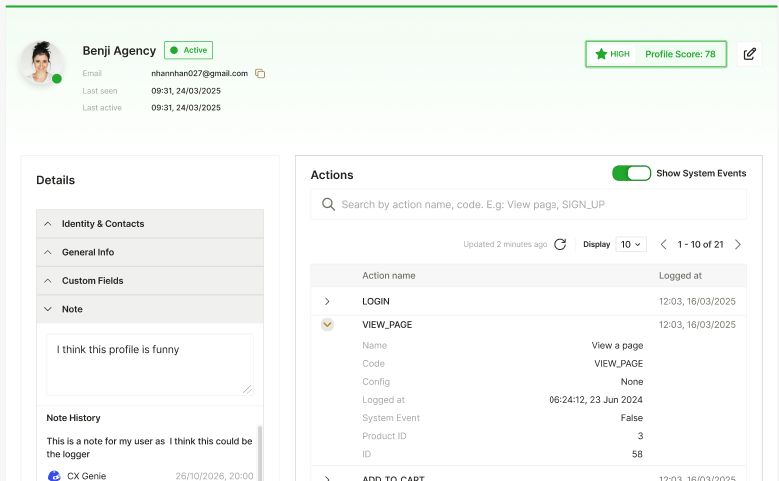
Raw event data is still hard for most business teams to act on. What teams actually need is a simple answer to one question: which accounts are likely to become paying customers?
One approach is to assign different weights to different actions based on how strongly they correlate with conversion. For example:
Inviting teammates → high weight
Setting up tracking → high weight
Logging in daily without taking action → low weight
This kind of intent-based scoring lets teams identify high-potential accounts much earlier without waiting for a demo request or a sales conversation to happen first.
Connect product behavior with revenue data
The final step is linking product behavior to actual revenue outcomes.
When you can see which accounts are generating MRR alongside which features those accounts use and which behaviors happened before conversion, patterns start to emerge:
High-MRR accounts often complete onboarding faster
Accounts that invite teammates early tend to retain better
The features teams assume are "core" are not always the features most connected to conversion
These insights are hard to see when product data and revenue data live in separate systems.
What this looks like in practice
Tools like FounderOS are built specifically around this workflow combining event tracking, onboarding funnels, account scoring, and Stripe revenue data so teams can detect high-intent accounts earlier and connect product behavior to growth signals.
The goal is not to collect more data. It is to understand which behaviors actually matter, and act on them before the window closes.
In SaaS, not every signup has the same value. What matters more is what users do after they sign up and whether your team can see those signals early enough to act on them.

Written by Anthony Do
Business Development Specialist at FounderOS, helping SaaS founders grow with product analytics and user activation.
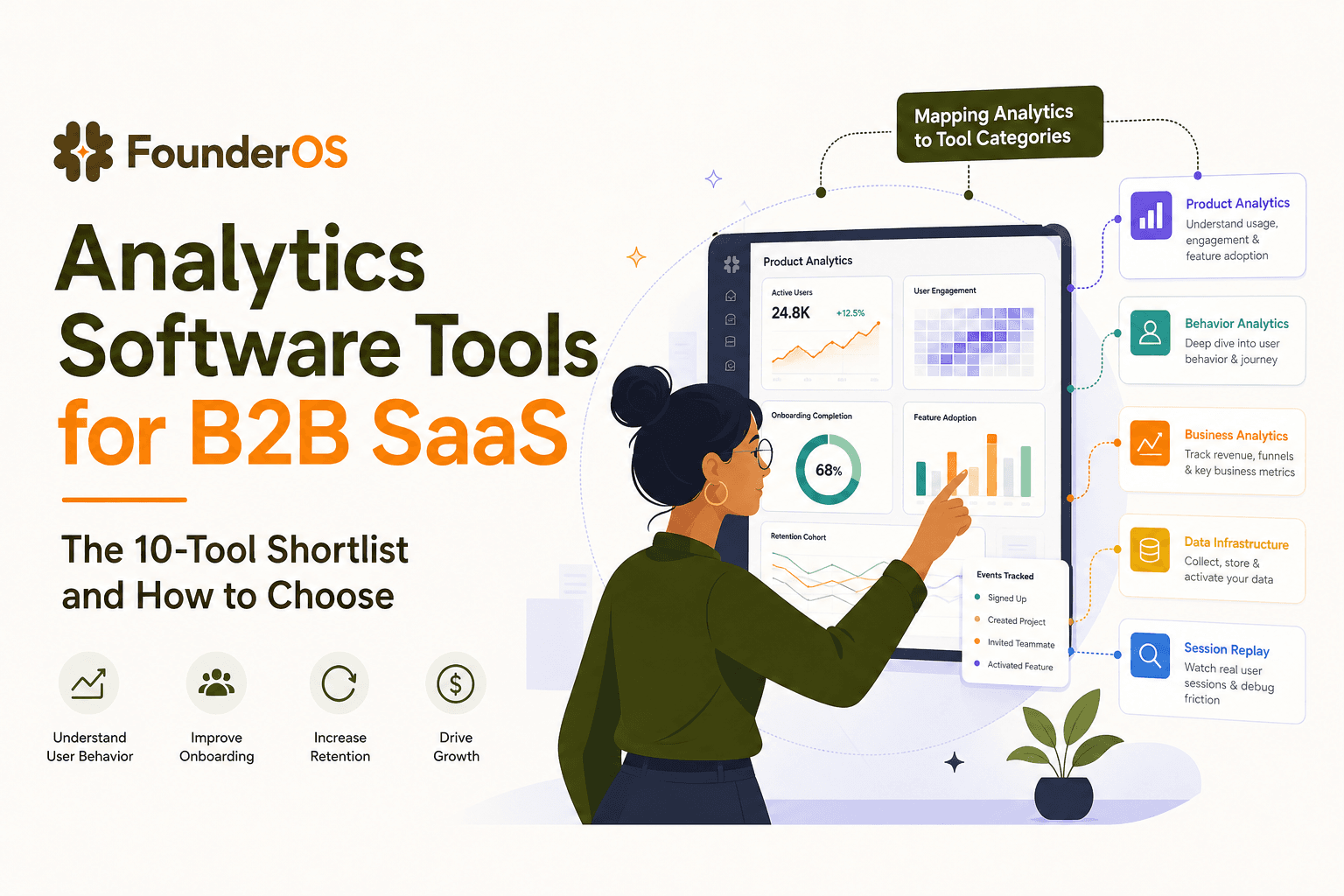
Analytics Software Tools for B2B SaaS - The 10-Tool Shortlist and How to Choose
A BOFU-ready shortlist of analytics software tools for B2B SaaS: 10 picks across categories plus a buyer rubric and rollout plan.
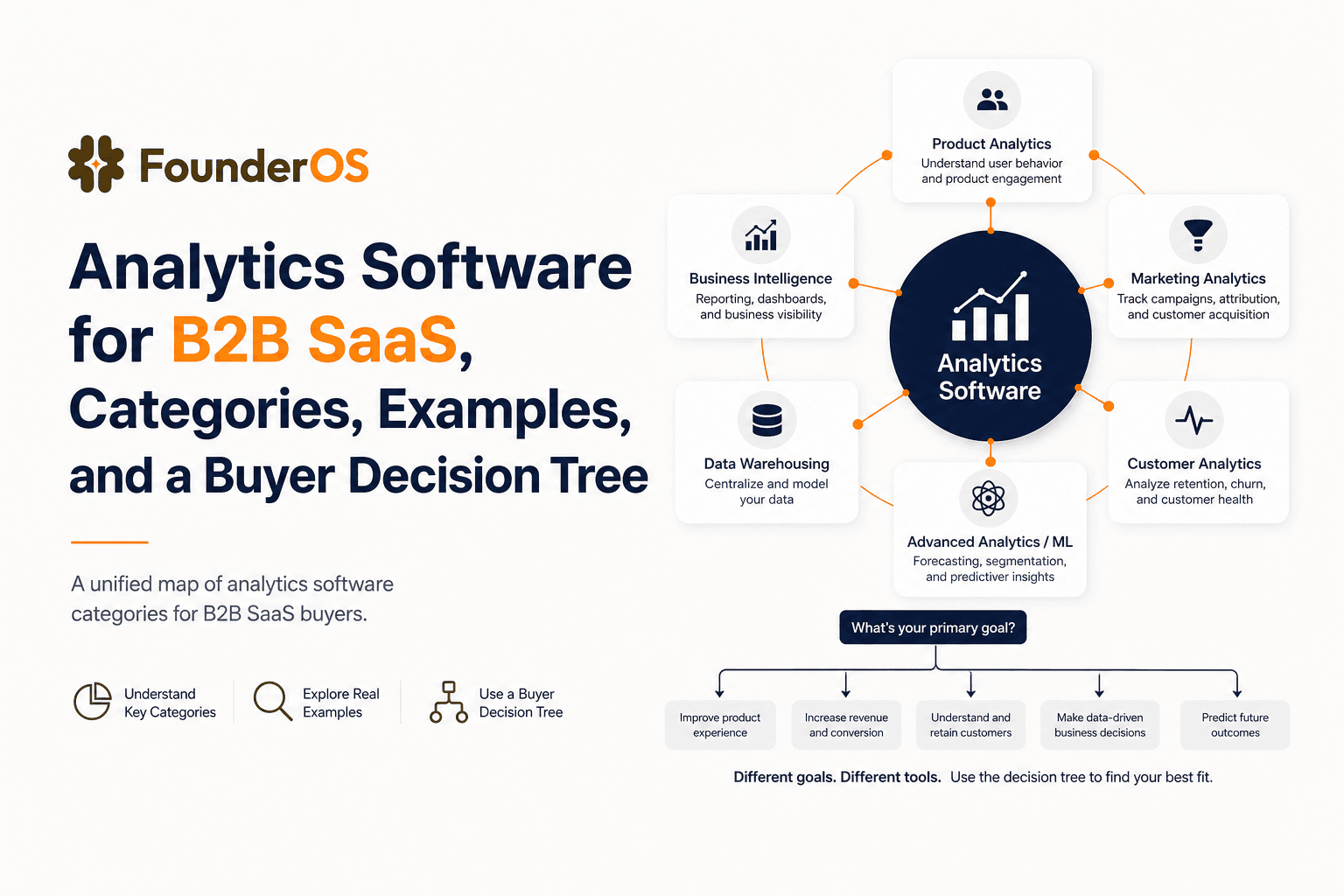
Analytics Software for B2B SaaS, Categories, Examples, and a Buyer Decision Tree
Choose analytics software for B2B SaaS with a clear category map, 10-minute decision tree, real workflows, and a practical buyer checklist.
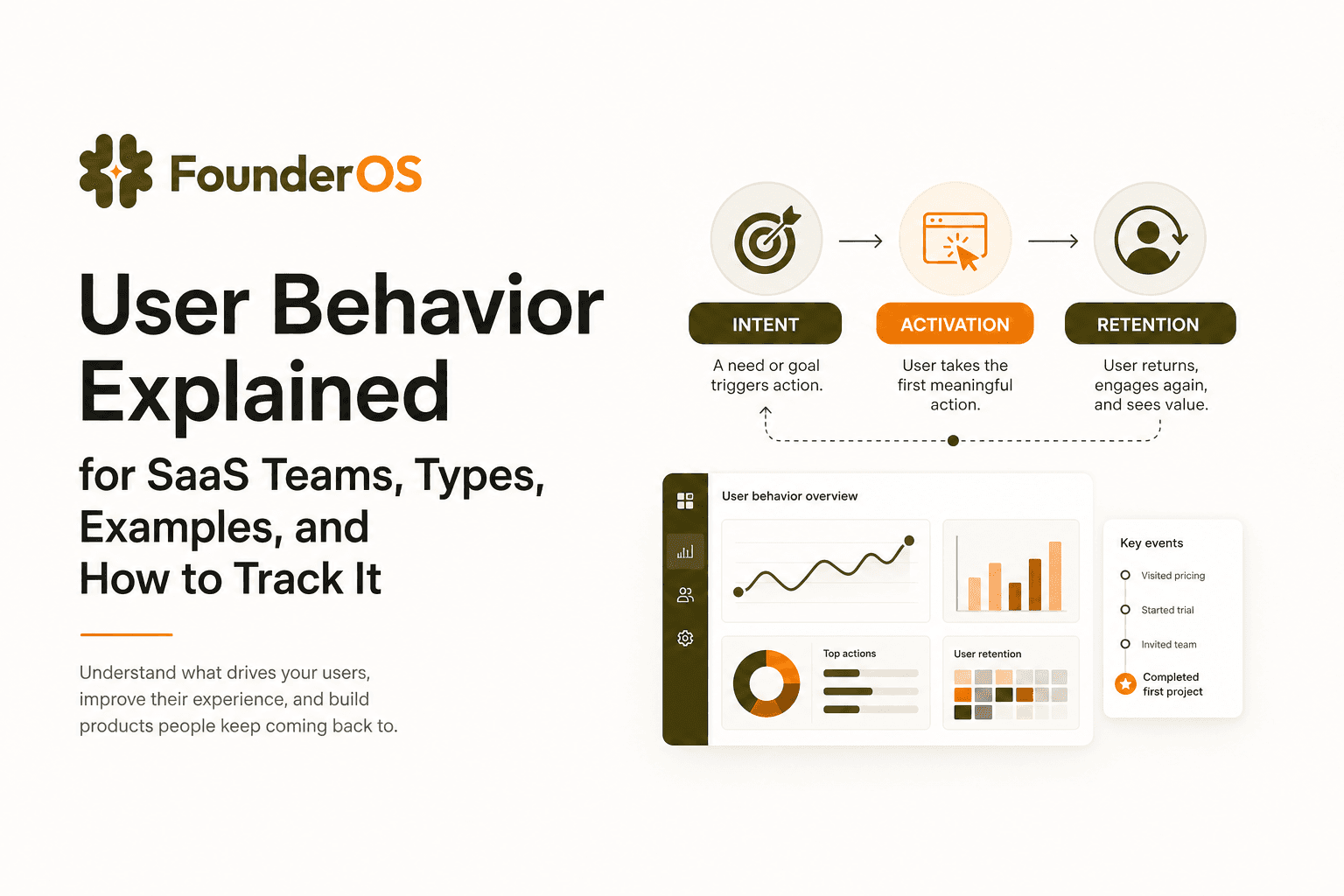
User Behavior Explained for SaaS Teams, Types, Examples, and How to Track It
Learn what user behavior means in SaaS, the key types, and a practical event tracking playbook to turn user behavior into product decisions.