
Fix Product Adoption Software Gaps and Turn New Signups Into Weekly Users
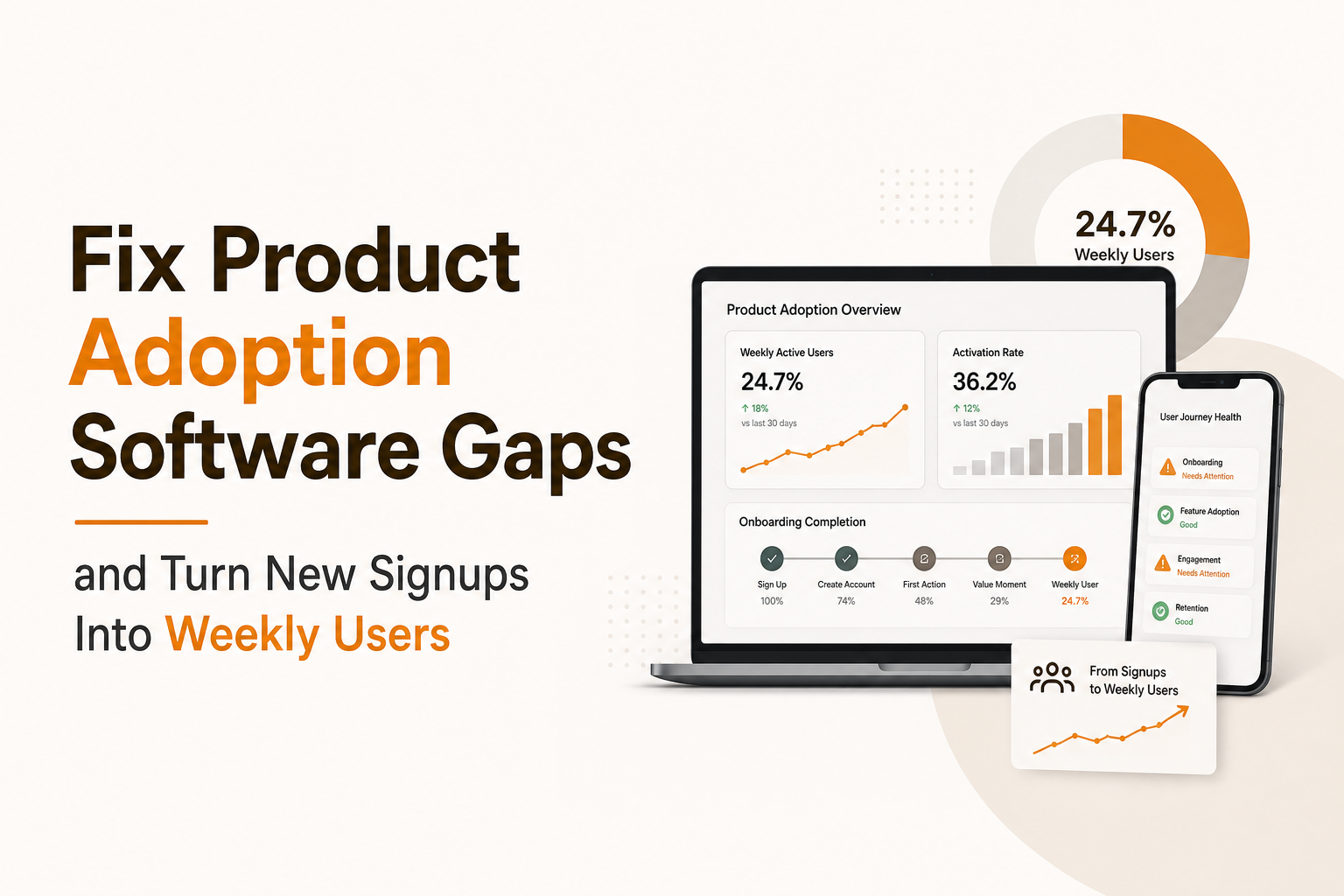
How to Fix Product Adoption Software Gaps and Increase Activation and Retention
Direct answer: Product adoption software works when it (1) identifies the few actions that predict retention, (2) guides users to complete them inside your product, and (3) measures whether those guides changed behavior. If your tool only shows tours without targeting and measurement, you will get “completed onboarding” but not real adoption.
- Adoption is not “users saw a tour.” Adoption is “users repeatedly reach a measurable outcome” (weekly).
- Good product adoption software must combine targeting, in-app guidance, and impact measurement, or you will optimize vanity completion rates.
- You can get first value in under 10 minutes by shipping one targeted flow tied to one activation event and tracking lift.
The Agitation: Why Product Adoption Software Is Costing You Money, Time, and Trust
Most teams buy product adoption software after the same pattern: signups look fine, demos look fine, but retention is flat. So they add tours, tooltips, and checklists. Then “onboarding completion” goes up, yet support tickets and churn do not move.
That gap is expensive because it compounds across three areas:
- Wasted acquisition spend: If 1,000 new users sign up and only 120 reach the first meaningful outcome, you are effectively paying to create 880 low-intent accounts. Even if your acquisition cost is modest, the opportunity cost is massive because your team is now supporting and analyzing noise.
- Support load that should not exist: When users cannot find the next step, they ask humans. Every “Where do I click?” ticket is a product education failure. Product adoption software should reduce these tickets by guiding users contextually, not by dumping a generic tour on first login.
- Loss of trust from high-value accounts: The users who matter most are often the least patient. If a buyer’s first admin experience is confusing, they do not complain loudly. They just stop inviting teammates.
Here is the uncomfortable truth: bad product adoption software creates false confidence. It reports that users “completed onboarding,” while your business outcome (activation, retention, expansion) stays unchanged.
Do not start by building a “welcome tour.” Start by identifying the one action that predicts a user will come back next week, then design a flow that makes that action unavoidable. A shorter, targeted flow that drives one retention-predictive action will beat a polished 12-step tour every time.
If you are unsure what that retention-predictive action is, you need behavior data first. That is where product analytics matters. If you are currently comparing product analytics platforms, the key is not dashboards, it is whether you can reliably segment users by what they did in the product and then act on it.
The Strategic Blueprint to Overcome Product Adoption Software Failure
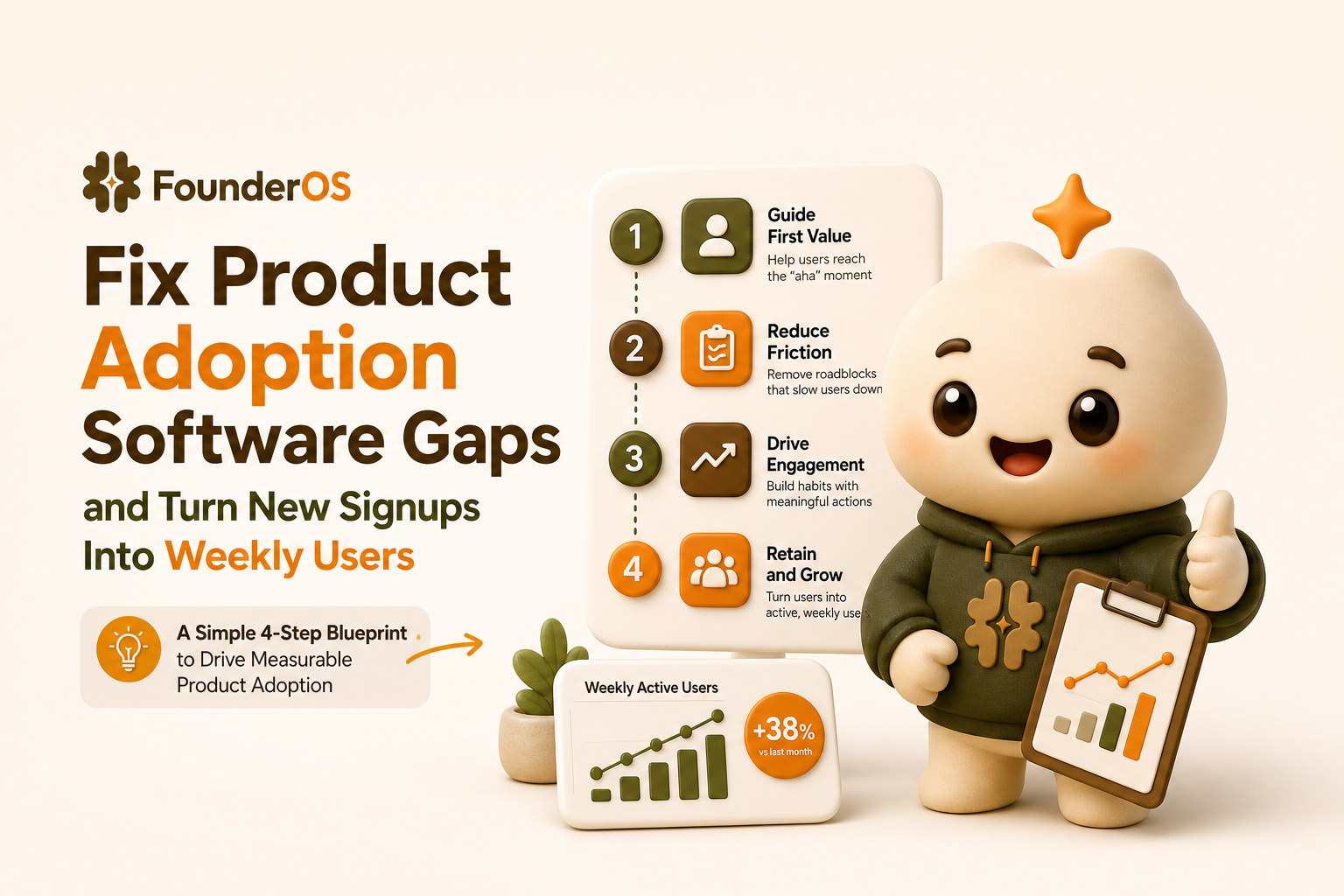
This is a 4-step blueprint you can run in a week. It is designed for decision-stage teams: minimal theory, maximum measurable output.
-
Step 1: Define adoption as a measurable outcome, not a UI interaction
- Bad definition: “User completed the tour.”
- Better: “User created their first project and invited one teammate.”
- Best: “User completed the first workflow that produces ROI (e.g., exported a report, shipped an integration, published a page).”
Checklist to pick your adoption outcome:
- It can be completed in one session.
- It correlates with week-2 retention (even informally at first).
- It is verifiable with product data (not a survey).
-
Step 2: Map the shortest path to that outcome (3 to 7 actions)
Write the path as a numbered list of actions users must complete. Example for a B2B SaaS with a dashboard:
- Create workspace
- Connect data source (or upload CSV)
- Configure one setting
- Generate first report
If your path has 12 steps, you are not mapping the shortest path. You are mapping your full product.
-
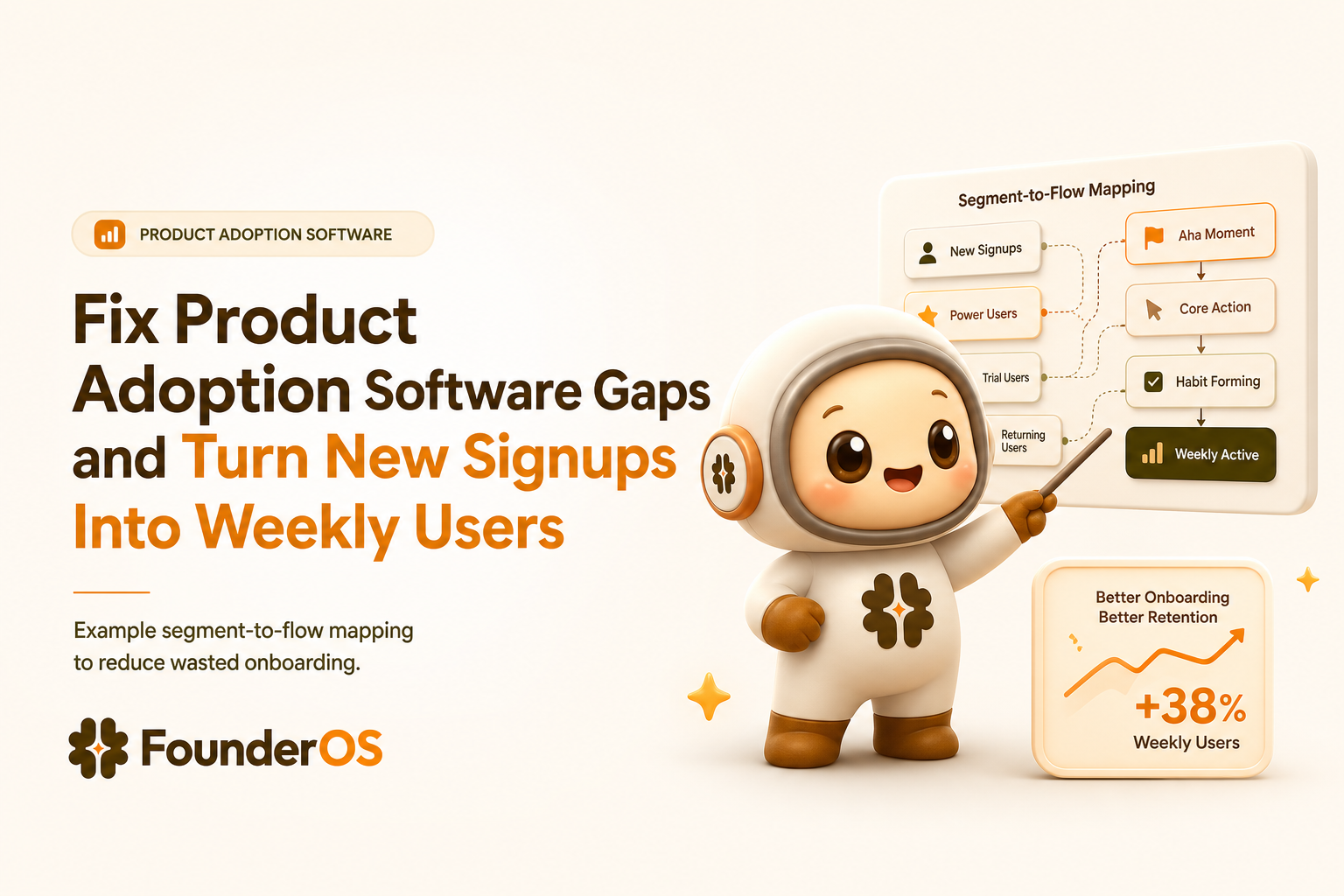
Step 3: Segment users by intent before you show anything
Showing the same onboarding to everyone is the fastest way to annoy high-intent users and confuse low-intent users.
Use this simple segmentation rule set:
- New: first session, no key actions completed
- High-intent: completed 1 to 2 key actions quickly (example: connected data within 5 minutes)
- Stuck: started but did not finish within 24 hours
If you want a practical method to do this from behavior (not guesswork), use how to identify high intent users in saas as your baseline playbook.
-
Step 4: Measure impact with a before/after benchmark
Product adoption software should earn its budget by moving a metric you care about. Use an impact table like this:
- Primary metric: Activation rate (users who reach the adoption outcome)
- Secondary: Time-to-first-value (minutes to outcome)
- Guardrails: Support tickets per 100 new users, and opt-outs/dismissals of flows
Minimum benchmark you should expect after shipping one targeted flow:
- Activation rate lift that is visible within 1 to 2 weeks (directional is fine).
- Time-to-first-value decreases for new users who see the flow.
If you need a deeper framework for activation measurement, this guide on how to improve user activation rate saas gives you a concrete example of what “lift” can look like when the workflow is specific.
Solving Product Adoption Software in Under 10 Minutes With Founder OS
If you follow the blueprint above, the tool choice becomes simpler: you need product adoption software that can target the right users, guide them through the few actions that matter, and measure impact without a long setup.
Here is a practical mapping of the blueprint to Founder OS, focusing on measurable outputs you can validate quickly.
| Blueprint step | What you need the tool to do | Founder OS feature | Measurable output |
|---|---|---|---|
| Define adoption outcome | Track the key action reliably | Product Tracking | Activation event count and conversion rate |
| Map shortest path | Create an in-app flow that matches the path | No-code Product Onboarding Tool (guided tours/flows) | Step completion and drop-off by step |
| Segment by intent | Show flows only to the right users | User Profile Tracking and User Segmentation | Flow exposure by segment (new, high-intent, stuck) |
| Measure impact | See whether flows changed activation | GTM Report and flow analytics | Before/after activation and time-to-value |
Targeted Flows: Stop Showing the Same Tour to Everyone
Most adoption efforts fail because they treat onboarding like a one-time presentation. In practice, users need different guidance based on what they have already done.
10-minute implementation checklist:
- Pick one activation event (example: “created first report”).
- Create a 3 to 5 step flow that drives that event.
- Set the trigger to show only when the user is on the relevant page and has not completed the event.
Measurable output: within days, you should see flow completion rate and whether users who complete the flow convert to the activation event at a higher rate than those who do not.
Behavior-Based Segments: Spend Guidance Where It Produces Retention
The fastest way to improve unit economics is to reduce wasted guidance. Your best users do not need hand-holding. Your stuck users do.
Use this segment matrix:
- High-intent: show only “shortcuts” and advanced tips.
- New: show the shortest path flow.
- Stuck: show a recovery flow that removes the main blocker (often data connection or first setup).
Measurable output: higher activation lift per impression because you are not diluting your flows across users who would have activated anyway.
Impact Reporting: Prove ROI, Not Just Engagement
Product adoption software should answer one executive question: “Did this change behavior?” Not “Did users click the tooltip?”
Weekly reporting checklist:
- Activation rate by segment (new vs stuck)
- Median time-to-first-value
- Top 3 drop-off steps in your main flow
Measurable output: a prioritized backlog of onboarding fixes based on observed drop-offs, not opinions.
FAQ
What is product adoption software, in practical terms?
It is software that helps users discover and repeatedly use the parts of your product that create value. Practically, it combines in-app guidance (like tours and prompts), targeting (who sees what), and measurement (did it increase activation or retention).
How do I know if my product adoption software is working?
Use a simple before/after test on one adoption outcome. If users who see and complete the flow reach your activation event more often, and faster, it is working. If only “tour completion” moves, it is not.
What should I implement first if I only have one day?
Implement one targeted flow tied to one activation event, and track (1) flow completion, (2) activation conversion for exposed users, and (3) drop-off step. One tight loop beats multiple generic tours.
Do I need product analytics to use product adoption software?
You can start without it, but you will quickly hit a ceiling because you cannot segment users by intent or prove impact. Even basic behavior tracking is enough to make onboarding flows targeted and measurable.
If you want to implement this blueprint quickly, Founder OS can help you launch targeted in-app flows, segment users by behavior, and measure activation impact in one place. Start with one activation event today and get first value in under 10 minutes.

Stay in the loop
Get the latest insights on SaaS growth, product strategy, and more delivered to your inbox.