
Customer Onboarding Platform Evaluation, Without the Guesswork: A Practical Scorecard
Choosing a customer onboarding platform is rarely a feature checklist problem. It is an outcomes and trade-offs problem: how fast can users reach a “first win,” how reliably can you guide different user types, and how clearly can you prove onboarding is improving activation (not just “tour views”). This guide gives you a practical scorecard you can use to shortlist tools in under an hour.
- Evaluate a customer onboarding platform by measurable onboarding outputs (first win, activation lift, fewer tickets), not by UI patterns.
- Use a scorecard that forces trade-offs across speed, targeting, measurement, maintenance effort, and cost per activated user.
- Run a short trial script: build one real flow, target two segments, and verify you can measure completion and downstream behavior.
Start With the Output: What Your Onboarding Must Produce
Before you compare vendors, write down the one onboarding outcome you are buying. If you do not, every customer onboarding platform looks “good enough,” and you end up paying for adoption theater.
Pick 1 primary outcome and 2 supporting outcomes
- Primary outcome (choose one):
- More users reach a “first win” in the first session
- Higher activation rate (users completing your key setup or core action)
- Fewer “how do I…” support tickets from new users
- Supporting outcomes (choose two):
- Higher completion of a specific setup step (example: invite teammate, connect data source, create first project)
- Better feature discovery (example: % of users trying Feature X within 7 days)
- Cleaner segmentation for lifecycle messaging
A concrete example (so your team aligns)
- Primary: Increase activation from 22% to 30% for self-serve signups
- Supporting: Reduce “where do I start?” tickets by 15%, increase “create first dashboard” completion to 45%
- What you will build: One guided flow for first-time users + one checklist for returning users who did not finish setup
If you already track user actions, great. If you do not, fix that first because onboarding without measurement becomes opinion. This is where event tracking setup matters: you need a reliable way to connect onboarding steps to real product usage.
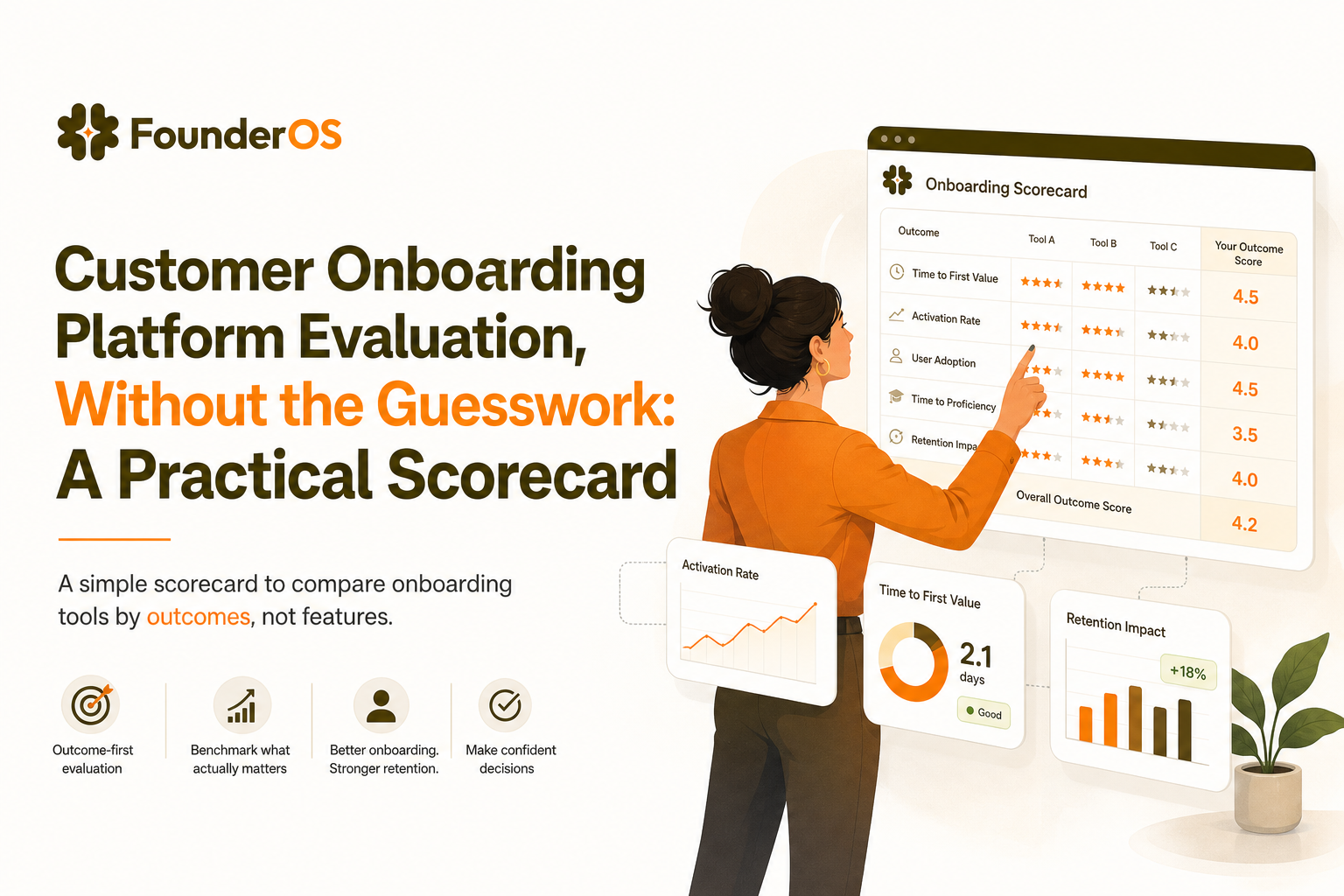
The 12-Point Customer Onboarding Platform Scorecard
Use this scorecard to compare any customer onboarding platform. Score each item 0 to 2 (0 = missing, 1 = partial, 2 = strong). A realistic “buy” threshold for most SaaS teams is 18+ out of 24.
Category A: Build speed and iteration (0 to 6)
- Time to publish: Can a non-engineer ship a change in under 10 minutes?
- Flow builder flexibility: Can you combine modals, tooltips, checklists, and surveys in one flow?
- Safe editing: Can you preview changes without breaking live onboarding?
Category B: Targeting and personalization (0 to 6)
- Segmentation depth: Can you target by role, plan, lifecycle stage, and key actions taken?
- Conditions: Can you show different steps based on what the user already did?
- Frequency control: Can you prevent “nagging” (caps per user, dismiss rules, cooldowns)?
Category C: Measurement you can trust (0 to 6)
- Completion analytics: Completion rate, drop-off per step, time to complete.
- Downstream impact: Can you tie completion to activation or retention outcomes?
- Experiment support: Can you run a simple A/B test or compare cohorts?
For the last two, you will want a clear view of where users get stuck across the journey. If your reporting is fuzzy, you will miss the real bottleneck. A good starting point is funnel analytics that shows where new users abandon setup.
Category D: Maintenance and total cost (0 to 6)
- UI change resilience: When your product UI changes, do flows break often?
- Team workflow: Can multiple teammates collaborate without overwriting each other?
- Cost per activated user: Pricing aligns with your volume and value (not just page views).
Decision Table: Two Common Shortlists (and How to Pick)
Most teams end up comparing “lightweight tours” vs “full onboarding plus measurement.” The right choice depends on whether you need proof of impact or just basic guidance.
| Criteria | Lightweight Onboarding Tool | Customer Onboarding Platform (Flow Builder + Measurement) |
|---|---|---|
| Best for | Simple products, low segmentation needs, quick tours | Multiple personas, complex setup, need to prove activation lift |
| Build speed | Fast to launch basic tours | Fast, plus reusable patterns (checklists, branching flows) |
| Targeting | Often basic (page or simple attributes) | Stronger segmentation and conditional steps |
| Measurement | Often completion only | Completion plus downstream behavior and cohort comparisons |
| Maintenance cost | Lower, but can become messy as flows grow | Higher capability, but needs governance (naming, ownership, audits) |
| Buying risk | Low cost, but risk of not moving activation | Higher cost, but easier to defend with measurable impact |
A simple rule to decide
- If you cannot name the top 2 activation blockers, start lightweight and focus on learning.
- If you already know your blockers and need to move a KPI this quarter, choose a customer onboarding platform with strong measurement.
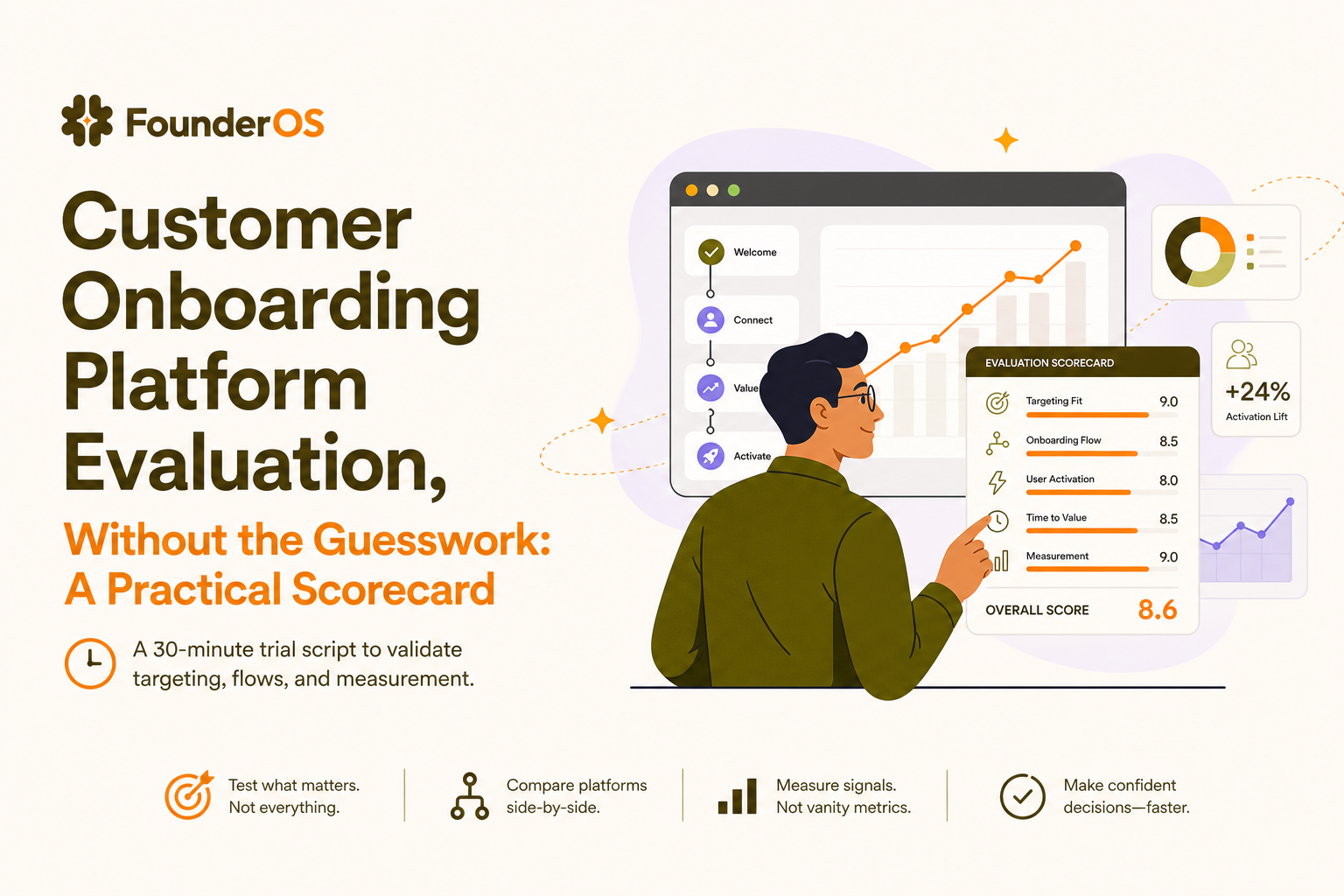
A 30-Minute Trial Script to Validate Your Top 2 Tools
Do not run a week-long “try everything” trial. Run a short, repeatable test that mirrors real onboarding.
Trial setup (5 minutes)
- Pick one core flow: “First login to first win.”
- Define two segments: (A) brand-new users, (B) users who returned but did not finish setup.
- Pick one success metric: activation completion within 24 hours.
Build test (15 minutes)
- Create a 5-step flow: welcome, highlight primary action, prompt a setup step, confirm success, next recommended action.
- Add one branch: if the user already completed setup, skip to the next recommended action.
- Add one survey at the end: “What stopped you today?” with 4 options.
Measurement test (10 minutes)
- Confirm you can see completion and drop-off by step.
- Confirm you can compare Segment A vs Segment B performance.
- Confirm you can export results or share a dashboard with your team.
If the tool cannot pass this script quickly, it will not scale when you add more personas, more flows, and more product changes.
What to Measure in Week 1 (So You Can Defend the Purchase)
To justify a customer onboarding platform, you need a small set of metrics that connect onboarding activity to business results. Track these four in your first week:
- Flow completion rate: target 60%+ for a short flow (5 steps). If it is below 40%, your steps are too long or mis-timed.
- Step drop-off: identify the worst step and rewrite it first. One step often causes most losses.
- Activation lift: compare users who completed the flow vs those who did not. If you cannot compare this, you are measuring the wrong thing.
- 7-day return rate by cohort: onboarding should increase the number of users who come back and do the core action again. A simple retention cohort analysis keeps the conversation grounded.
Governance checklist (prevents “flow sprawl”)
- Name every flow with: persona + goal + trigger (example: “Admin - Invite Team - After Signup”)
- Assign an owner per flow and a monthly review date
- Archive flows that do not move a metric within 30 days
FAQ
If you want a fast way to implement the scorecard above, Founder OS is one example of a customer onboarding platform that combines no-code flows with onboarding analytics so you can publish quickly and measure completion and impact. If you are evaluating tools this week, start a free build-and-measure trial and ship one real onboarding flow in under an hour.
Written by Ivy Tran
Founder of FounderOS, sharing practical insights on SaaS growth, product analytics, and user activation.
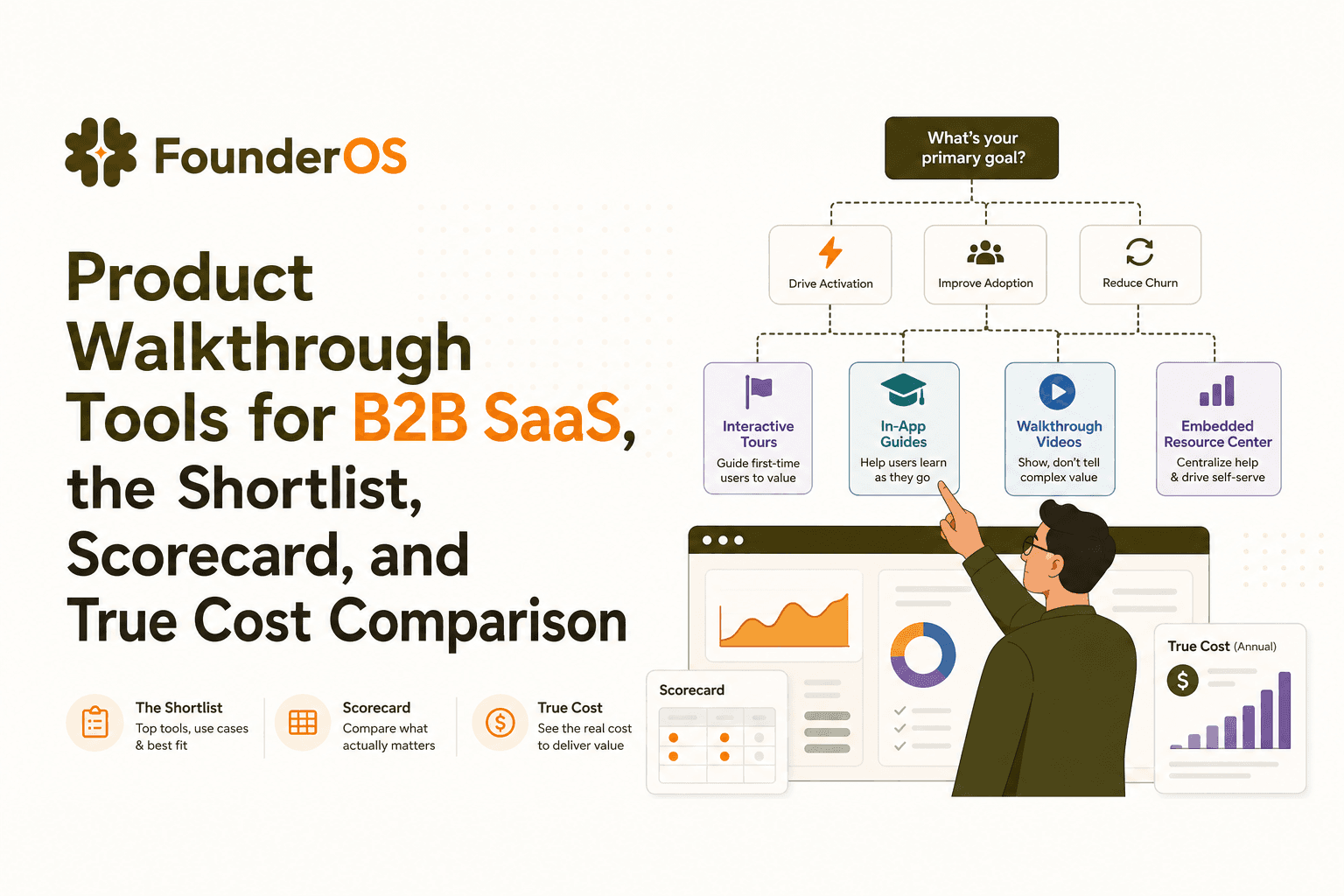
Product Walkthrough Tools for B2B SaaS, the Shortlist, Scorecard, and True Cost Comparison
Compare product walkthrough tools for B2B SaaS with a shortlist, success scorecard, and true cost scenarios for 2k, 10k, and 50k users.

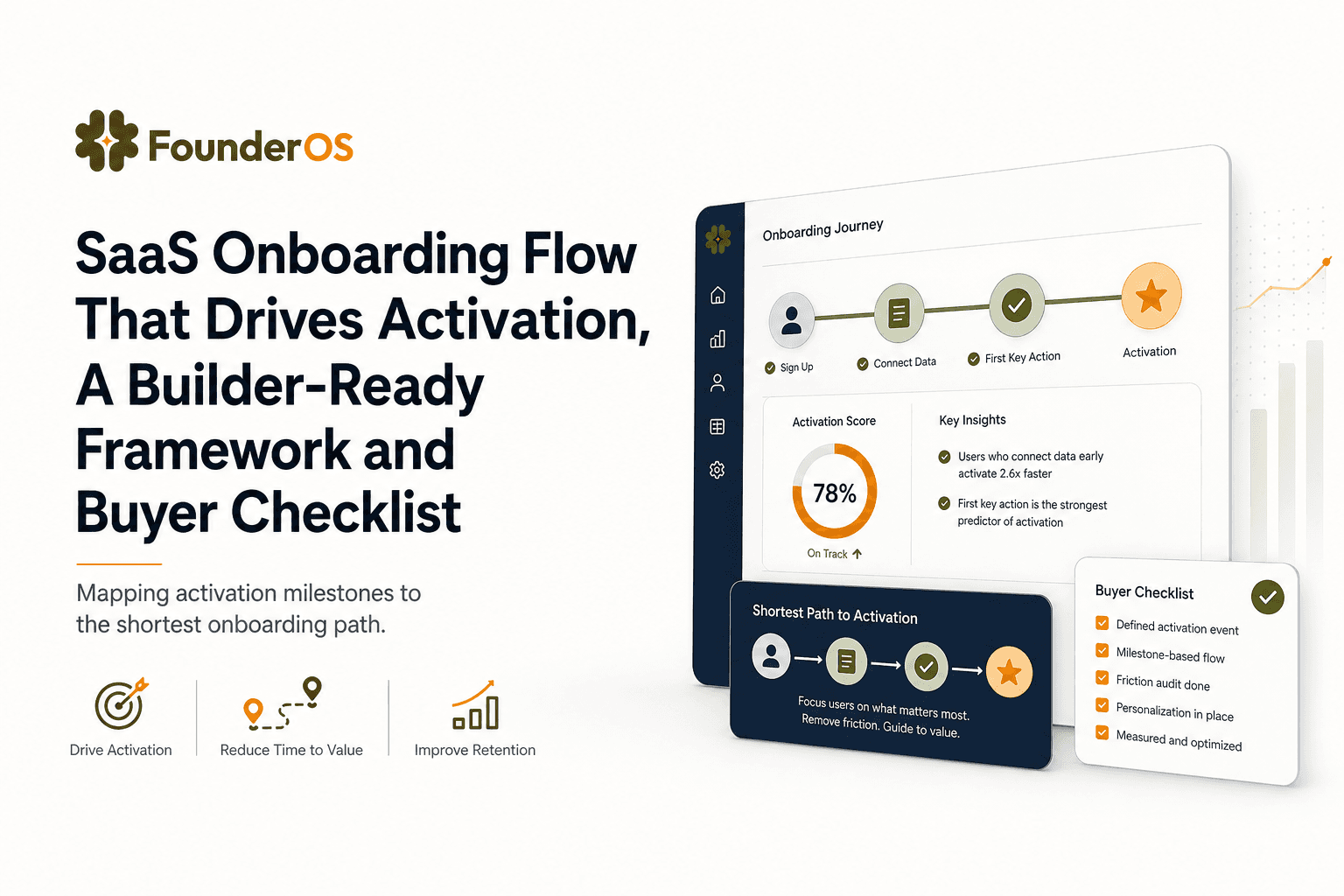
SaaS Onboarding Flow That Drives Activation, A Builder-Ready Framework and Buyer Checklist
Build a saas onboarding flow that drives activation with segments, triggers, tracking, and a buyer checklist for no-code flow builders.

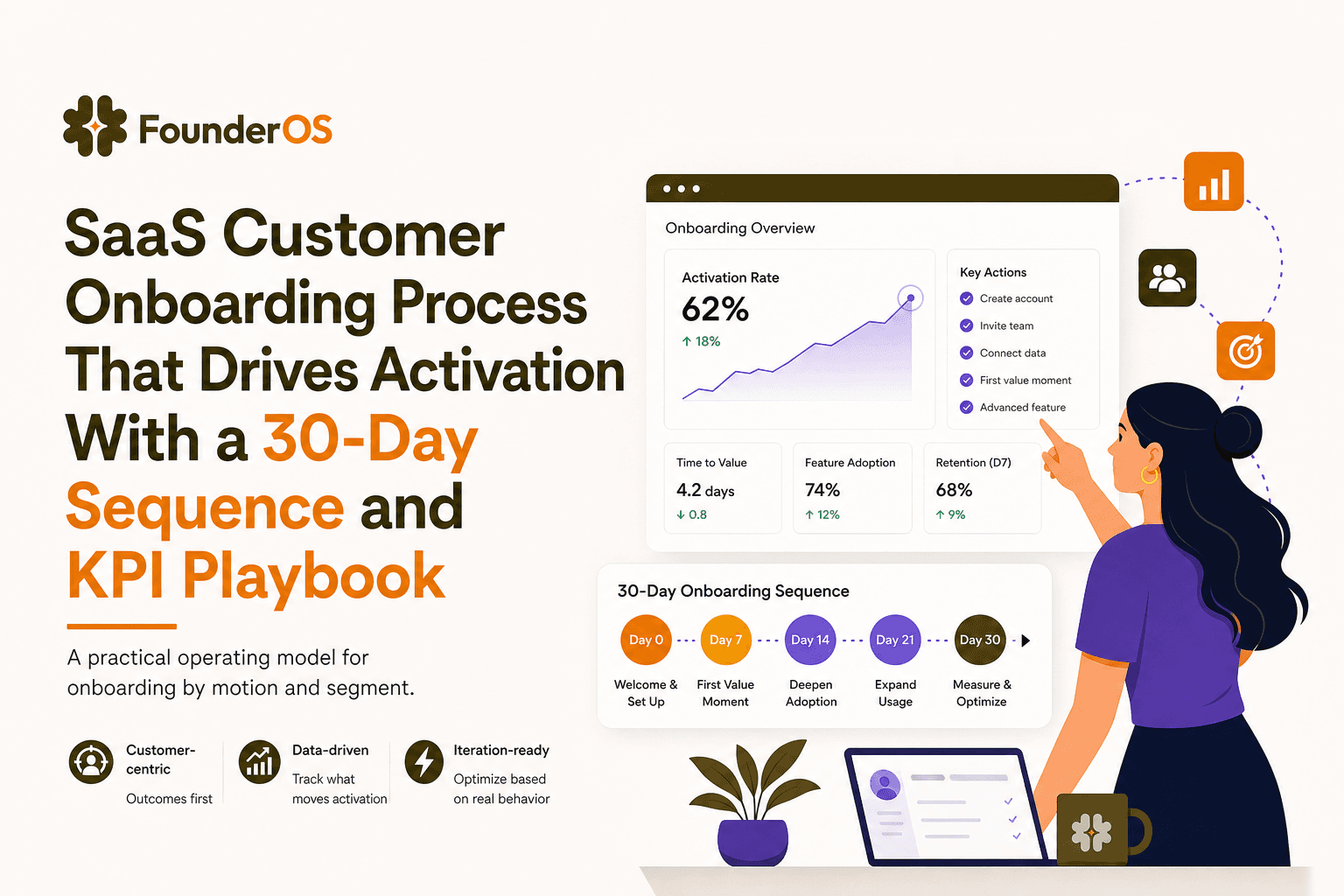
SaaS Customer Onboarding Process That Drives Activation With a 30-Day Sequence and KPI Playbook
Build a saas customer onboarding process with a 30-day sequence, triggers, RACI ownership, and KPI formulas to reach activation faster.
