
Lead Grading Explained and a Simple Framework to Start Using It
Lead grading is the simplest way to stop treating every new lead like they have the same potential. Instead of asking “how interested are they,” lead grading asks “how well do they fit.” When teams confuse grading with scoring, they end up chasing busy leads that never convert, while true ICP prospects wait too long for attention.
- Lead grading measures fit (ICP match) while lead scoring measures intent (behavior) and mixing them breaks prioritization.
- You can set up lead grading in one afternoon by defining 3 to 4 grades, mapping firmographic and qualifying criteria, and setting clear thresholds.
- Validate lead grades with quick checks: conversion rate by grade, pipeline velocity, and a monthly feedback loop with Sales.
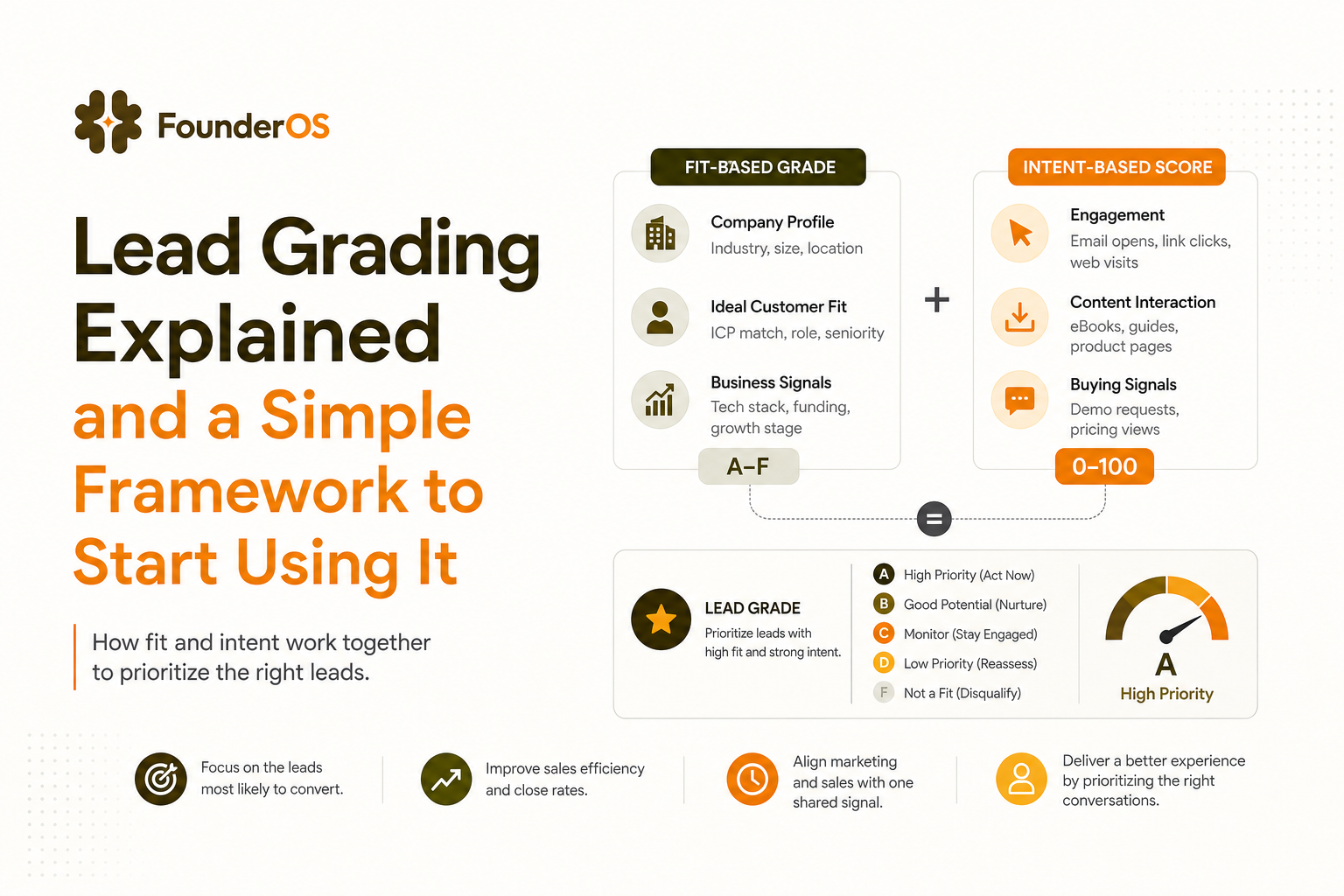
Lead grading vs lead scoring - the difference most teams miss
Definitions you can use in a meeting
- Lead grading = a measure of fit. It answers: “Is this lead the kind of company and buyer we can realistically win and retain?”
- Lead scoring = a measure of intent. It answers: “How likely are they to buy soon based on what they did?”
Why mixing them breaks prioritization and reporting
When fit and intent are blended into one number, you lose the ability to diagnose what is actually happening:
- If your pipeline is full but deals stall, is it because leads are low fit or because follow-up is slow? A blended score hides the answer.
- If a campaign “performed,” did it bring the right accounts (fit) or just lots of activity (intent)?
- If SDRs complain about lead quality, you cannot tell whether the issue is targeting (grading) or engagement (scoring).
A simple rule that prevents 80% of mistakes
Keep two separate fields in your CRM:
- Grade (A-D) for fit
- Score (0-100) for intent
Then route and prioritize using a matrix, not a single blended number.
The prioritization matrix (use this even if you have no automation)
| Fit (Lead Grade) | Intent (Lead Score) | What it usually means | Recommended action |
|---|---|---|---|
| A | High | Best accounts, actively evaluating | Fast SDR follow-up, book meeting within 24 hours |
| A | Low | Great fit, not ready yet | Nurture with product value, periodic check-ins |
| C/D | High | Curious but unlikely to buy or retain | Self-serve path, content, light-touch support |
| C/D | Low | Low fit and low intent | Deprioritize or disqualify |
If you want a deeper playbook for intent signals, see lead scoring and how it complements grading.
A simple lead grading framework you can set up in one afternoon
Step 1 - Define your ICP in measurable criteria (not adjectives)
“Mid-market,” “modern,” and “fast-growing” are not grade criteria. Convert your ICP into fields you can actually check. Start with 6 to 10 criteria max.
ICP criteria checklist (pick what matters for your product)
- Company size: employees or revenue range
- Industry: specific verticals you win in
- Geography: time zones, language, regulatory constraints
- Tech stack: must-have tools or integrations
- Use case: the job-to-be-done you reliably solve
- Buyer role: titles that usually champion and approve
- Budget proxy: willingness to pay, existing spend, plan type
- Risk flags: students, agencies, consultants, competitors, etc.
Step 2 - Choose 3 to 4 grades and make them behavior-proof
Good lead grading does not change when someone clicks more buttons. It changes when you learn something new about fit. Keep it simple:
- A = perfect or near-perfect ICP match
- B = solid match with one compromise
- C = partial match, likely low win rate or low retention
- D = not a match (disqualify or route to self-serve)
Step 3 - Build grade rules using “must-have” and “nice-to-have”
To avoid endless debates, separate criteria into two buckets:
- Must-have: if missing, the lead cannot be A (sometimes cannot be B)
- Nice-to-have: increases confidence but should not override fundamentals
Example rule set (template you can copy)
| Grade | Must-have criteria | Nice-to-have criteria | Common routing |
|---|---|---|---|
| A | Right industry AND right size AND target buyer role present | Tech stack match, clear use case, high retention segment | SDR + AE fast track |
| B | Right industry AND (size slightly off OR buyer role unclear) | One strong signal like strong use case or stack match | SDR follow-up within 48 hours |
| C | Partial match (one of industry/size/use case is off) | Some potential for expansion or referrals | Nurture or self-serve |
| D | Clear mismatch or risk flag | None | Disqualify or low-touch |
Step 4 - Pick signals you can collect reliably (and document the source)
Most grading projects fail because the criteria are reasonable but the data is not. For each criterion, write down where it comes from and how often it is missing.
Signal reliability checklist
- Source: form field, enrichment, manual SDR research, product signup domain, billing data
- Coverage: what percentage of leads have it today?
- Freshness: does it change often?
- Ambiguity: can two people interpret it differently?
Step 5 - Decide what happens when data is missing
Missing data is normal. Define a policy so your team is consistent:
- If a must-have field is missing, default to B (not A) until confirmed.
- If multiple must-haves are missing, default to C.
- Never assign D due to missing data alone. D should mean “known bad fit.”
How to validate your lead grades actually predict revenue
Validation goal - prove grades separate outcomes
Lead grading is useful only if A leads convert meaningfully better than B, and B better than C. You do not need perfect attribution to validate. You need directional separation that holds over time.
Quick check 1 - conversion rate by grade (start with 30 to 90 days)
Create a simple report with these metrics by grade:
- Lead to meeting booked
- Meeting to opportunity
- Opportunity to closed-won
What “good” looks like: A should be at least 2x C on one or more of these steps. If A and C are similar, your grade criteria are not capturing fit.
Quick check 2 - pipeline velocity by grade
Fit should also affect speed. Compare:
- Median days from first touch to meeting
- Median days from meeting to opportunity
- Median sales cycle length for won deals
If A deals are not faster than C deals, you might be grading on the wrong attributes, or Sales is not treating grades differently.
Quick check 3 - retention or expansion by grade (for SaaS)
If you have subscription data, add one more lens: do A accounts retain better? Even a basic comparison helps:
- Activation rate within first 7 days
- 30-day retention
- Expansion within 90 days
This is where product behavior can strengthen your grading and scoring system. For example, if your best customers always adopt a specific feature early, that is a powerful signal to layer into intent scoring, not fit grading. A useful companion read is how to identify high intent users in saas.
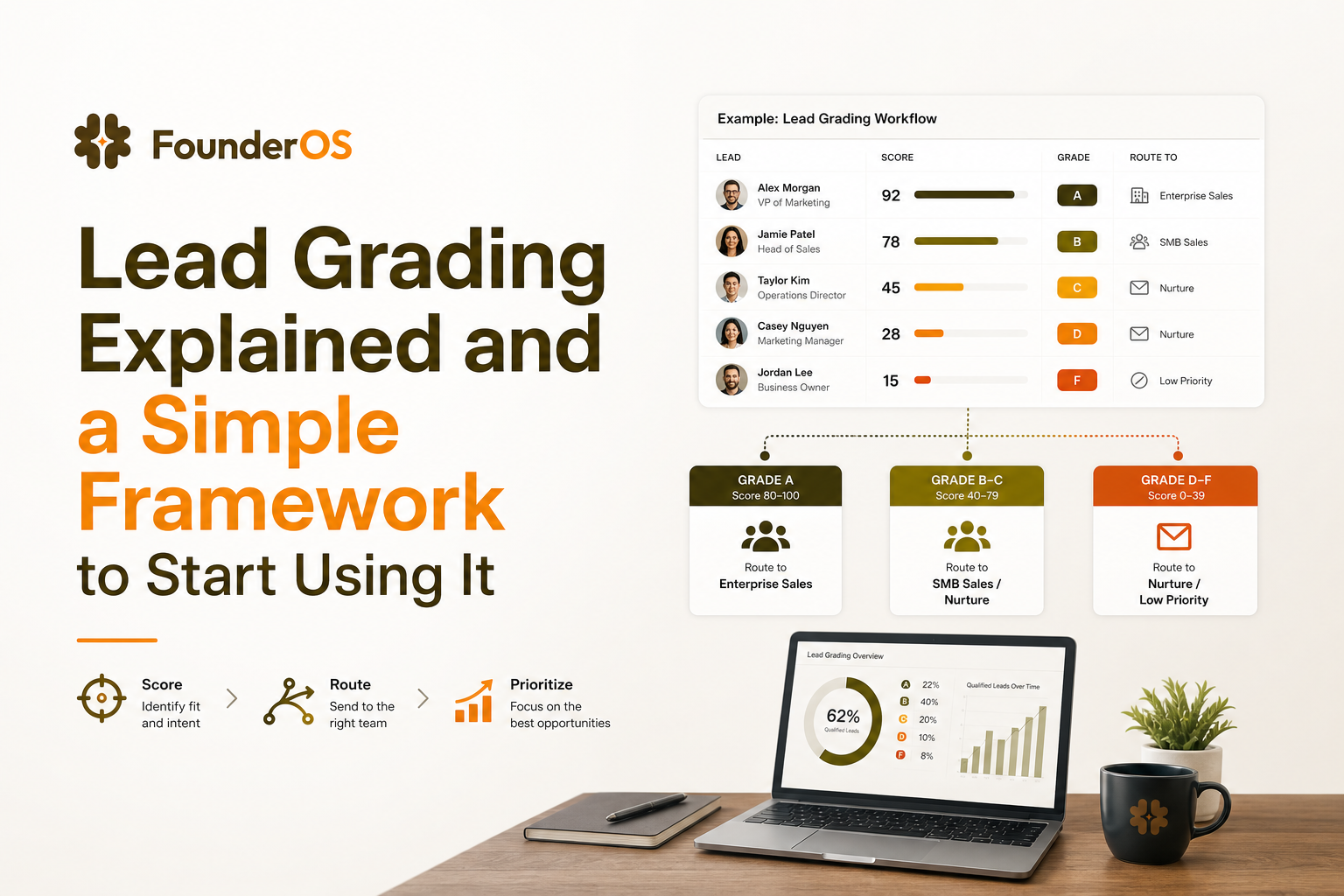
A practical workflow to use lead grading and scoring together (without over-engineering)
Step 1 - Route by grade first, then prioritize by score
Use lead grading to decide who gets human attention. Use scoring to decide who gets it first.
- Grade A: always eligible for SDR outreach. Priority order by score.
- Grade B: outreach if score is above a threshold or if the channel is high quality.
- Grade C: only outreach when score is very high (for example demo request), otherwise nurture.
- Grade D: self-serve and exclude from SDR sequences.
Step 2 - Set one threshold per grade (not ten)
Pick a single score threshold for each grade. Example:
- A: score ≥ 40 triggers immediate outreach
- B: score ≥ 60 triggers outreach
- C: score ≥ 80 triggers outreach
This keeps the system explainable. If you cannot explain it to a new SDR in 5 minutes, it will not be used.
Step 3 - Use a monthly feedback loop with Sales (15 minutes)
Bring a short list of recent leads per grade and ask two questions:
- Which leads were mis-graded and why?
- Which disqualified leads should have been D from the start?
Update only one rule per month. Small, consistent changes beat a big rebuild.
Step 4 - Track signals with product analytics when you can
Many teams rely only on form fields and enrichment for lead grading, then wonder why “high intent” users are missed. Product usage often reveals intent earlier than email clicks.
If you already track events and user profiles, you can identify behaviors that correlate with downstream steps like demo requests or upgrades. That is the domain of scoring, but it helps you sanity-check grading too. If you are evaluating tools, this overview of product analytics platforms can help you understand what to look for in event tracking and funnel analysis.
Concrete example - a beginner-friendly grade sheet
Here is a simple example you can adapt. Assume you sell B2B SaaS to operational teams.
| Criterion | A | B | C | D |
|---|---|---|---|---|
| Employees | 50-500 | 20-49 or 501-1000 | 10-19 or 1001-2000 | <10 or >2000 |
| Industry | Top 3 winning verticals | Adjacent verticals | Unproven | Known poor-fit verticals |
| Buyer role present | Ops lead or Head of X | Manager level | IC only | Student, consultant, agency |
| Use case | Core use case | One step removed | Vague | Mismatch |
Tip: keep this sheet in a shared doc and link it directly in your CRM field description so grading stays consistent.
For engagement after signup, onboarding matters too. If your activation is weak, grading and scoring will look “wrong” because even great-fit leads fail to reach value. This guide on customer onboarding platform fundamentals explains what to fix first.
FAQ
If you want to connect lead grading to what users actually do inside your product, Founder OS can help by tracking events, building user profiles, and visualizing drop-offs so your team can separate fit from intent with real behavior data. Start simple: keep grading rules in your CRM, then use product insights to refine scoring and improve activation over time.
Written by Ivy Tran
Founder of FounderOS, sharing practical insights on SaaS growth, product analytics, and user activation.
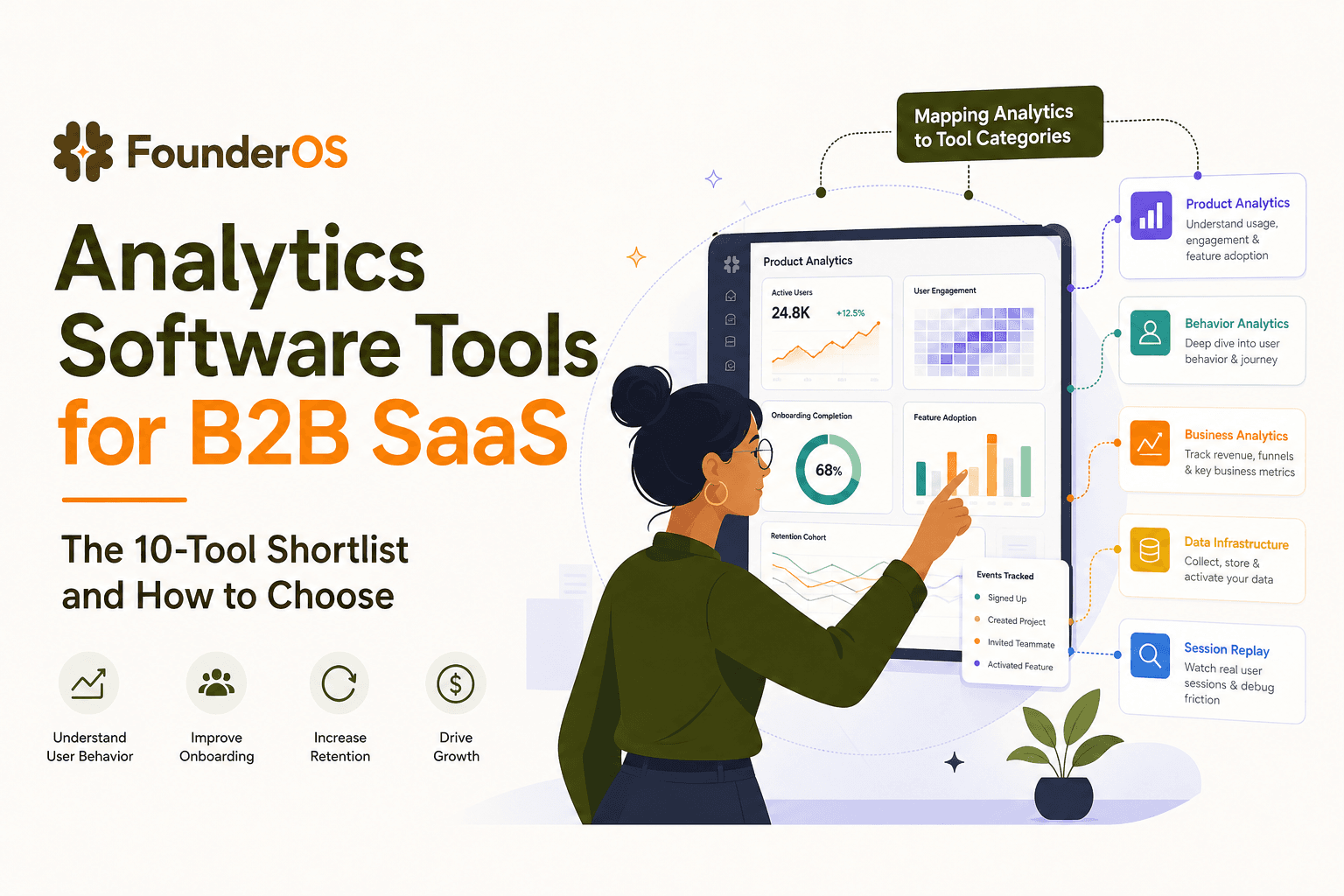
Analytics Software Tools for B2B SaaS - The 10-Tool Shortlist and How to Choose
A BOFU-ready shortlist of analytics software tools for B2B SaaS: 10 picks across categories plus a buyer rubric and rollout plan.

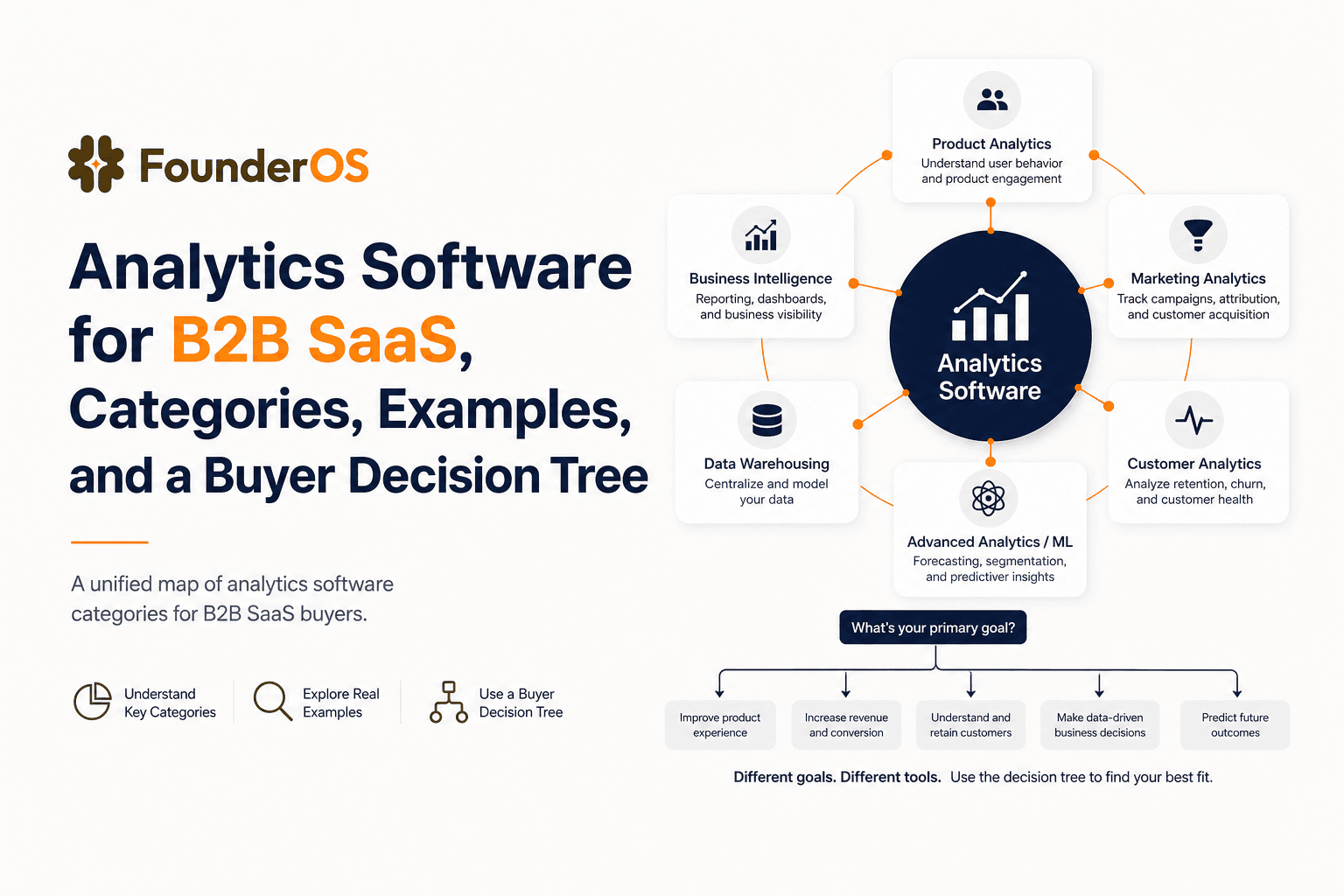
Analytics Software for B2B SaaS, Categories, Examples, and a Buyer Decision Tree
Choose analytics software for B2B SaaS with a clear category map, 10-minute decision tree, real workflows, and a practical buyer checklist.
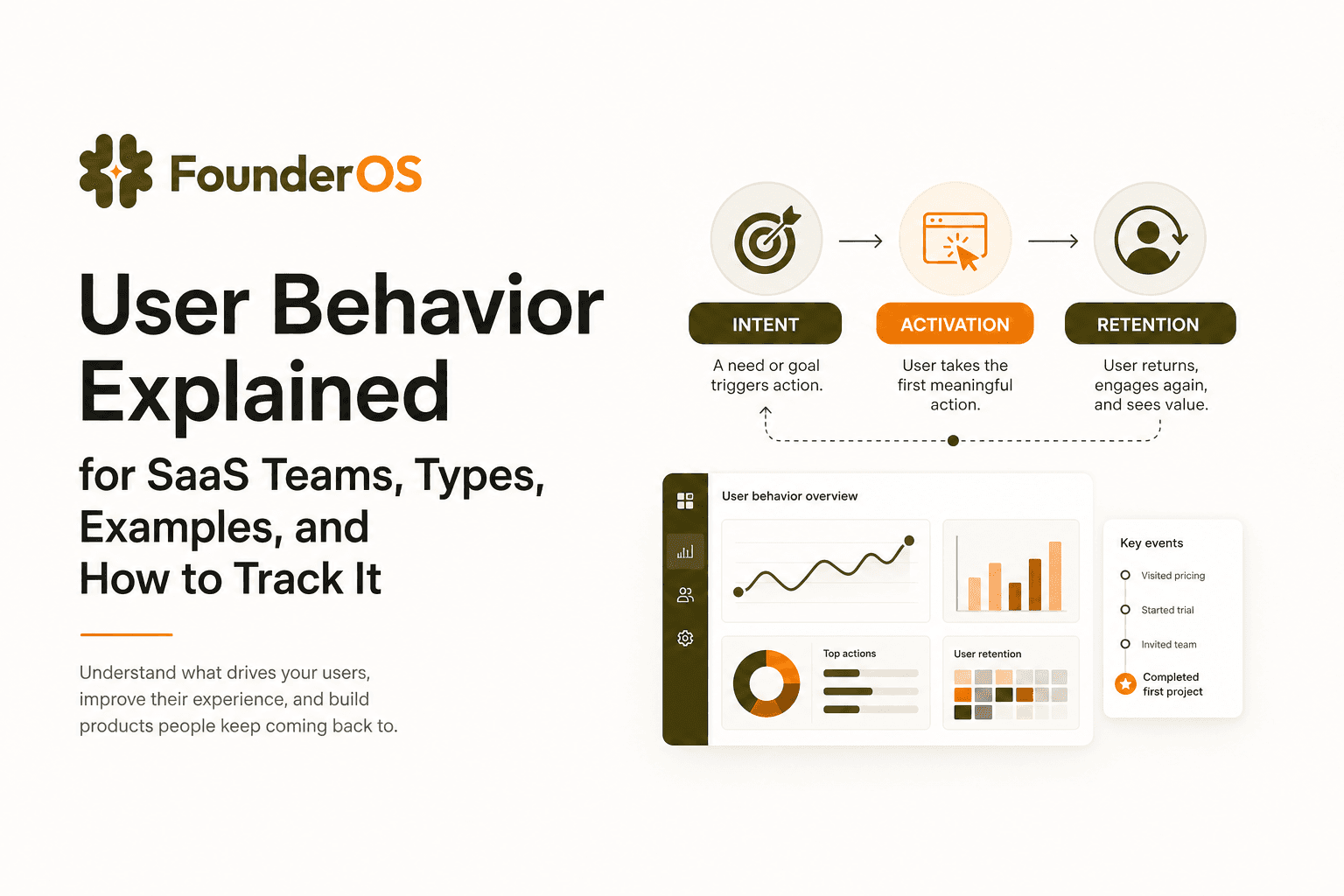
User Behavior Explained for SaaS Teams, Types, Examples, and How to Track It
Learn what user behavior means in SaaS, the key types, and a practical event tracking playbook to turn user behavior into product decisions.