
Lead Scorecard Template for B2B SaaS, A Practical Worksheet for Fit, Engagement, and Routing
A lead scorecard gives B2B SaaS teams a repeatable way to evaluate prospects by fit, product engagement, and buying signals before routing them to sales. A practical lead scorecard combines clear criteria, weighted points, score bands, and action rules so teams can move from subjective qualification to consistent decisions.
- A strong scorecard balances company fit, user behavior, and negative signals instead of relying on one activity metric.
- Scoring rules should connect directly to routing actions, such as nurture, sales review, or priority outreach.
- Regular validation against customer outcomes keeps the model accurate as products, markets, and buyer behavior change.
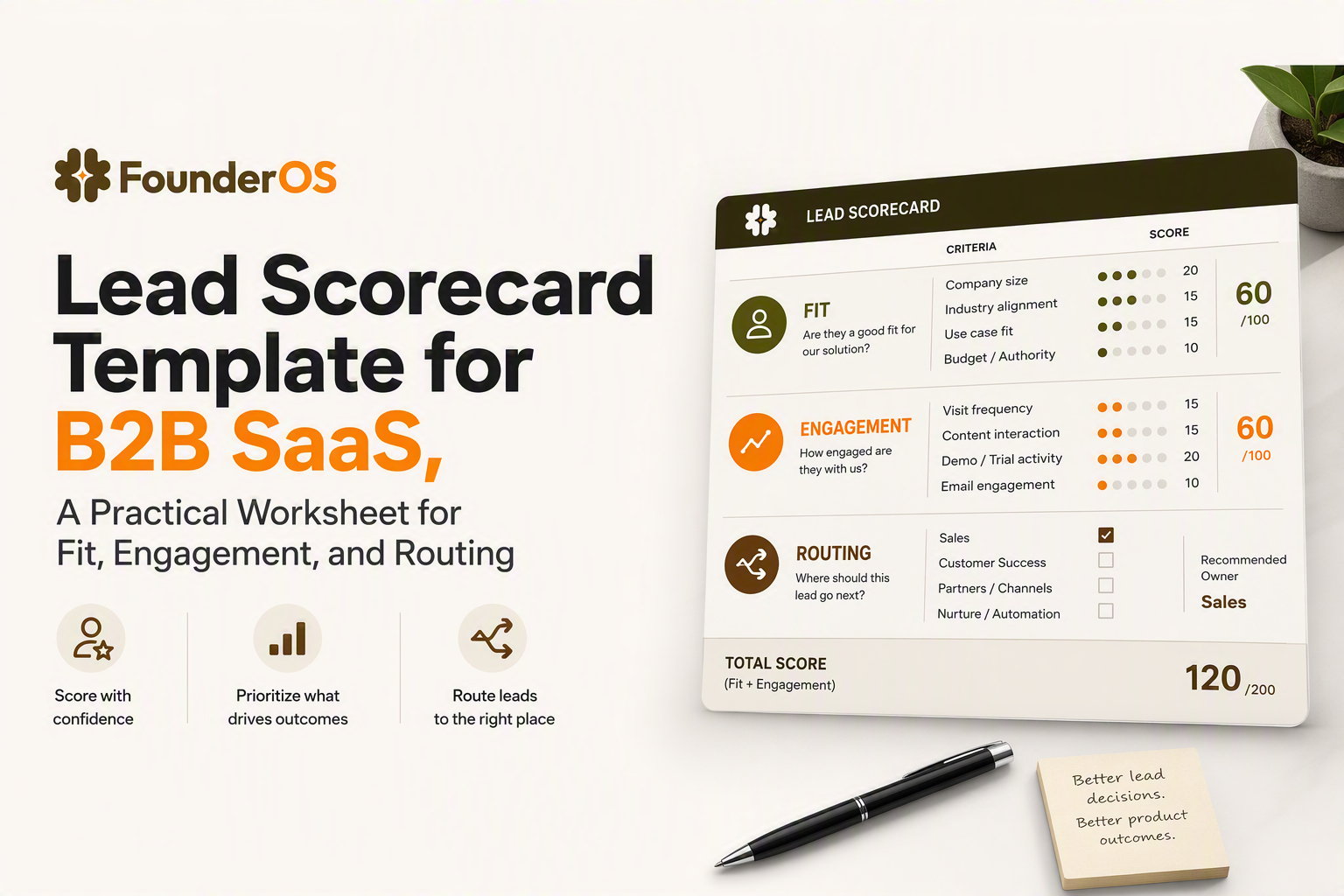
Build a Lead Scorecard With Fit, Engagement, and Negative Signals
A reliable lead scorecard starts with three categories: business fit, product engagement, and negative signals that reduce buying confidence. The goal is not to create the most complicated model, but to create a scoring worksheet that matches how your team actually wins customers.
Use a weighted scoring worksheet
A reusable framework can look like this:
| Category | Criteria | Weight | Score Range | Action Trigger |
|---|---|---|---|---|
| Fit | Target industry, company size, role, budget alignment | 40% | 0-40 points | High-fit accounts receive sales review |
| Engagement | Product usage, key feature adoption, content interaction | 45% | 0-45 points | High activity triggers outreach |
| Negative signals | Low authority, poor match, inactivity | 15% | -15 to 0 points | Reduce priority or enter nurture |
Many teams also combine scoring with lead grading so they separate account quality from immediate buying activity. The scorecard should answer two questions: Is this the right customer, and is this the right moment?
In our experience working with SaaS growth teams, the biggest scoring errors happen when teams reward activity without checking whether those actions come from customers who match their ideal profile.
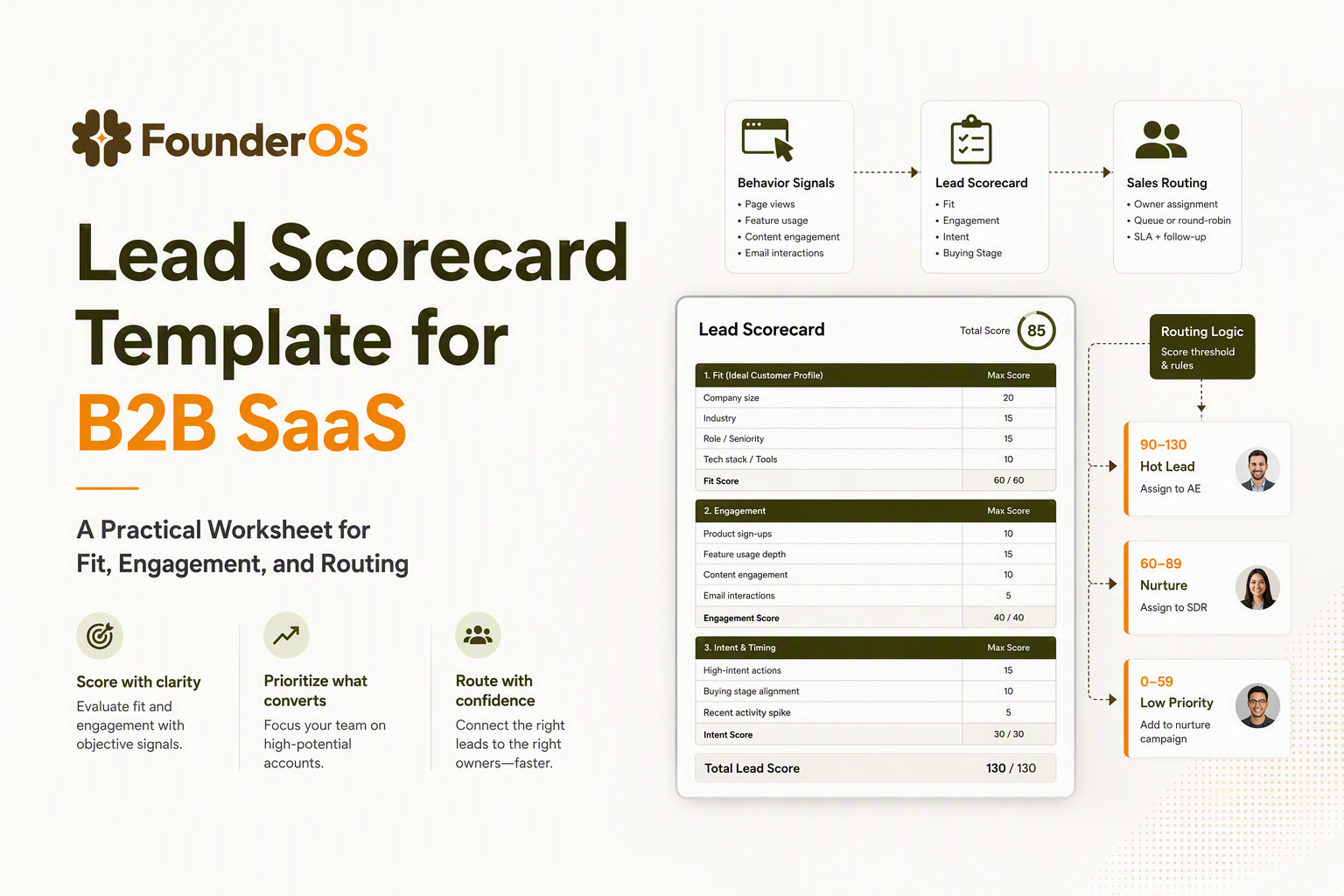
Define practical score bands
A simple routing model can use three bands:
- 80-100 points: sales-ready priority lead with personalized outreach.
- 50-79 points: marketing-assisted opportunity requiring additional qualification.
- Below 50 points: nurture until stronger signals appear.
Calculate a Lead Scorecard Example From First Visit to Routing
A lead scorecard calculation should follow the full buyer journey, from initial visit through the final routing decision. A worked example helps teams test whether scoring rules match real buying patterns.
Example B2B SaaS lead calculation
Assume a visitor named Alex works as a product manager at a 150-person SaaS company.
- Company fit: target SaaS segment (+20 points).
- Role match: product decision-maker (+15 points).
- Visited pricing page twice (+10 points).
- Created an account and completed onboarding (+25 points).
- Used the core reporting feature (+15 points).
- No activity for 30 days (-10 points).
Total score: 75 points. The correct action is not immediate sales escalation. The lead has strong fit and meaningful product behavior but needs a reactivation signal before becoming a top priority.
When we tested behavior-based scoring, our team found that product actions created clearer qualification signals than page visits alone because usage showed actual user intent.
Connect scores to routing rules
A score is only useful when it creates a workflow. Define ownership before launch:
- Sales owns leads above the priority threshold.
- Growth teams handle users showing engagement but missing fit.
- Automated nurture handles low-intent or incomplete profiles.
Choose the Right Lead Scorecard Model for Your Data Maturity
The right lead scorecard model depends on available data, team resources, and reporting maturity. Rule-based scoring, predictive models, and AI-assisted approaches solve different problems.
Compare scoring approaches
| Model | Best For | Data Needed | Main Tradeoff |
|---|---|---|---|
| Rule-based | Early SaaS teams | CRM fields and basic behavior data | Requires manual updates |
| Predictive | Growing teams with historical wins | Large customer datasets | Needs reliable training data |
| AI-assisted | Teams combining multiple signals | Behavior, account, and revenue data | Requires governance and review |
Teams building product-led motions often need behavioral context, not just CRM fields. analytics events tracking helps connect actions such as feature usage and activation milestones with qualification signals.
Our team has seen better scoring decisions when product behavior is connected with user identity and account context instead of stored as isolated events. Founder OS supports this workflow with Product Tracking, User Profile Tracking & User Segmentation, and GTM Report capabilities that help teams organize product signals for growth decisions.
Launch, Validate, and Refresh the Lead Scorecard Before It Gets Stale
A lead scorecard needs regular validation because customer behavior, pricing, and acquisition channels change over time. A quarterly review cycle is a practical starting point for most SaaS teams.
Create a governance checklist
- Review top converted accounts and compare their scores.
- Remove signals that no longer predict buying behavior.
- Check whether sales accepts the routing thresholds.
- Adjust score decay rules for inactive users.
A useful validation process compares predicted quality with actual outcomes. For example, review closed-won accounts, sales-qualified opportunities, and inactive leads to identify which criteria need more or less weight.
We initially assumed more activity always meant higher intent, but our analysis showed that repeated actions from poorly matched accounts often created noise. The better approach was combining engagement with customer fit.
Frequently Asked Questions About Lead Scorecards
Build a more reliable qualification process by connecting your lead scorecard with real product behavior. Founder OS helps B2B SaaS teams capture user activity, create behavioral segments, and turn product signals into clearer GTM decisions. Start using better product insights to improve how you score, qualify, and route leads.
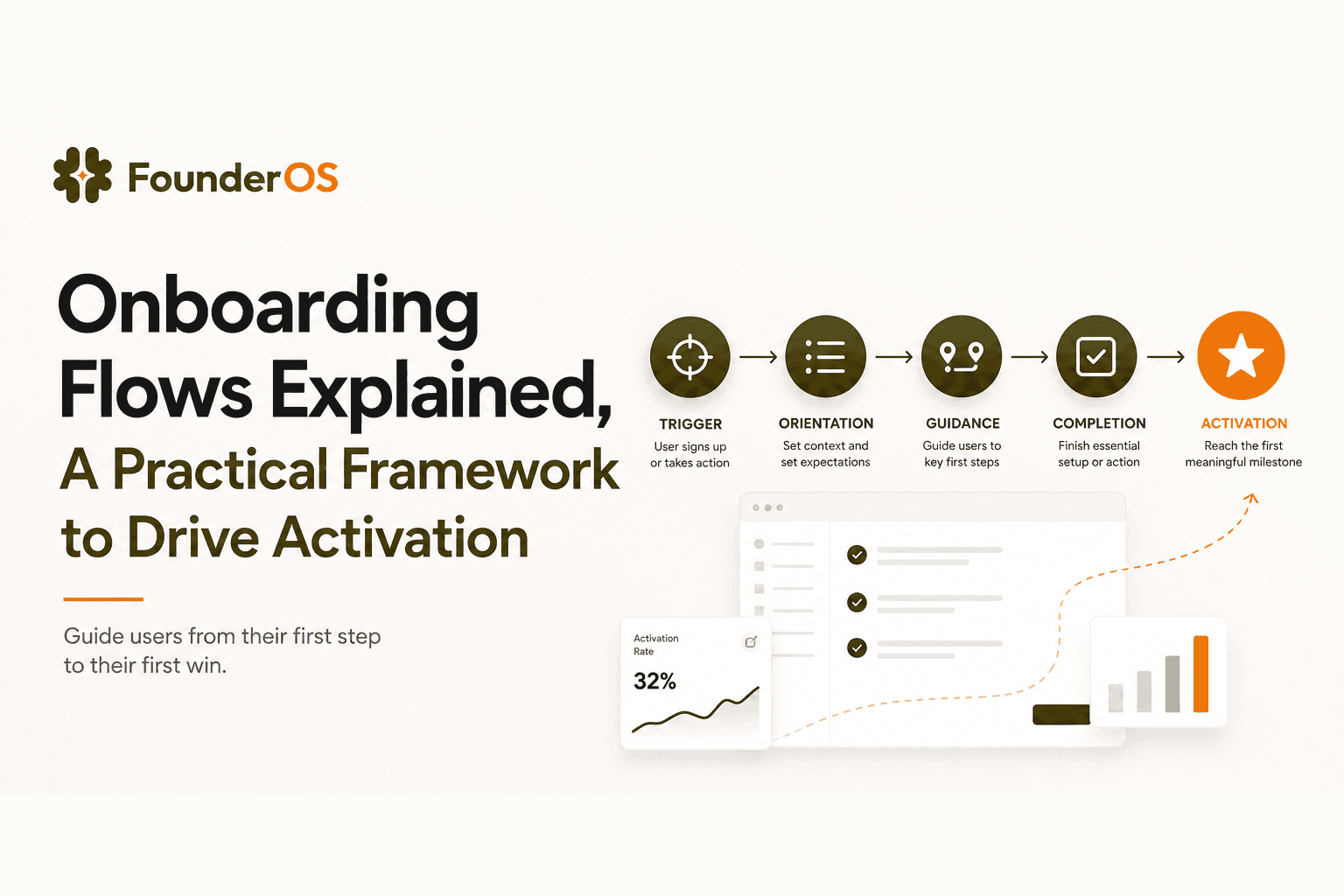
Onboarding Flows Explained, A Practical Framework to Drive Activation
Learn onboarding flows for B2B SaaS with a practical framework to design, segment, and measure flows that improve activation, not just completion.
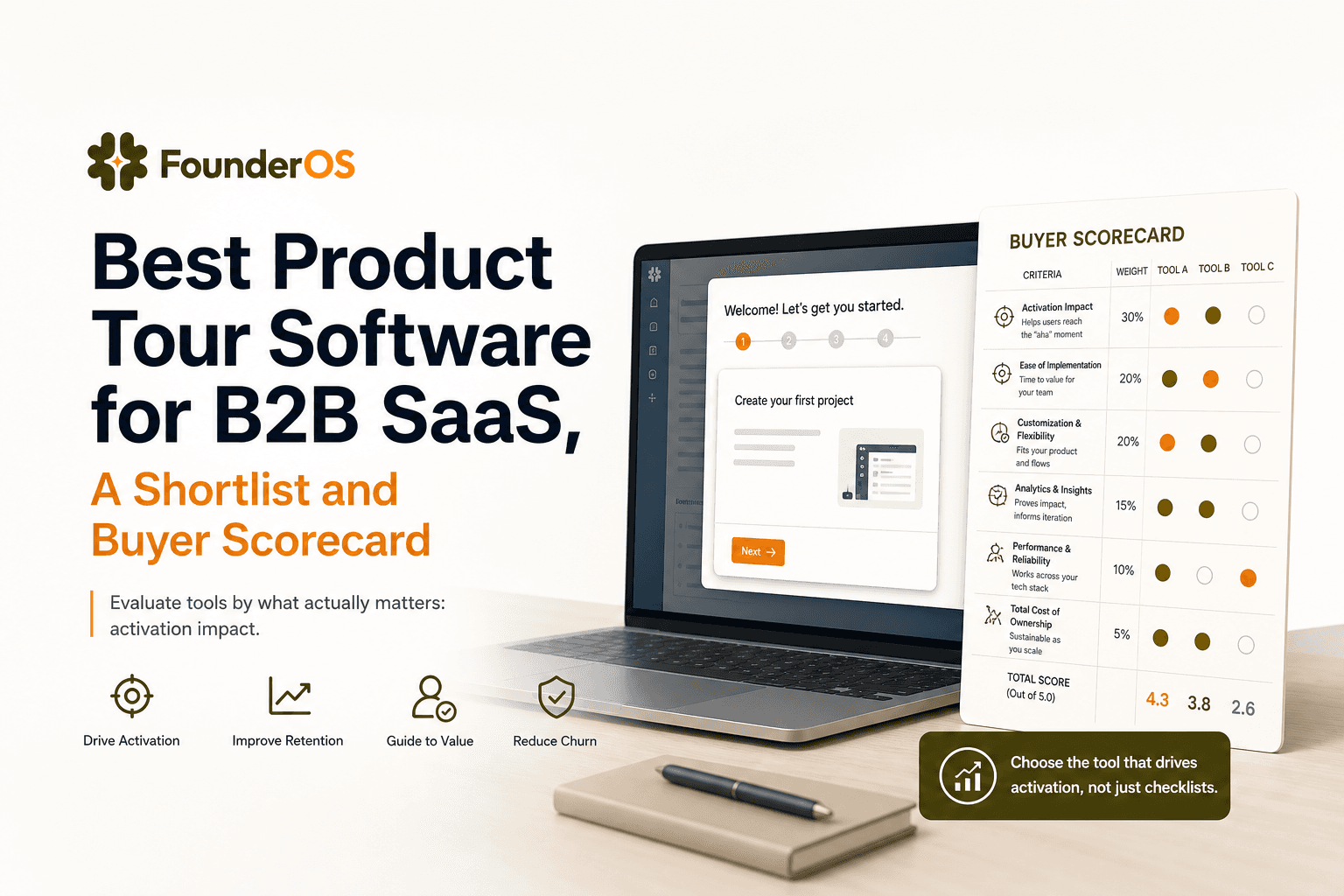
Best Product Tour Software for B2B SaaS, A Shortlist and Buyer Scorecard
Pick the best product tour software with a 10-point scorecard, shortlist by use case, and a 7-day validation plan for B2B SaaS activation.
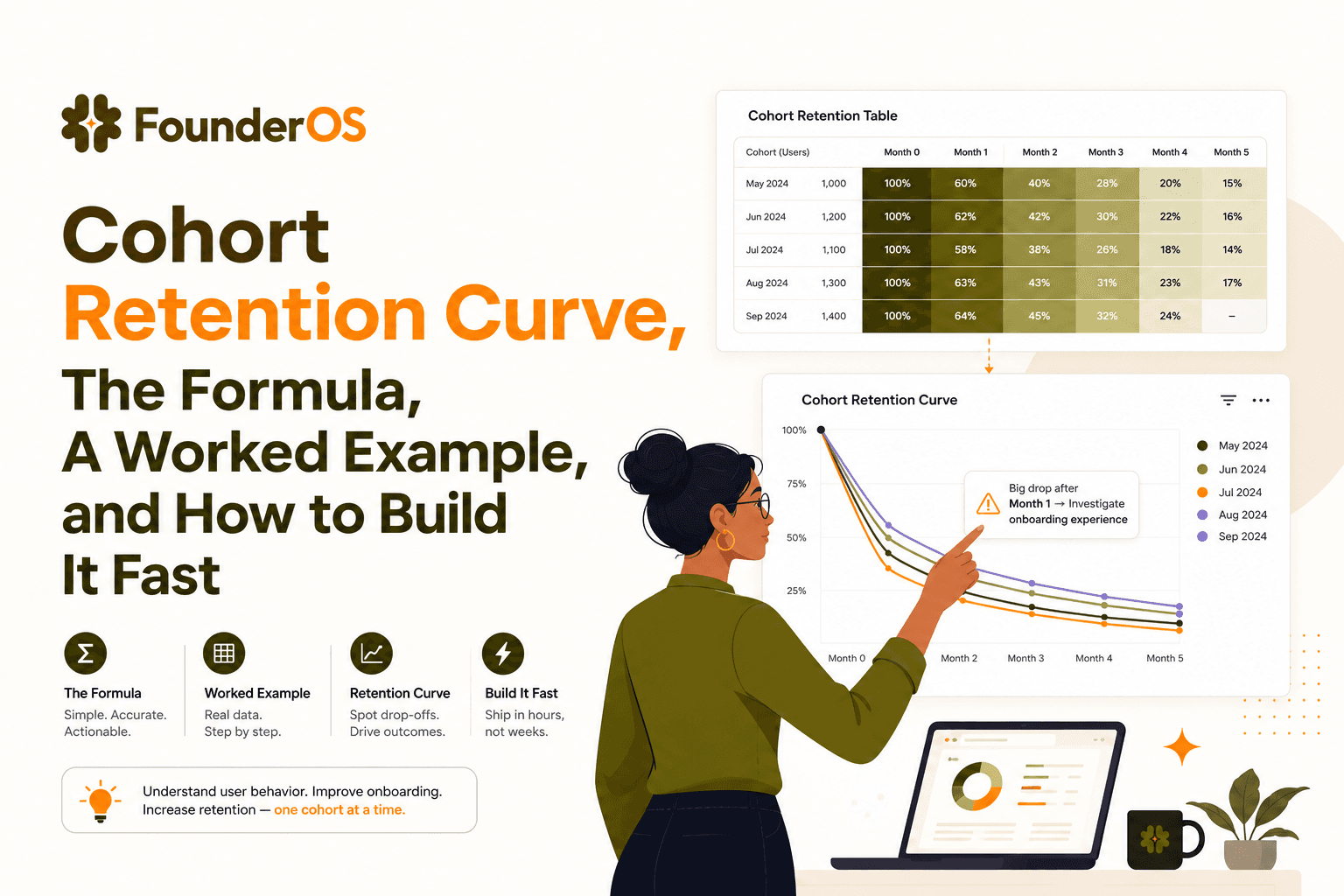
Cohort Retention Curve, The Formula, A Worked Example, and How to Build It Fast
Learn cohort retention curve inputs, formulas (bounded vs unbounded), a worked example from events to curve, plus fast setup steps.