
Mixpanel Product Analytics vs Modern Alternatives, What Actually Matters for B2B SaaS
If you are evaluating mixpanel product analytics for your B2B SaaS, the real decision is not dashboards versus dashboards. It is whether your tracking model, identity resolution, and cost structure will let you answer activation questions fast enough to change onboarding, pricing, and GTM execution before you burn budget and pipeline.
- Choose Mixpanel when you have stable event discipline, predictable volume, and a team that will actively maintain tracking and governance.
- Modern alternatives win when speed-to-insight, identity stitching, and cost predictability matter more than deep historical customization.
- De-risk any switch with a 30-day parallel run, KPI baselines, and a small set of activation metrics tied to revenue outcomes.
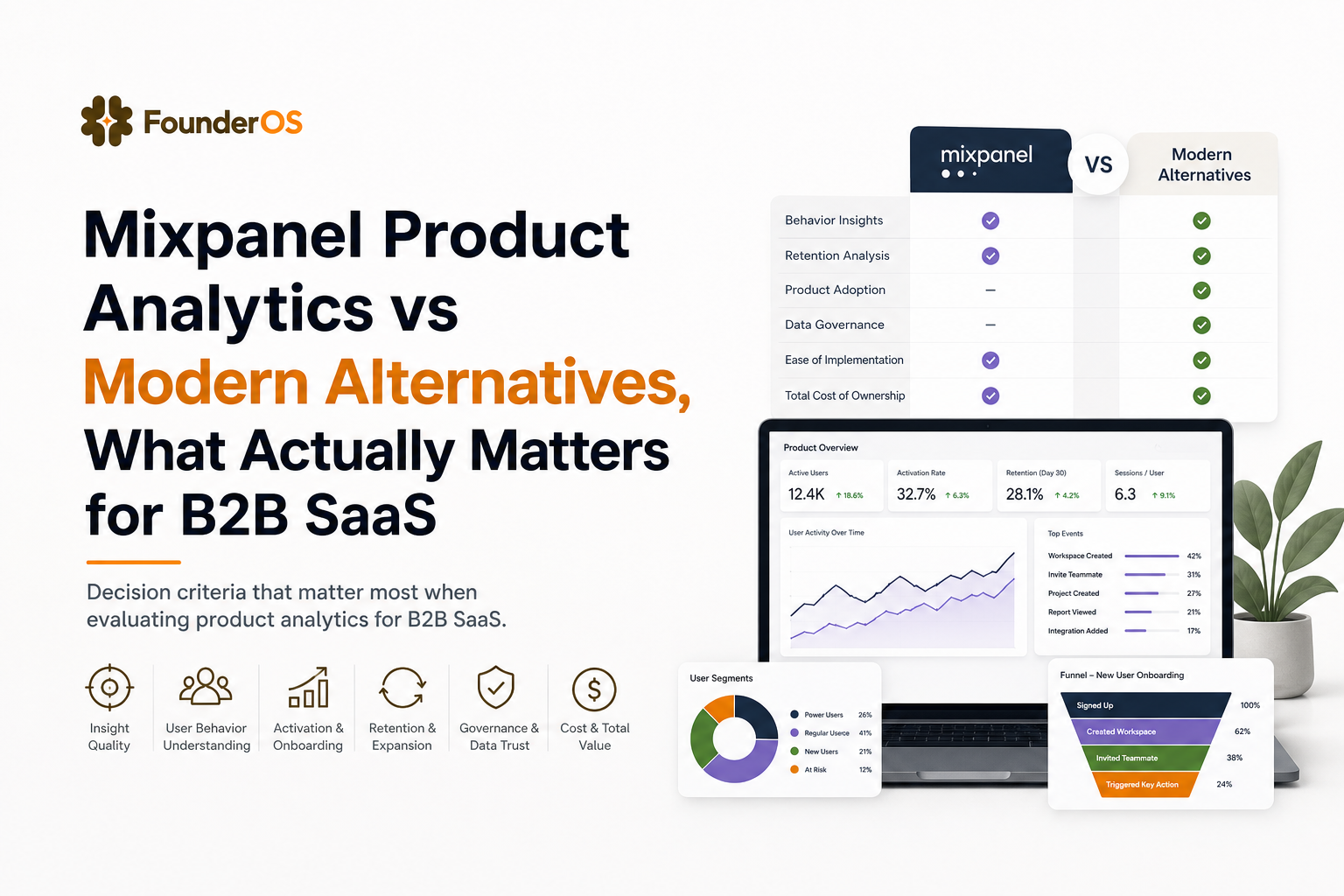
The agitation: Why mixpanel product analytics is costing you money, time, and pipeline
Most teams do not fail at product analytics because they lack charts. They fail because the analytics system becomes a tax on shipping. When mixpanel product analytics (or any event-based tool) is not aligned with your reality, the cost of inaction shows up in four places that hit founders directly:
- Wasted paid acquisition: You keep buying traffic because “signups look fine,” but activation is quietly collapsing at a specific step. If your activation rate drops from 25% to 18% and you spend $30k/month on acquisition, you are effectively paying for ~39% more signups to get the same number of activated users.
- Slow product decisions: If it takes 2 weeks to define events, QA them, and build a usable report, your team will ship onboarding changes without feedback loops. That is how “we improved the tour” turns into “we shipped noise.”
- Broken identity and false conclusions: If anonymous-to-known stitching is inconsistent, you will misread conversion rates, cohort retention, and attribution. That leads to the worst kind of confidence: confident, wrong decisions.
- Unpredictable analytics spend: Event-based pricing can punish success. A feature that increases engagement can double events overnight. Your analytics bill spikes, and the team starts sampling, removing events, or avoiding instrumentation. That is how you end up managing costs instead of managing growth.
The uncomfortable truth: the longer you delay fixing the analytics fit, the more your onboarding and GTM decisions drift away from what users actually do. That drift compounds into churn, lower expansion, and sales cycles that get longer because product value is harder to prove.
When Mixpanel Product Analytics is the right choice (and when it is not)
mixpanel product analytics is often a strong choice when you have the maturity to keep event tracking clean and the organization will use it consistently. But it is not always the best fit for lean B2B SaaS teams that need answers in days, not quarters.
Choose Mixpanel when these conditions are true
- You have stable core workflows: Your product’s key journey is not changing weekly. You can define a durable event taxonomy and keep it consistent.
- You can support governance: Someone owns naming conventions, identity rules, and “what counts” as activation. Without this, any analytics tool becomes a junk drawer.
- You need deep behavioral slicing: You will actively use cohorts, retention, and multi-step analysis to drive roadmap and lifecycle decisions.
- Your volume is predictable: You can forecast event growth so pricing surprises do not trigger “instrumentation austerity.”
Consider modern alternatives when you see these failure modes
- Time-to-first-insight is too slow: If it takes more than a day to answer “where do new users drop off,” you will stop asking questions.
- Engineering becomes the bottleneck: If every new question requires a tracking sprint, analytics becomes a quarterly project instead of a daily habit.
- Identity is messy by design: B2B SaaS often has multiple users per account, invites, role changes, and SSO. If you cannot reliably connect person-level behavior to account outcomes, you will struggle to tie product usage to revenue.
- GTM needs activation workflows: If you need segments that immediately drive in-app onboarding, alerts, or lifecycle plays, you may want a lighter system that connects behavior to action faster.
Quick audience mapping (because “right fit” depends on who is using it): Product teams tend to win with Mixpanel when they are diagnosing onboarding and feature adoption step-by-step; Data teams win when they can enforce consistent definitions and keep identity clean across anonymous → known; Marketing/Growth wins when channel quality is measured by activation or proof events (not just signups); and Engineering wins when instrumentation is treated like a maintained interface and release impact can be checked quickly. If those owners and habits are not real in your org, the tool choice will not save you.
The evaluation checklist for mixpanel product analytics alternatives
This checklist is designed for B2B SaaS founders and GTM leads who care about activation, retention, and revenue linkage. Score each criterion 1 to 5. Then multiply by the suggested weight to force tradeoffs.
1) Tracking model fit (weight 25%)
- Autocapture vs explicit events: Can you get useful signals (page views, clicks, forms) without weeks of tagging?
- Custom events without schema friction: Can a developer add a critical event in minutes, with consistent naming?
- Data quality controls: Can you prevent duplicates, noisy events, or inconsistent properties from polluting reports?
Benchmark: if your “signup to first value” journey needs more than 15 to 25 core events to understand, you likely have a modeling problem, not a tooling problem.
2) Identity resolution for B2B (weight 25%)
- Anonymous to known stitching: Does the tool reliably merge pre-signup behavior with post-signup users?
- Person vs account views: Can you analyze behavior at both user and workspace/account level?
- Invite and role-change handling: Does identity stay consistent when users join an existing account or switch organizations?
Practical test: pick 20 recent closed-won accounts and verify you can trace “first activation moment” and “feature adoption in week 1” at the account level without manual spreadsheet work.
3) Speed-to-insight and collaboration (weight 20%)
- Time from install to usable dashboard: Can a founder see drop-offs the same day?
- Drill-down to real sessions/users: Can you go from aggregate drop-off to the exact users who churned from the flow?
- Shareable reporting: Can GTM, product, and success teams align on the same definitions without meetings?
Benchmark: if your team cannot answer “what changed in activation this week” in under 30 minutes, you are not operating with a real feedback loop.
4) Segmentation and activation workflows (weight 20%)
- Behavioral segments: Can you segment by sequences, recency, and frequency, not just user traits?
- Real-time updates: Do segments refresh automatically as users act?
- Downstream action: Can segments feed onboarding, alerts, or lifecycle plays without manual exports?
For deeper segmentation strategy, see user segmentation.
5) Cost predictability and governance (weight 10%)
- Pricing tied to value, not noise: Will a UI change that increases clicks double your cost?
- Role-based access and auditability: Can you control who changes definitions and who can export data?
- Data retention and export: Can you keep history and avoid lock-in for critical metrics?
Experienced B2B founders often discover that the metric that predicts conversion is not the first key action, it is how fast a user can prove the product works in their environment. In analytics terms, define a “proof event” (e.g., first successful integration, first report generated, first teammate invited) and measure median time-to-proof by segment. Improvements here usually lift activation and sales velocity together, while reducing support load.
Shortlist of mixpanel product analytics alternatives for B2B SaaS GTM teams
Alternatives usually fall into categories rather than one-to-one replacements. The point is to match your constraints: speed, identity complexity, and activation execution.
- Lightweight product analytics with fast setup: Best when you need answers quickly and do not want long instrumentation cycles.
- Warehouse-first analytics: Best when you already have strong data engineering and need full control over modeling and costs.
- GTM activation-focused stacks: Best when the goal is not just insight, but turning segments into onboarding and lifecycle actions.
Before you shortlist vendors, do one integration/stack sanity check (this is where many “easy” trials fall apart): verify you can send behavioral segments to your CRM (so sales sees product-qualified signals), your marketing automation (so lifecycle messaging is behavior-based), and ideally your data warehouse (so product usage can be joined to revenue). Also confirm how the tool handles webhooks or reverse ETL for downstream destinations, and who is the source of truth for identity (app, CRM, or warehouse). Ask vendors to show the exact flow for “segment → destination,” not just a dashboard screenshot.
If you want a structured comparison mindset, see product analytics platforms and this decision guide on amplitude vs mixpanel.
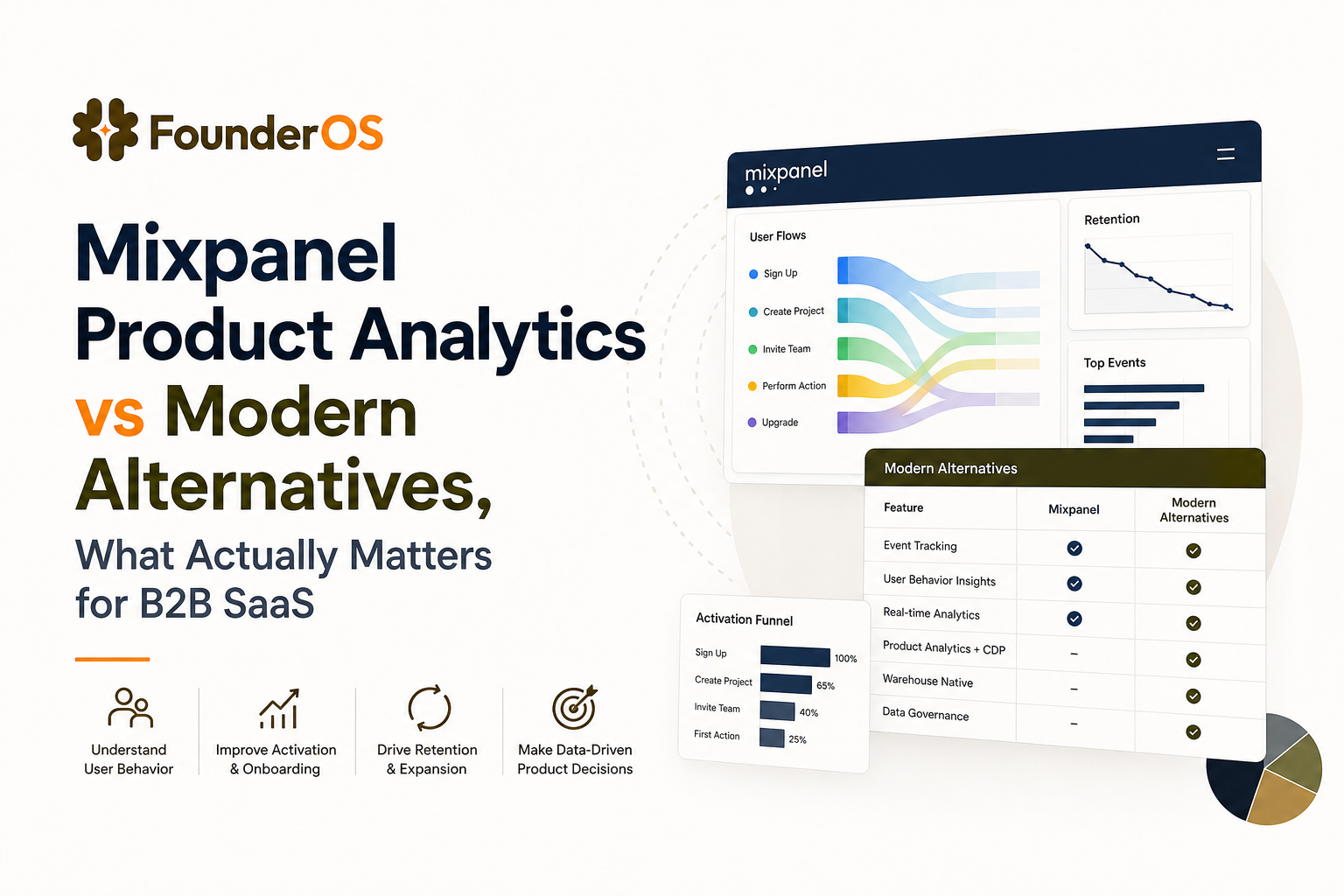
| Decision criterion | Mixpanel product analytics tends to fit when | Modern lightweight alternatives tend to fit when | Warehouse-first tends to fit when |
|---|---|---|---|
| Speed-to-insight | You can invest in consistent instrumentation and ongoing upkeep | You need usable signals same day, minimal setup, fewer dependencies | You can wait longer for modeled datasets and BI layers |
| Identity complexity (B2B accounts) | Your identity rules are well-defined and maintained | You want simpler identity workflows and fast verification at user and account level | You need custom identity modeling across multiple systems |
| Activation execution | Insights are enough; action happens in separate tools | You want segments to directly drive onboarding and GTM actions | You have in-house systems to operationalize segments |
| Cost predictability | You can forecast event growth and accept usage-based variability | You need tighter control and fewer surprise spikes from increased engagement | You want to manage costs via warehouse compute and storage choices |
| Governance and change management | You have owners for taxonomy, definitions, and QA | You want guardrails that reduce maintenance overhead | You enforce governance through data contracts and pipelines |
If you are switching, de-risk the migration and prove ROI in 30 days
Switching away from mixpanel product analytics fails when teams migrate everything. Successful teams migrate only what proves value fast, then expand.
Step 1: Define the minimum viable event taxonomy (Day 1 to 3)
- Pick one activation journey: “signup to proof” or “invite teammate to value.”
- Define 8 to 12 events max, each with 3 to 6 properties.
- Write acceptance tests: what counts, what does not, and how identity is assigned.
If your funnels are unclear, use a diagnostic approach like this funnel analysis playbook.
Step 2: Run a parallel implementation (Day 4 to 14)
- Keep current tracking running.
- Instrument the minimum taxonomy in the new tool.
- Compare 3 metrics daily: activation rate, median time-to-proof, and week-1 retained usage of the core feature.
Success milestone: metric deltas between systems should be explainable. If not, you have an identity or definition mismatch that must be resolved before you trust any dashboard.
Step 3: Establish KPI baselines tied to revenue (Day 10 to 20)
- Baseline conversion from activated user to qualified lead or sales conversation.
- Baseline expansion signal: accounts that adopt Feature X in week 2 have higher upgrade rate.
- Baseline churn risk: accounts with no “proof event” in first 7 days are at risk.
Behavior-based qualification is where analytics becomes GTM leverage. A practical guide is how to identify high intent users in saas.
Step 4: Prove ROI with one activation intervention (Day 20 to 30)
- Create one behavioral segment: “Signed up, did not reach proof event within 24 hours.”
- Ship one change: in-app onboarding prompt, checklist, or guided tour for that segment.
- Measure lift: target a realistic improvement like +10% relative lift in proof completion, or reducing median time-to-proof from 2 days to <1 day.
Only after this works should you migrate the rest of your historical reporting. The goal is not a perfect replica of the old system. The goal is faster decisions with measurable activation impact.
For measurement standards and experimentation discipline, reference the Product Analytics Playbook and event naming guidance similar to what teams discuss in analytics governance communities.
FAQ about choosing Mixpanel and alternatives
If your priority is turning behavior into action, Founder OS is built for fast setup, real-time tracking, and activation execution: capture events quickly, build behavioral segments, diagnose drop-offs, and route insights into onboarding flows so you can improve activation without waiting on long instrumentation cycles.
Written by Ivy Tran
Founder of FounderOS, sharing practical insights on SaaS growth, product analytics, and user activation.
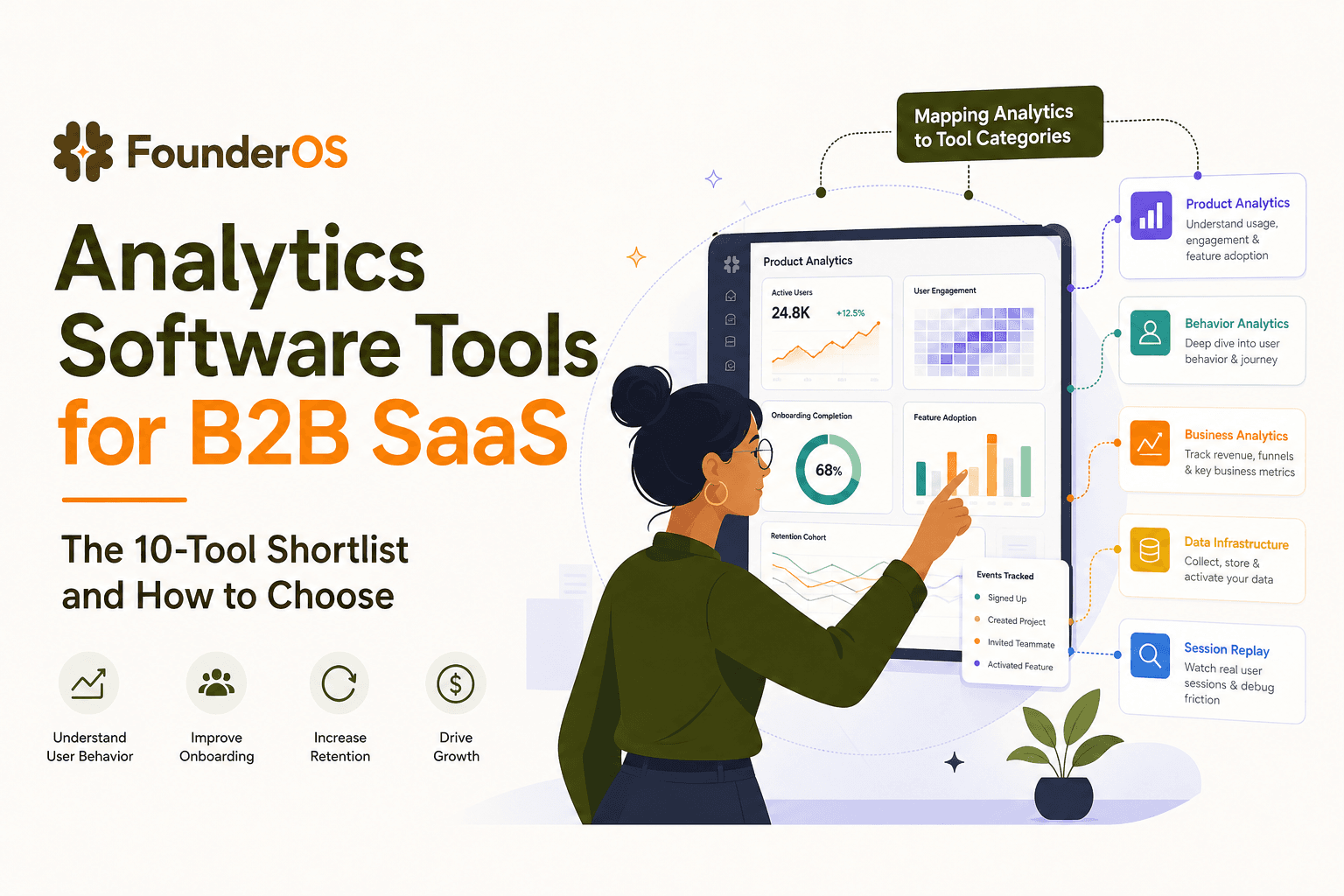
Analytics Software Tools for B2B SaaS - The 10-Tool Shortlist and How to Choose
A BOFU-ready shortlist of analytics software tools for B2B SaaS: 10 picks across categories plus a buyer rubric and rollout plan.

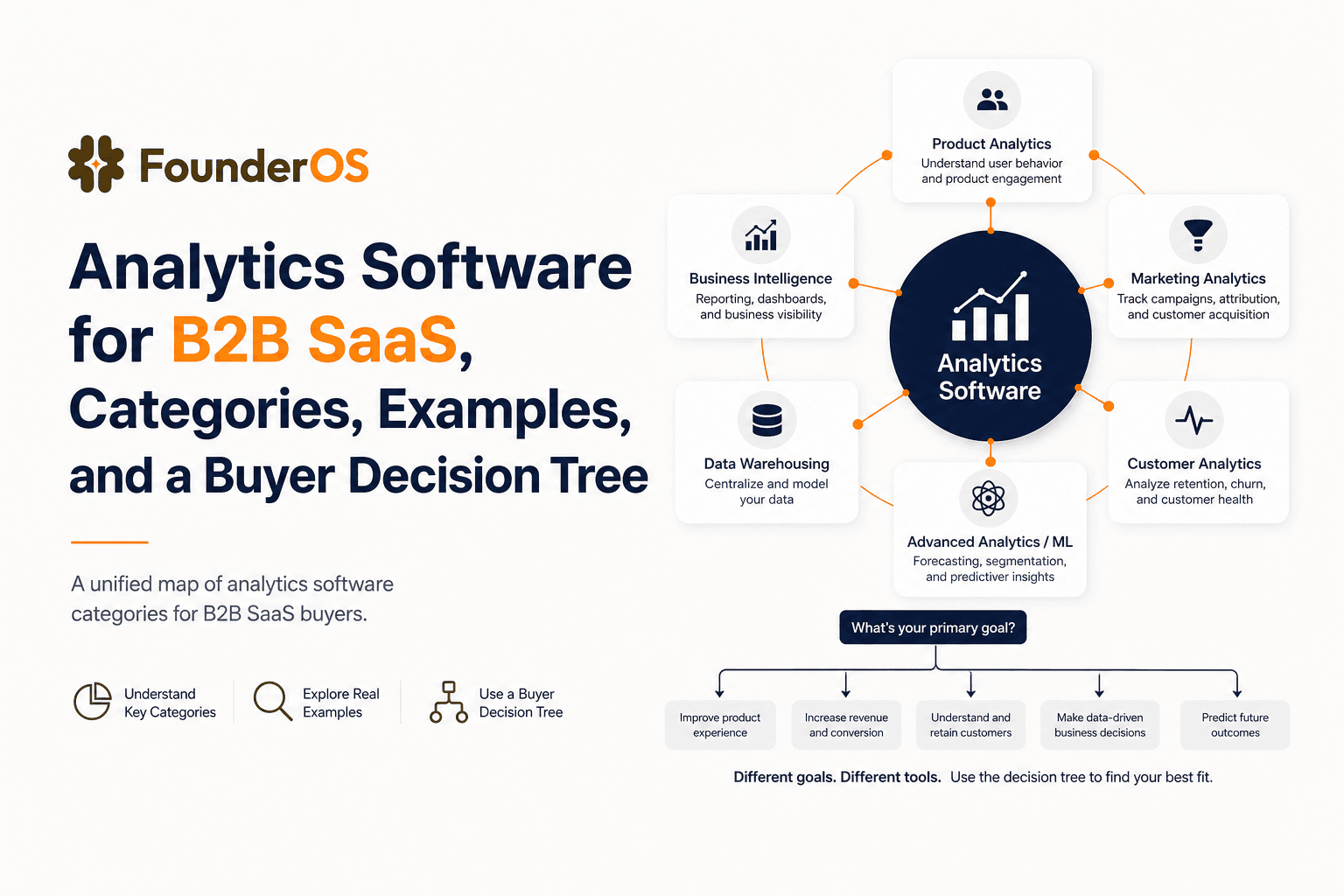
Analytics Software for B2B SaaS, Categories, Examples, and a Buyer Decision Tree
Choose analytics software for B2B SaaS with a clear category map, 10-minute decision tree, real workflows, and a practical buyer checklist.
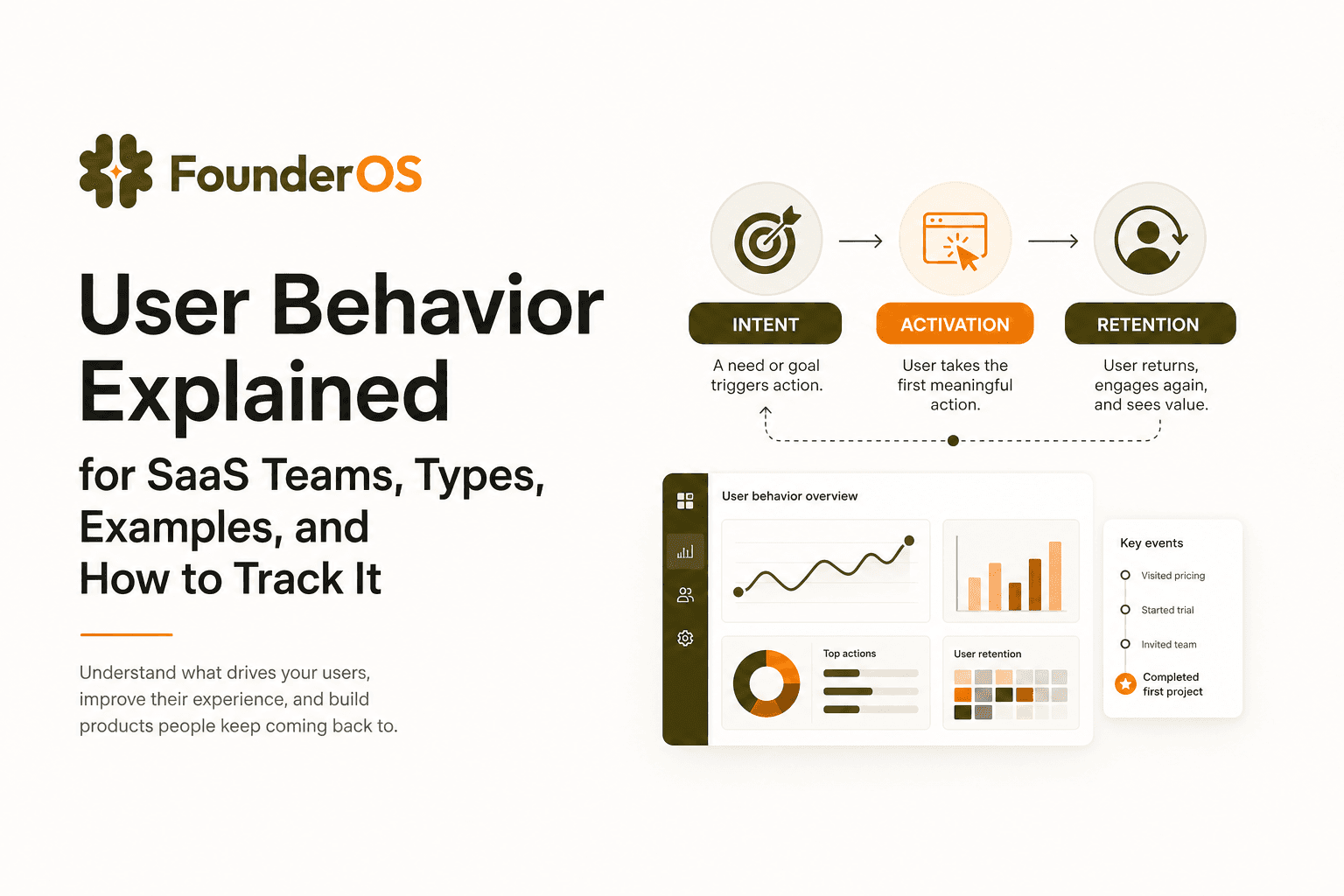
User Behavior Explained for SaaS Teams, Types, Examples, and How to Track It
Learn what user behavior means in SaaS, the key types, and a practical event tracking playbook to turn user behavior into product decisions.