
User Activation Explained for B2B SaaS and a Simple Way to Define Yours
User activation is the moment a new B2B SaaS user first realizes meaningful value, and it is one of the fastest ways to tell whether your product and go-to-market are actually working. If you cannot point to a measurable activation moment, you end up optimizing for signups, onboarding completion, or “time in app” while revenue and retention stay flat.
- User activation is not signup, not onboarding completion, and not generic engagement, it is a specific, measurable value event.
- Pick one activation moment using a simple “value, speed, and repeatability” score, then define 2 to 4 supporting signals.
- Instrument events and run a short activation funnel so drop-offs tell you exactly where new users stall and what to fix first.
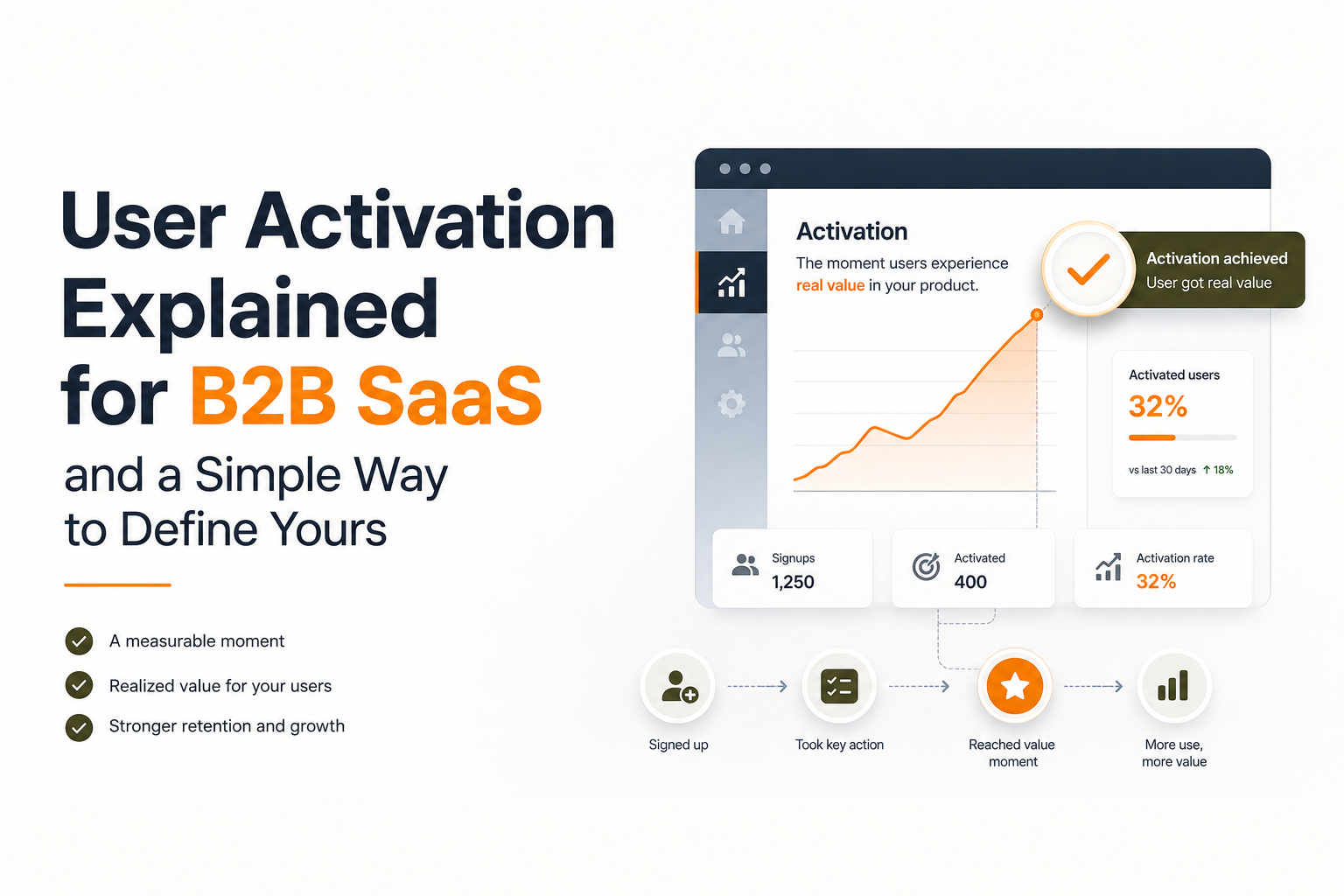
What user activation really means in B2B SaaS and what it is not
Why teams get stuck on the wrong metric
Most B2B SaaS teams want higher “activation,” but measure something else because it is easier to observe. Common substitutes include:
- Signup: an account exists, but value has not happened yet.
- Onboarding completion: a checklist is done, but the user may still not have solved their job-to-be-done.
- Engagement: sessions, page views, or time spent, which can increase even when outcomes do not.
These proxies can be useful diagnostics, but they are not user activation. In B2B SaaS, activation should map to “I got something done” rather than “I clicked around.”
A practical definition you can actually measure
User activation is the first time a new user completes a value event that strongly predicts they will keep using the product and eventually pay or expand. The event must be:
- Observable in product telemetry (an event you can track).
- Value-linked (it represents a real outcome, not a UI interaction).
- Time-bound (you can measure how quickly users reach it).
Examples of measurable activation moments in B2B SaaS:
- A CRM: “first pipeline created” or “first deal moved to stage.”
- An analytics tool: “first event ingested” and “first dashboard viewed with data.”
- A scheduling tool: “first meeting booked with an external attendee.”
- A support platform: “first ticket resolved with automation.”
Why activation matters more than early engagement
When user activation is defined well, it becomes a leading indicator you can improve before revenue shows up. It also creates alignment across product, marketing, and sales because everyone can see the same moment of realized value.
Industry benchmarks vary widely by category and acquisition model, but the general pattern is consistent: the faster users reach a real outcome, the more likely they are to retain. For background on retention and cohort thinking, Amplitude’s guides are a useful reference: Amplitude retention guide.
The cost of fuzzy activation definitions
What happens when “activation” is a vibe
If your definition is vague, you will see symptoms like:
- Growth plateaus even as top-of-funnel volume increases.
- Onboarding debates that never end because no one agrees what “good” looks like.
- Sales friction because trials do not reach a convincing “aha” moment.
- Misleading wins where a UI tweak increases clicks but not retention.
A quick diagnostic checklist
Answer these with a yes or no. If you get fewer than 4 yes answers, your user activation measurement is probably not actionable yet.
- Can we name one event that represents “value realized” for a new user?
- Is that event tracked consistently across web, app, and key devices?
- Do we know the median time-to-activation for new users?
- Can we break activation rate down by channel, persona, and use case?
- Can we see the steps before activation and where users drop off?
- Do we have a weekly owner for activation rate and time-to-activation?
How to choose your user activation moment without guessing
Use the VSR framework to pick the right activation event
To define user activation, start by listing 3 to 7 candidate “value events,” then score each one using three criteria. This keeps you from picking the easiest event to track rather than the best predictor of success.
VSR scoring (1 to 5 each):
- Value: How directly does this event represent the user achieving their desired outcome?
- Speed: Can a legitimate new user reach it quickly (often within the first session or first day)?
- Repeatability: Does reaching this event correlate with repeat usage or expansion behavior?
Rule of thumb: pick the event with the highest total score, then validate it against retention or conversion data once you have a few weeks of cohorts.
Define supporting signals so activation is not a single brittle step
A single event can be too narrow. Add 2 to 4 supporting signals that describe “quality activation” without turning it into a 12-step obstacle course.
Good supporting signals usually fall into these buckets:
- Setup completeness: required configuration that enables value (for example, “connected integration”).
- First output: the user sees a result (for example, “report generated”).
- Collaboration: invites a teammate or shares externally, common in B2B.
- Depth: uses a core feature twice or across two sessions.
Keep the activation definition simple: one primary activation event plus a small set of supporting signals you can segment on.
Concrete example of an activation definition
Imagine a B2B SaaS product that helps teams automate weekly KPI reporting.
- Primary activation event: “first scheduled report delivered to Slack.”
- Supporting signals: “data source connected,” “first dashboard created,” “invited at least 1 teammate.”
This definition is measurable, value-linked, and easy to diagnose when it fails.
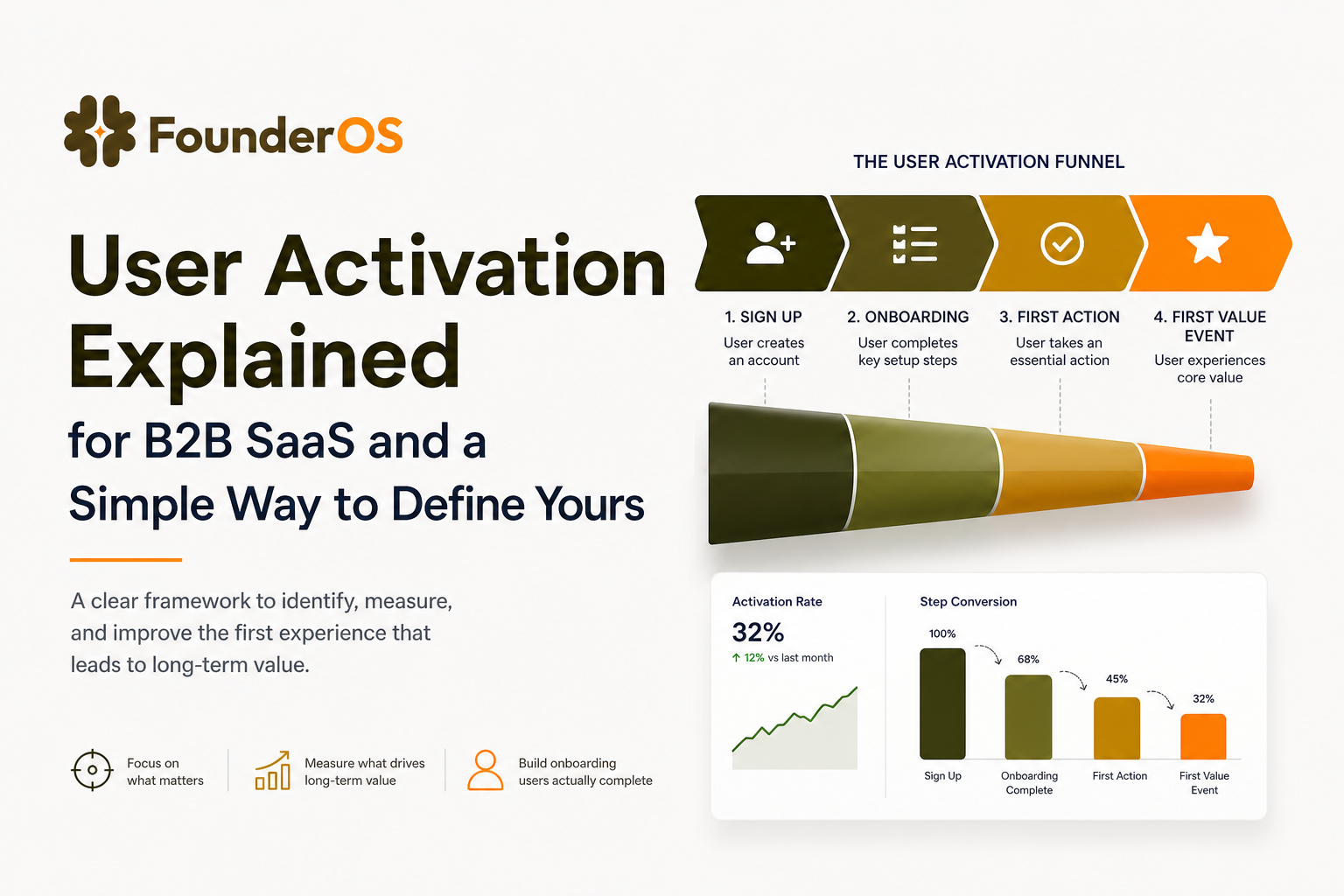
How to measure user activation with event tracking and a simple funnel
Step 1: Instrument events with a minimum viable tracking plan
You do not need hundreds of events to measure user activation. You need the right events, named consistently, with a small set of properties that let you segment later.
Minimum viable activation tracking plan:
- Core events: signup, login, key setup actions, the activation event, and 1 to 3 post-activation events.
- Event properties: plan type, role/persona (if known), acquisition source/UTM, workspace or account id, and any key object ids (project_id, report_id).
- User identity: ensure anonymous-to-known user stitching so you do not lose pre-signup behavior.
If you are also improving onboarding, connect the tracking plan to what users actually see. For deeper implementation guidance, these resources can help align onboarding steps with measurable outcomes: product onboarding best practices and onboarding checklist.
Step 2: Build a short activation funnel (3 to 6 steps)
A useful activation funnel is short enough to interpret and specific enough to diagnose. Start with 3 to 6 steps that represent the critical path to value.
Example funnel:
- Signup completed
- Connected data source
- Created first dashboard
- Scheduled first report
- Activation event: report delivered to Slack
Make sure each step is an event, not a page. Pages are often ambiguous. Events represent intent and outcome.
If you want a more detailed diagnostic approach to interpreting drop-offs, this guide goes deeper: funnel analysis.
Step 3: Interpret drop-offs using three lenses
Once your funnel runs, do not jump straight to redesigning onboarding. Use these three lenses to locate the real constraint behind low user activation.
- Friction lens: Is the step technically hard or confusing? Look for long time gaps and repeated attempts.
- Value clarity lens: Do users understand why the step matters? Drop-offs right after signup often indicate unclear value, not UI issues.
- Fit lens: Are certain channels or personas failing disproportionately? That points to targeting and positioning, not product flow.
Then segment the funnel by:
- Acquisition source (UTM, referral, outbound, partner)
- Persona (admin vs end user)
- Company size or industry
- Trial vs freemium
Step 4: Turn findings into one weekly activation experiment
Low user activation is usually not solved by a single big redesign. It is solved by a sequence of focused fixes. Use this weekly loop:
- Pick one funnel step with the biggest absolute drop-off.
- Write a hypothesis tied to one lens (friction, value clarity, fit).
- Ship one change (copy, default settings, guided step, error handling).
- Measure impact on step conversion and overall activation rate.
If your fix involves in-product guidance, a guided product tour can be effective, especially when it is triggered by behavior rather than shown to everyone.
Tools and workflow notes (keeping it simple)
You can measure user activation with any analytics stack that supports event tracking, user profiles, segmentation, and funnel visualization. The key is speed and consistency: events should appear quickly, identity should be reliable, and you should be able to click from aggregate drop-off into real user sessions or profiles to understand what happened.
For example, some teams use a lightweight setup where a single snippet starts capturing common interactions automatically, then they add a few custom events for the activation path. This reduces the time between “we need to measure activation” and “we can see the funnel” from weeks to days.
| Measurement element | What to define | Common mistake | Better definition |
|---|---|---|---|
| Activation event | One value outcome | “Completed onboarding” | “First report delivered” |
| Time-to-activation | Median and p75 | Only tracking averages | Median plus p75 to spot long-tail friction |
| Activation rate | % of new users activating within a window | No time window | Activate within 1 day, 7 days, 14 days |
| Segments | Persona, channel, company size | Only one global number | Activation rate by cohort and source |
| Funnel steps | 3 to 6 critical events | 10 to 20 steps | Short path that highlights the constraint |
User activation FAQ
If you want to define user activation, instrument the key events, and see exactly where new users stall without waiting on a data team, Founder OS can help you go from install to first insight quickly with event tracking, user profiles, segmentation, and conversion paths that make activation gaps obvious. Start by choosing your activation moment, then measure it consistently week over week.
Written by Ivy Tran
Founder of FounderOS, sharing practical insights on SaaS growth, product analytics, and user activation.
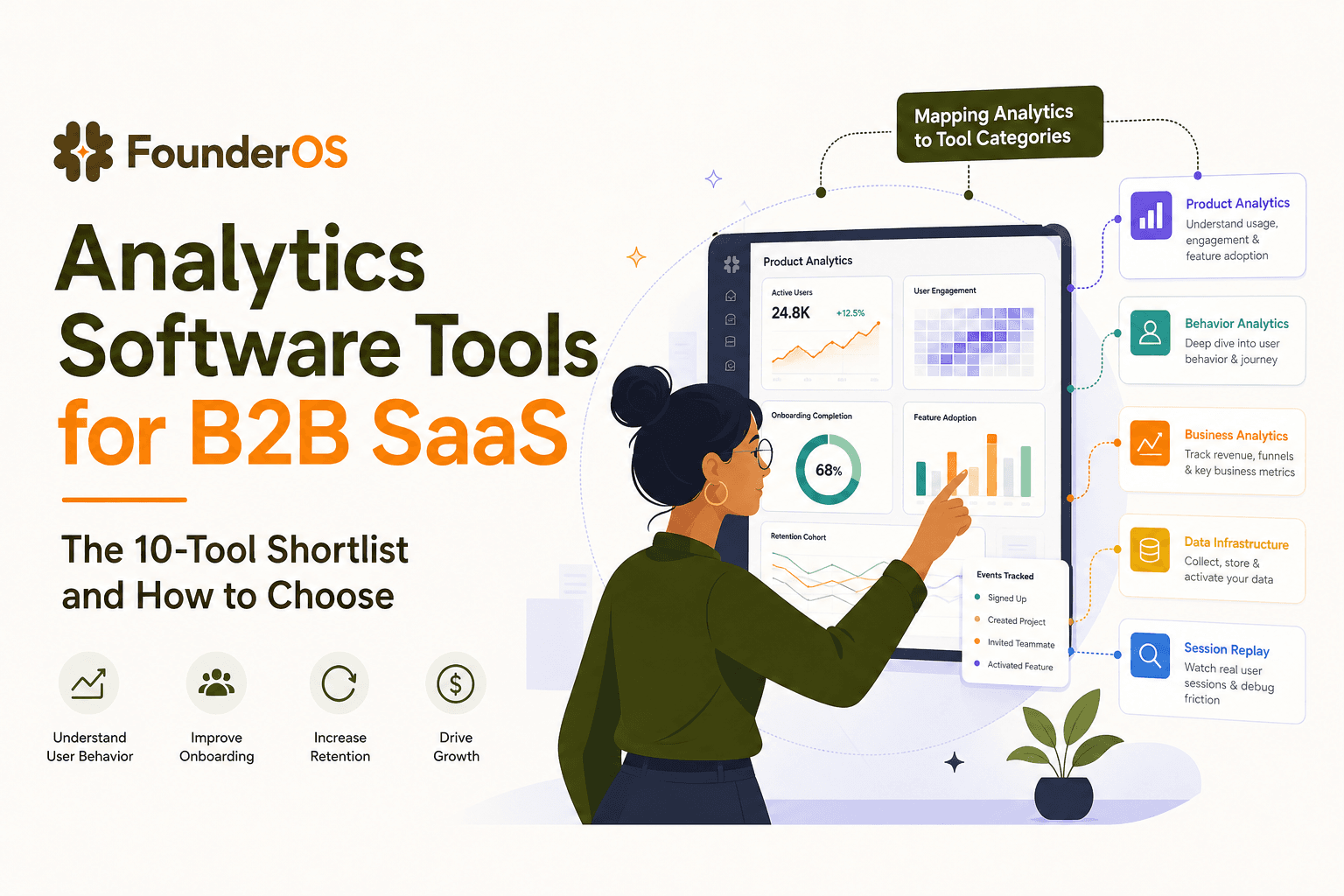
Analytics Software Tools for B2B SaaS - The 10-Tool Shortlist and How to Choose
A BOFU-ready shortlist of analytics software tools for B2B SaaS: 10 picks across categories plus a buyer rubric and rollout plan.

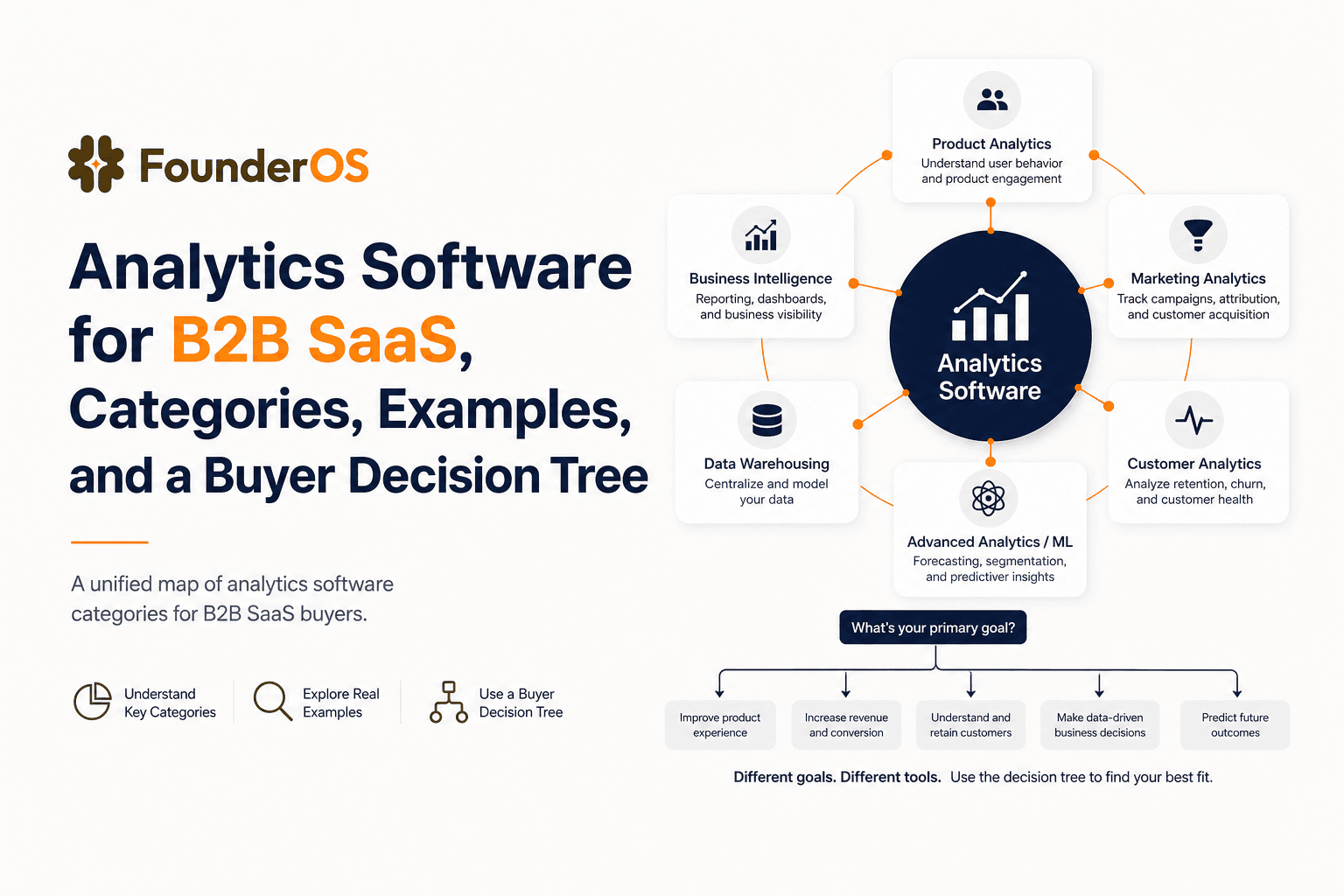
Analytics Software for B2B SaaS, Categories, Examples, and a Buyer Decision Tree
Choose analytics software for B2B SaaS with a clear category map, 10-minute decision tree, real workflows, and a practical buyer checklist.
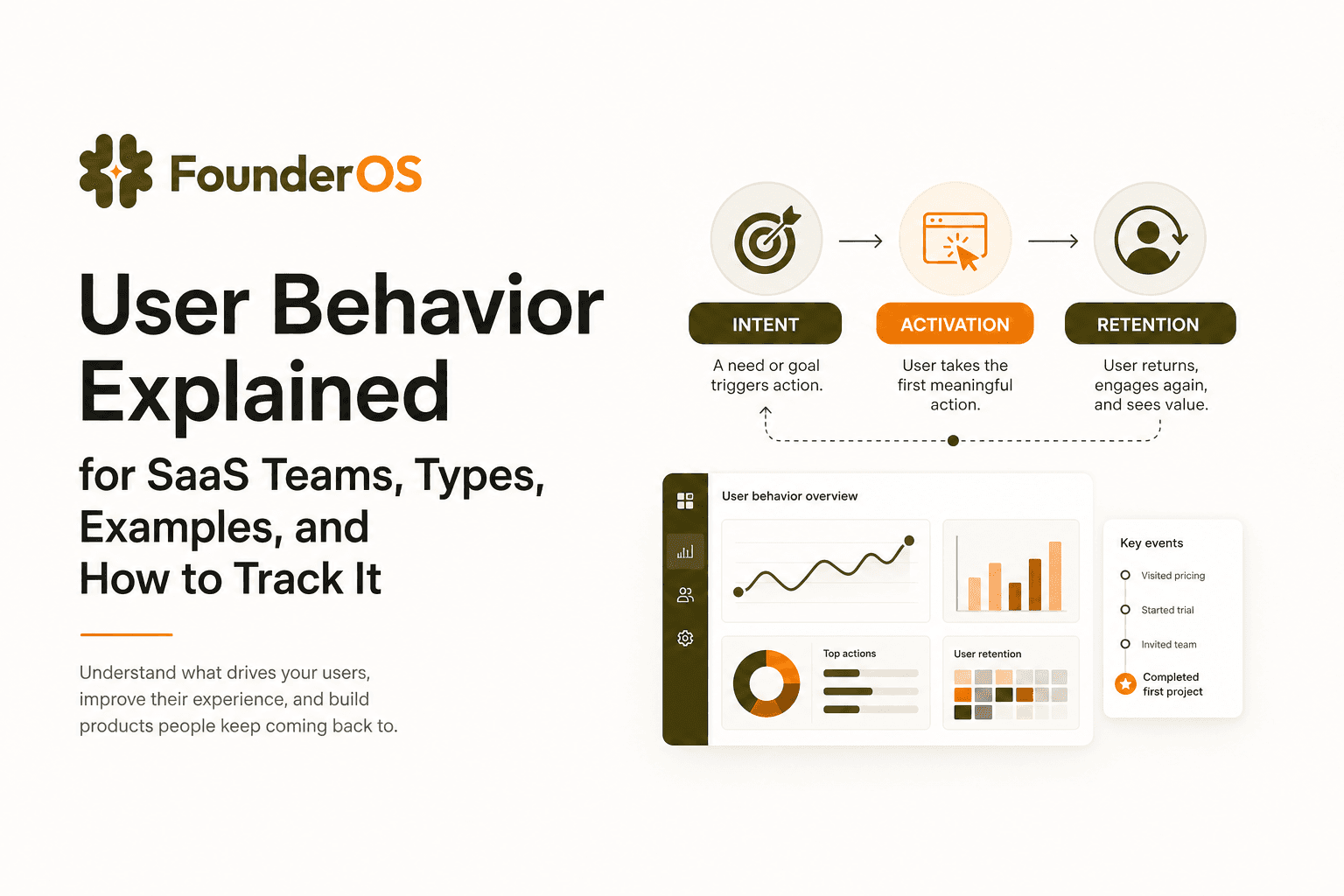
User Behavior Explained for SaaS Teams, Types, Examples, and How to Track It
Learn what user behavior means in SaaS, the key types, and a practical event tracking playbook to turn user behavior into product decisions.