
Enterprise Analytics Platform For B2B SaaS, The Decision Tree and Buyer Checklist
An enterprise analytics platform for B2B SaaS should connect user behavior, product adoption, and revenue decisions through governed data workflows rather than isolated dashboards. Buyers evaluating platforms need a clear category definition, technical requirements, scoring model, and rollout plan before committing budget and engineering resources.
- Select analytics technology based on business questions first, then evaluate architecture, governance, and scale requirements.
- Use a weighted scorecard with security gates, demo tests, and implementation criteria to avoid choosing a tool that becomes shelfware.
- Validate event tracking, segmentation, user profiles, and revenue reporting workflows before signing a platform agreement.
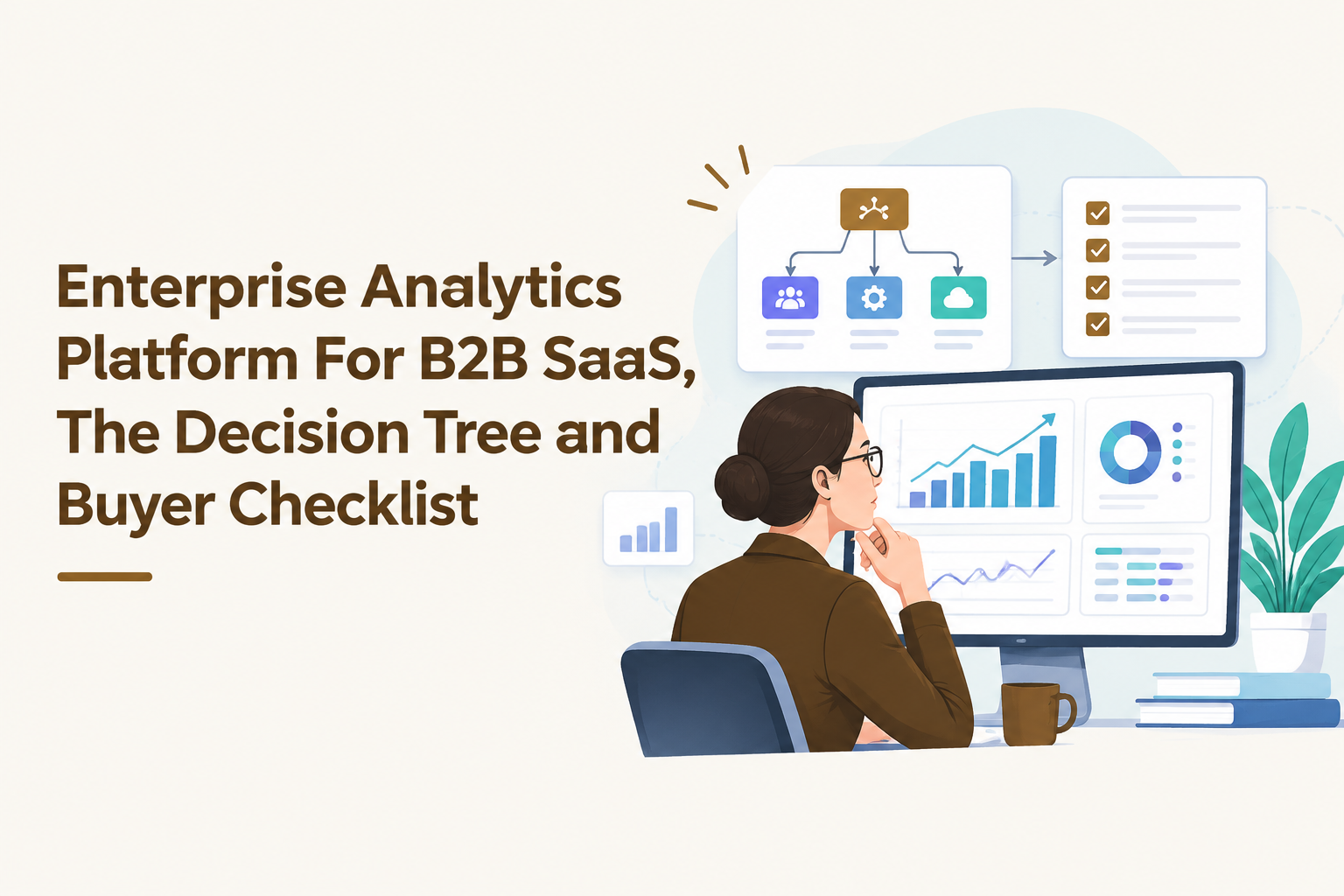
Enterprise Analytics Platform vs Enterprise Data Platform, A Decision Tree for Picking the Right Category
An enterprise analytics platform is the right category when teams need fast access to behavioral insights, product usage patterns, and business decisions from customer activity data. An enterprise data platform is usually designed for broad storage, transformation, and governance across many systems.
Start with the decision criteria
Choose a product analytics focused platform when the primary questions are: Which onboarding step loses users? Which features drive retention? Which accounts show buying intent? Choose a data platform when the priority is centralizing operational data from finance, CRM, support, and multiple applications.
A practical decision tree begins with four questions. First, do teams need answers in minutes or centralized reporting infrastructure? Second, do analysts require raw data access or prepared behavioral insights? Third, does security require enterprise controls such as role permissions and governance reviews? Fourth, will product, growth, and revenue teams actively use the system?
Our team has found that organizations often overbuy infrastructure when their immediate need is understanding user behavior. When we mapped analytics requirements before architecture decisions, the strongest implementations started with activation events and customer journeys, then expanded into broader data connections.
Define category boundaries before procurement
The category comparison can be summarized as follows:
| Need | Best fit |
|---|---|
| User journeys, activation, retention analysis | Product analytics platform |
| Enterprise-wide data storage and transformation | Data platform |
| Revenue attribution linked to behavior | Analytics layer connected to business systems |
Many B2B SaaS teams need both categories over time, but the first purchase should match the highest priority decision problem.
Enterprise Product Analytics Requirements That Actually Break Shortlists
The strongest enterprise analytics platform evaluations focus on measurable capabilities including event tracking, segmentation, permissions, compliance, and scale before comparing vendor names.
Build requirements around stakeholders
Product leaders need behavioral visibility, growth teams need conversion analysis, sales teams need account signals, and security teams need governance evidence. A useful requirements checklist includes automatic event collection, custom event definitions, user profile history, cohort analysis, access controls, audit capability, and reliable data export options.
Event tracking should answer more than what happened. It should show who performed an action, when it happened, what actions happened before and after, and which customer segment performed the behavior. Strong platforms connect events to user profiles so teams can analyze complete journeys instead of anonymous activity.
Segmentation requirements should include dynamic audiences based on actions, not only demographic attributes. For example, a SaaS team may need a segment for users who completed onboarding but never adopted a core feature within seven days.
Validate operational fit
During evaluations, request demonstrations using your own workflow examples. Test whether the platform can identify activation drop-offs, compare customer groups, and produce reports without requiring constant engineering support.
We initially assumed reporting speed was the biggest challenge, but our experience showed that data ownership created larger problems. Teams achieved better adoption when product managers could answer routine questions independently while governance teams maintained clear controls.
Useful supporting resources include analytics events tracking and digital product analytics guidance.
A Weighted Scorecard for RFPs, Demos, and Security Review
A weighted scorecard makes enterprise analytics platform selection repeatable by combining business value, technical capability, security readiness, and implementation effort into one decision model.
Use scoring weights before demos
A practical scoring model can assign 30% to analytics capabilities, 25% to data quality and governance, 20% to implementation effort, 15% to security requirements, and 10% to commercial fit. Each category should include pass-fail requirements that eliminate unsuitable options early.
Demo scripts should test real scenarios instead of feature tours. Ask vendors to create an activation report, identify users who dropped before a key action, build a behavioral segment, and explain how permissions are managed.
Security reviews should verify authentication methods, user access controls, data handling processes, and compliance documentation. Procurement teams should record answers in a shared evaluation document to prevent decisions based only on presentations.
A useful benchmark is whether teams can move from a question to an answer without creating a separate engineering request. Founder OS, for example, demonstrates workflows around Product Tracking, User Profile Tracking, User Segmentation, GTM Report capabilities, and Product Onboarding workflows that buyers can validate during a practical review.
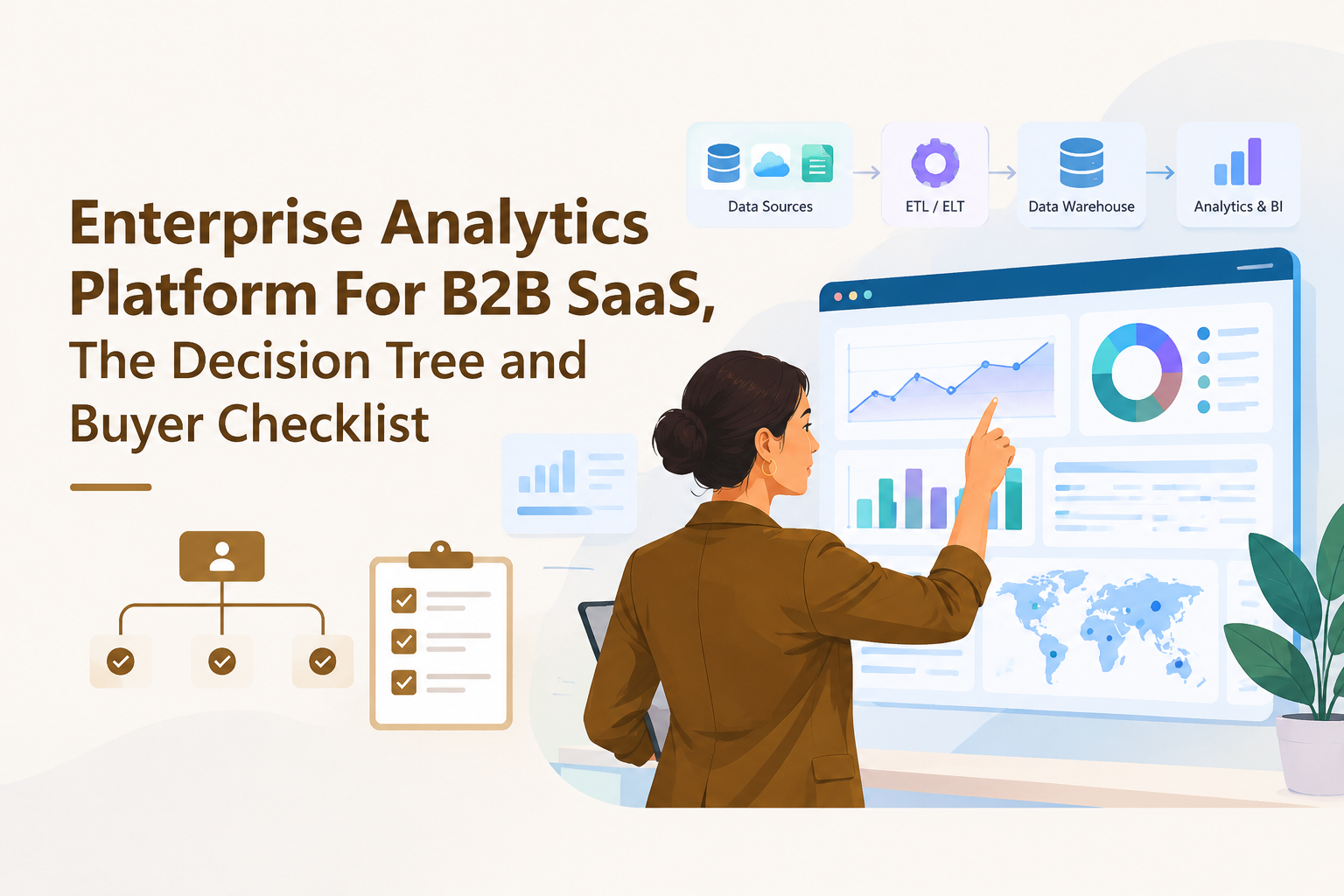
Reference Architecture and Data Flows for B2B SaaS Revenue Insights
A B2B SaaS analytics architecture should connect customer actions from collection to insight through controlled data flows that support product and revenue decisions.
Map the complete data journey
The typical flow starts with product events such as signups, feature usage, onboarding completion, and account activity. Data then moves through collection tools, processing layers, storage systems, and analytics experiences used by business teams.
The governance model should define event naming standards, ownership, documentation, retention rules, and quality checks. Without these controls, dashboards may show conflicting definitions of activation, conversion, or engagement.
Our team has audited analytics implementations where the same customer action had multiple names across departments. The pattern was clear: a simple tracking plan with owners and review cycles improved trust faster than adding more dashboards.
Connect behavior with revenue signals
B2B SaaS organizations increasingly need behavioral context for sales and customer success. A complete implementation connects product activity with account information, lead scoring signals, and retention indicators.
Platforms that combine event visibility with user segmentation can help teams identify high-intent users, disengaged accounts, and onboarding opportunities without waiting for manual analysis.
Implementation Plan and Timeline, Get to Trusted Funnels and Lead Scoring in 30 Days
A 30-day implementation plan for an enterprise analytics platform should prioritize tracking accuracy, team adoption, and measurable business questions before advanced reporting.
Phase one: foundation and tracking plan
Days one through seven should define ownership, key events, user properties, and success metrics. Product and engineering teams should agree on naming conventions and required data before expanding tracking coverage.
Phase two: validation and reporting
Days eight through twenty-one should focus on implementation, quality checks, and first reports. Teams should validate signup journeys, onboarding completion, feature adoption, and customer segments.
Phase three: adoption and optimization
Days twenty-two through thirty should establish recurring reviews, train users, and connect insights to business actions. A platform succeeds when teams use it in weekly decisions, not when it only stores historical information.
Founder OS as an Enterprise Analytics Platform for B2B SaaS, What to Validate in a Demo
Founder OS should be evaluated against enterprise analytics platform requirements through direct validation of tracking, segmentation, reporting, and implementation workflows.
Demo checkpoints for buyers
Ask the demo team to show how events are captured, how user histories are built, how segments update, and how reports support growth decisions. Validate whether product teams can identify drop-offs and understand user behavior without complex queries.
Founder OS provides Product Tracking similar to modern product analytics workflows, User Profile Tracking, User Segmentation, GTM Report capabilities, and a Product Onboarding Tool designed for founders and B2B SaaS teams that need faster product insight.
Teams can also compare category options through resources about product analytics platforms and best analytics software.
Frequently Asked Questions About Enterprise Analytics Platforms
Book a demo with Founder OS to map your tracking plan, validate data flows and access requirements, and launch your first product insights workflows with confidence.
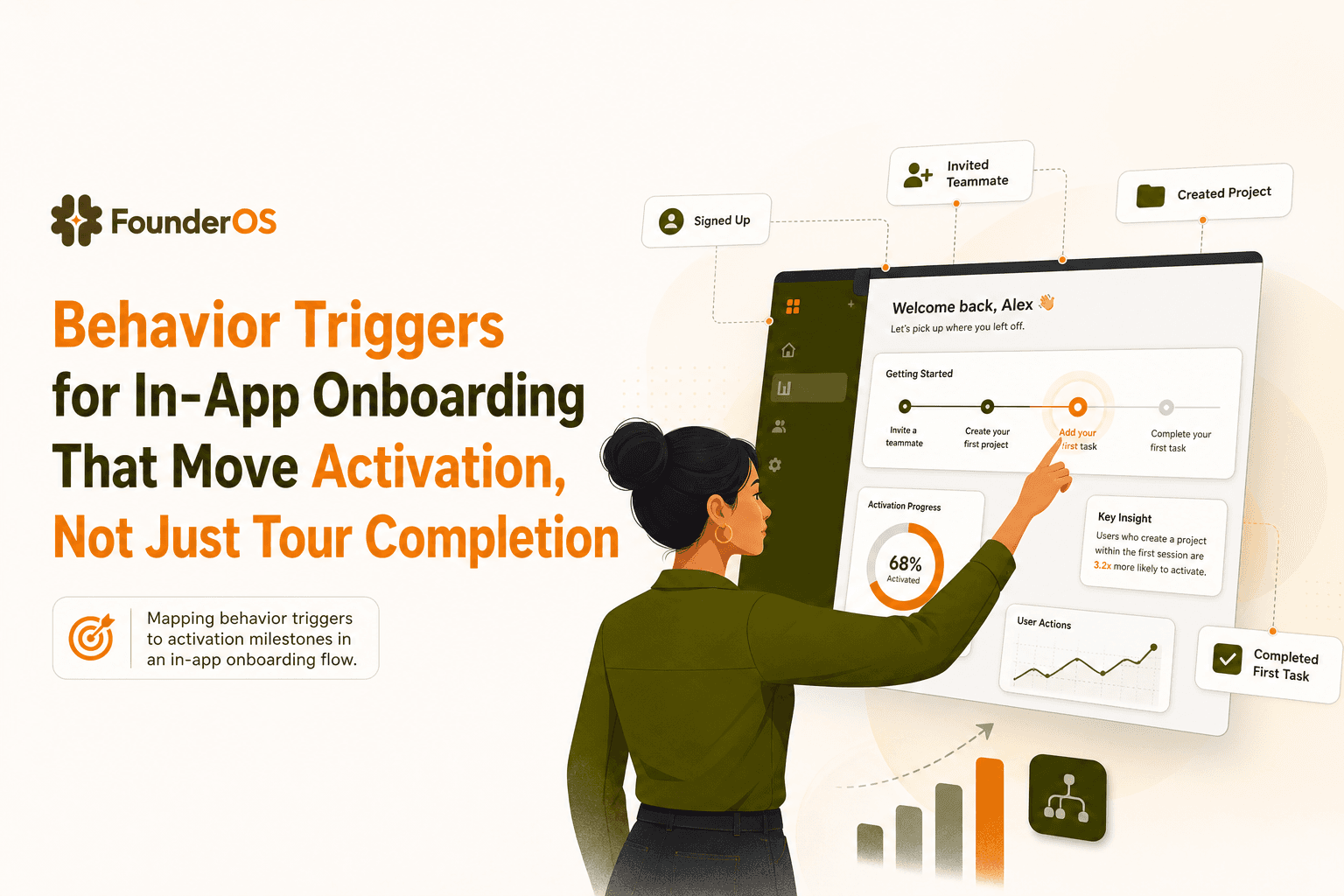
Behavior Triggers for In-App Onboarding That Move Activation, Not Just Tour Completion
Learn behavior triggers for in-app onboarding that drive activation milestones, not just tour completion. Includes trigger taxonomy, tests, and checklists.
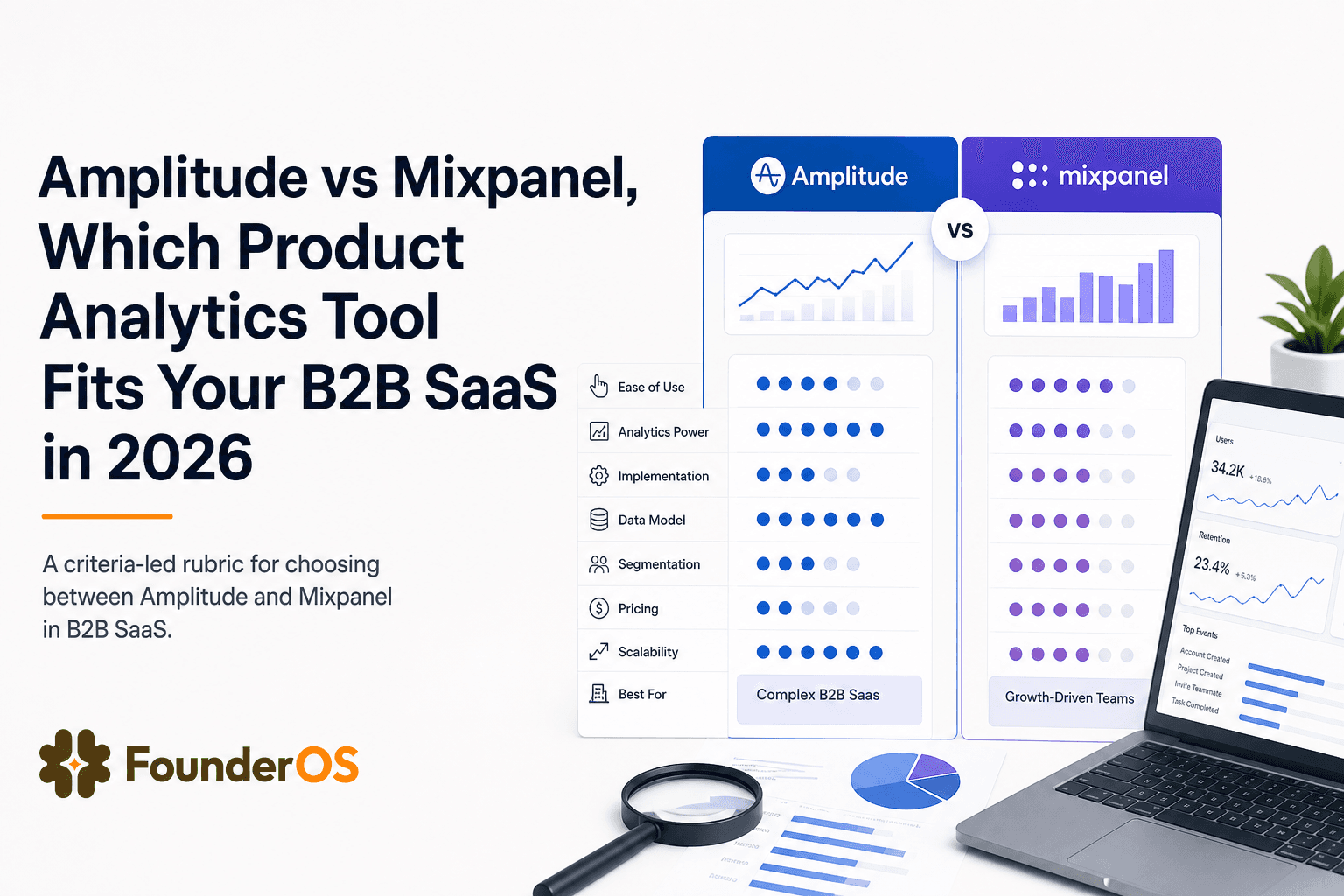
Amplitude vs Mixpanel, Which Product Analytics Tool Fits Your B2B SaaS in 2026
Amplitude vs Mixpanel comparison for B2B SaaS teams in 2026. Use a fast rubric for data model fit, analysis depth, collaboration, and TCO.
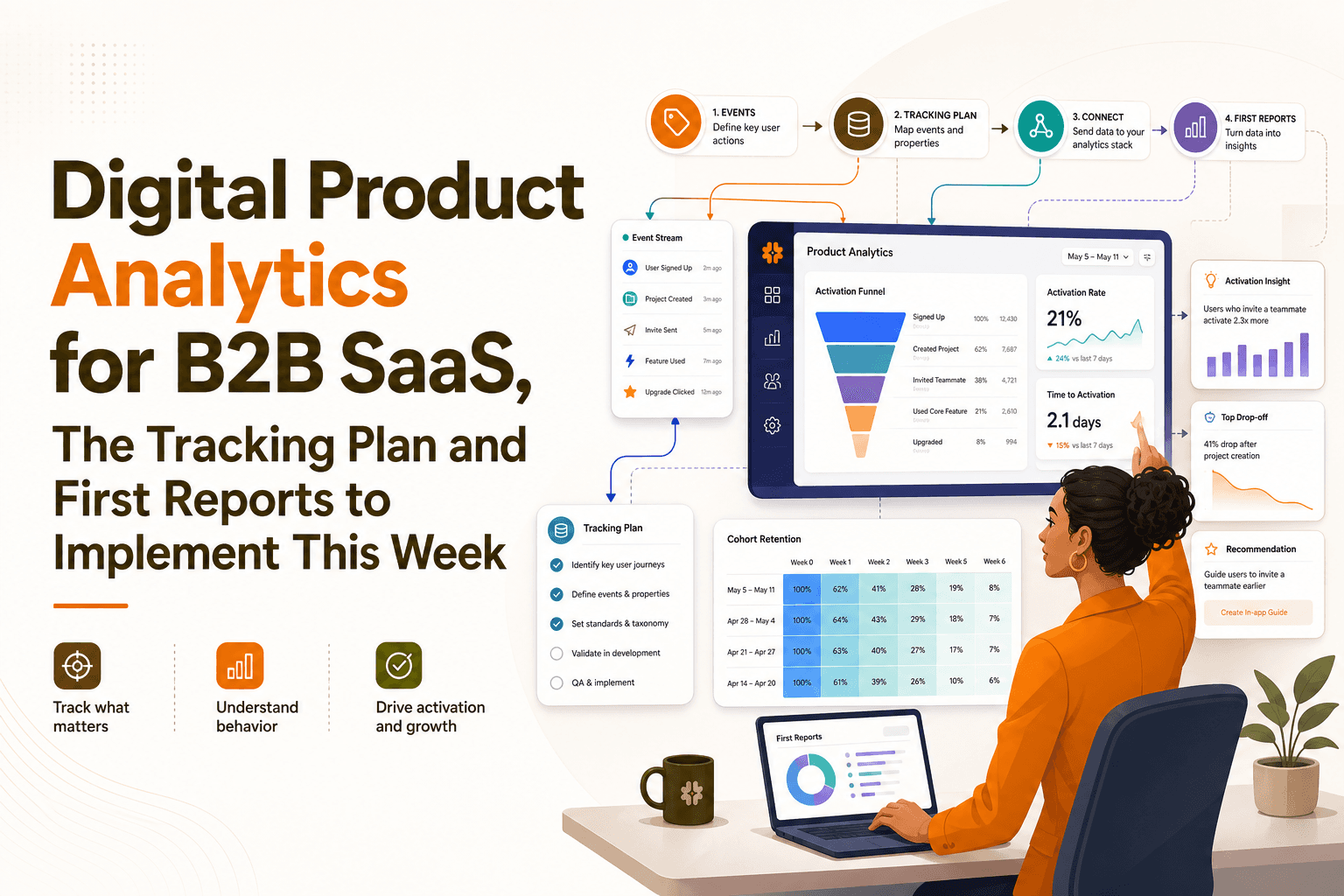
Digital Product Analytics for B2B SaaS, The Tracking Plan and First Reports to Implement This Week
Implement digital product analytics in a B2B SaaS: a minimal event schema, week-1 funnel and retention reports, and a 7-day rollout plan.