
PostHog vs Mixpanel Which Product Analytics Tool Fits Your B2B SaaS in 2026

PostHog vs Mixpanel comes down to one practical decision: do you want a product analytics platform optimized for in-product experimentation and data control, or one optimized for fast, polished event analytics with a mature reporting experience.
- Choose PostHog if you need feature flags/experimentation close to the data, want more control over storage and governance, and can support a more technical setup.
- Choose Mixpanel if your priority is fast, consistent self-serve analysis for product and growth teams with minimal data plumbing and a familiar event-based workflow.
- For cost predictability, estimate 6 to 12 months of tracked events, saved reports, and downstream usage first, then pick the tool whose pricing levers match how your team actually works.
PostHog vs Mixpanel at a Glance The Fastest Way to Choose
PostHog vs Mixpanel is easiest to choose with a criteria-first rubric tied to your team’s constraints, because both tools can answer the same core questions but feel very different in day-to-day ownership and speed.
Use this 60-second decision rubric
- Pick PostHog if (1) you want product analytics tightly coupled with feature flags/experiments, (2) you care about data control and governance mechanics, and (3) you have engineering time to invest in instrumentation and operational upkeep.
- Pick Mixpanel if (1) you want the fastest path to trusted funnels/retention/segmentation for non-technical teammates, (2) you prefer a mature UI-first reporting workflow, and (3) you want to minimize the surface area of “analytics ops.”
- Shortlist a third option if you want “Mixpanel-style analytics” plus activation workflows and go-to-market reporting in one place, because the friction often comes from stitching analytics insights to onboarding and lifecycle actions.
What usually matters most in B2B SaaS evaluations
In B2B SaaS, the highest-leverage questions are rarely vanity dashboards; they are activation and expansion questions like “Which behaviors in week 1 predict a paid conversion?” and “Which segments are stuck before the first value moment?” In my experience, the best tool is the one that your team can keep accurate after three product launches and two pricing changes, not the one that demos the best.
Data Model and Tracking Workflow Differences That Change Your Day-to-Day
Tracking workflow differences, not headline features, are what make PostHog vs Mixpanel feel “easy” or “painful” after the first month.
Compare the tracking model with a governance checklist
Use this checklist to evaluate each tool in your own environment, because the tradeoffs show up in identity resolution, event design, and who can safely make changes.
- Event design and naming: Can you enforce naming conventions, version events, and prevent “duplicate meanings” (two events that represent the same user action) without slowing shipping?
- Identity resolution: How do anonymous sessions merge into known users after signup, and what happens when the same person uses multiple devices or emails?
- Schema and retroactive changes: Can you fix mistakes without breaking historical reports, and how do you document changes so marketing, sales, and product interpret metrics the same way?
- Data ownership and access: Who can create properties, define cohorts, or export raw data, and how do you audit those changes?
- Instrumentation velocity: How many engineer-hours per release will it take to keep events clean as the product evolves?
Where teams tend to feel friction
Teams evaluating posthog vs mixpanel often underestimate the operational side: you are not just “tracking events,” you are maintaining a measurement system. A practical test I run is to ask, “If we rename three onboarding steps and add a new role-based permission model next sprint, how many dashboards break, and how quickly can we repair them?” The answer reveals whether the tool supports your pace of change.
If your company needs more data control and you expect deeper engineering involvement, PostHog can be a better fit. If you expect product, growth, and CS to self-serve most questions with minimal governance overhead, Mixpanel’s workflow is often easier to keep consistent, especially early on.
For a deeper instrumentation approach that reduces rework, this guide on analytics events tracking is a useful way to decide what to track before you debate tooling.
Funnel, Retention, and Segmentation Analysis Where Each One Feels Faster or Harder
Funnel, retention, and segmentation work is where PostHog vs Mixpanel becomes a daily productivity decision because the same question can take 2 minutes or 2 hours depending on how analysis is structured.
Concrete B2B SaaS workflows to test in a demo
Bring these tasks into your trial and time them with real teammates, because “it can do funnels” is not the same as “we can trust funnels by Friday.”
- Activation funnel: Signup → create workspace → invite teammate → connect integration → first successful run. Validate that you can compare cohorts by acquisition source and by persona (role, company size) without rebuilding the funnel.
- Onboarding drop-off drilldown: Identify the biggest drop-off step, then inspect the users behind the drop to see what they did instead. This is where UI speed and identity stitching matter.
- Retention cohorts: Build week-1 retention by “core value event,” not just logins, then segment by whether users adopted a key feature in their first session.
- Sales-assisted product usage: Segment “expansion-ready” accounts by a threshold of usage and by feature breadth, then share that segment with GTM stakeholders.
Speed vs flexibility tradeoff in practice
Mixpanel tends to shine when you need a reliable, repeatable analysis loop that non-technical roles can run: build a funnel, slice by a property, save a report, and revisit it weekly. PostHog tends to shine when analytics is part of a broader product engineering loop, especially when you want to connect analysis with how features are released and tested.
I have found that teams moving fast in B2B SaaS get the most value when “segments become actions” quickly. If segments live only inside dashboards, the insight-to-iteration cycle slows down. That is why I like evaluations that include one real operational handoff: create an “at-risk activation” segment and route it into an onboarding or lifecycle workflow, then measure the before/after conversion change over two weeks.
If you want to go deeper on the mechanics, this playbook on funnel analysis helps you validate whether your funnel drop-offs are instrumentation problems or real product problems.
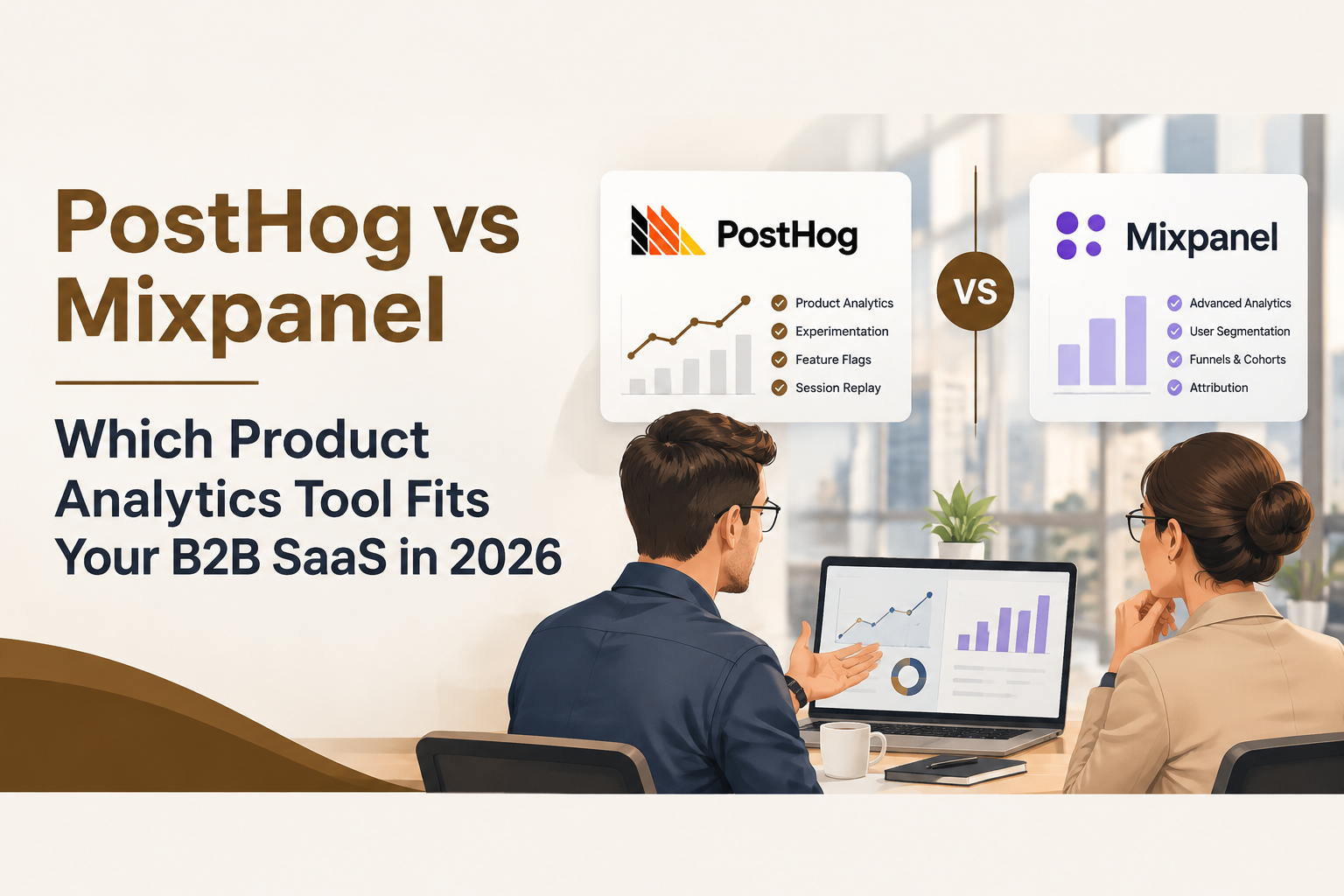
Experimentation, Feature Flags, and Product-Led Growth Workflows
Experimentation workflow is the clearest separator in PostHog vs Mixpanel because it determines whether product analytics is just “measurement” or also “controlled iteration.”
A readiness checklist for A/B tests that won’t mislead you
- Assignment integrity: Can you guarantee consistent variant assignment across sessions and devices, and do you have a plan for logged-out users?
- Metric definition: Can you define a primary metric (for example, activation completion) and guardrails (for example, error rate) that stay stable when events evolve?
- Rollout control: Can you ramp a feature by cohort (new users only, a role, a plan tier) and roll back quickly when guardrails trip?
- Analysis turnaround time: Can a PM validate results without waiting on a data team, and can engineering trust the underlying event stream?
How the tradeoff usually shows up
PostHog is often evaluated specifically because teams want feature flags and experimentation closely connected to their analytics and product release process. Mixpanel is often evaluated because teams want best-in-class event analytics, and experimentation may be handled in another system or via engineering processes.
In practice, the “right” answer depends on whether experiments are central to your product development cadence. If you ship behind flags weekly, PostHog’s experimentation posture can reduce tool sprawl. If you experiment occasionally but you analyze constantly, Mixpanel’s reporting-first feel can be the more efficient default.
Pricing and Cost Predictability How to Avoid Surprises at Scale
Cost predictability is the make-or-break factor in PostHog vs Mixpanel once your event volume grows, because pricing surprises usually come from tracking too much, not from tracking the right things.
Estimate 6 to 12 month spend with a simple worksheet
Use this worksheet before you talk to sales or commit to annual terms:
- List your “must-track” events: activation steps, core value actions, key feature adoption, billing lifecycle events.
- Estimate events per active user per day: include page views, key clicks, and background events, then separate “nice-to-have” from “must-have.”
- Forecast active users and accounts: use a realistic growth curve, not your best-case pipeline model.
- Identify cost levers: sampling, filtering noisy events, reducing high-cardinality properties, or limiting retention windows.
- Plan for second-order usage: saved reports, more teammates asking more questions, and exports to a warehouse or BI tool.
What to ask vendors so pricing matches reality
- How are billable events counted, and what common event types accidentally inflate volume?
- Can you exclude or block specific events/properties at ingestion?
- What happens to historical data if you downgrade or change plans?
- What are the typical costs of “doing it right” (governance, data retention, exports), not just the sticker price?
If you are benchmarking, read the detailed breakdown of posthog pricing and, if Mixpanel is on your shortlist, the practical math behind the mixpanel free plan so you can model upgrades before you hit limits.
| Decision criteria | PostHog is usually a better fit when | Mixpanel is usually a better fit when |
|---|---|---|
| Team goal | You want analytics tightly linked to experimentation and release control | You want fast, consistent self-serve product analytics and reporting |
| Implementation style | Engineering-led instrumentation and governance is acceptable | UI-first workflows for PM/growth/CS need to be frictionless |
| Data control expectations | You need stronger control over how data is stored and governed | You prioritize speed and simplicity over deeper ownership mechanics |
| Experimentation cadence | Frequent flag-based rollouts and A/B tests are core to shipping | Experiments are occasional or handled elsewhere; analytics is the primary need |
| Cost predictability strategy | You can actively manage ingestion, event design, and governance levers | You want predictable analysis workflows and to reduce analytics-ops overhead |
FAQ for choosing between PostHog and Mixpanel
If you want an option beyond posthog vs mixpanel that is built for founders who need Mixpanel-style product analytics plus GTM-ready reporting and onboarding in one platform, Founder OS is worth a look: you can start free or book a demo to validate event tracking, user profiles, segmentation, and activation flows end to end.

Written by Sophia Nguyen
Growth Product | Helping founders build products users love.
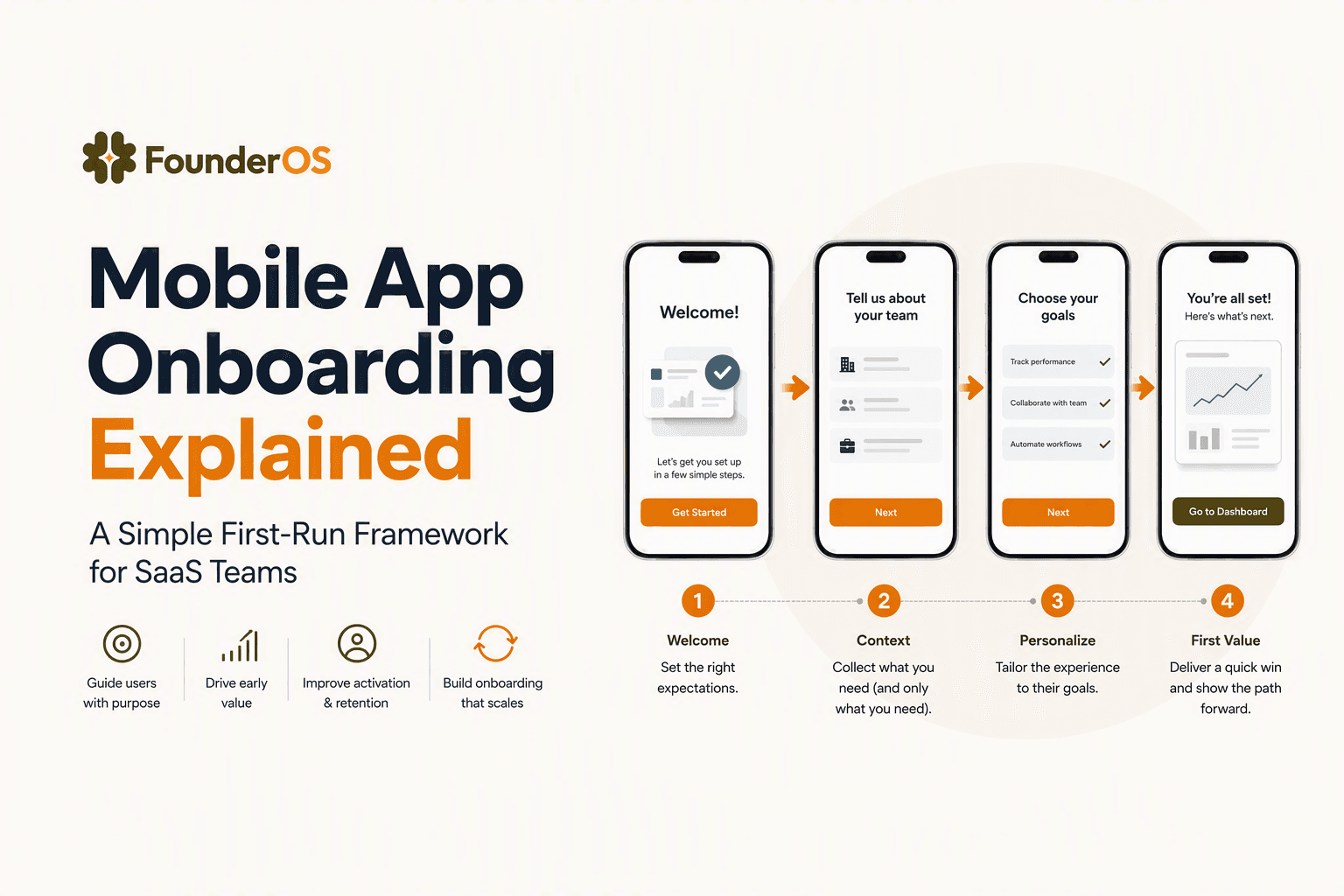
Mobile App Onboarding Explained, A Simple First-Run Framework for SaaS Teams
Learn mobile app onboarding basics, build a first-run flow, reduce friction, and help SaaS users reach value faster.
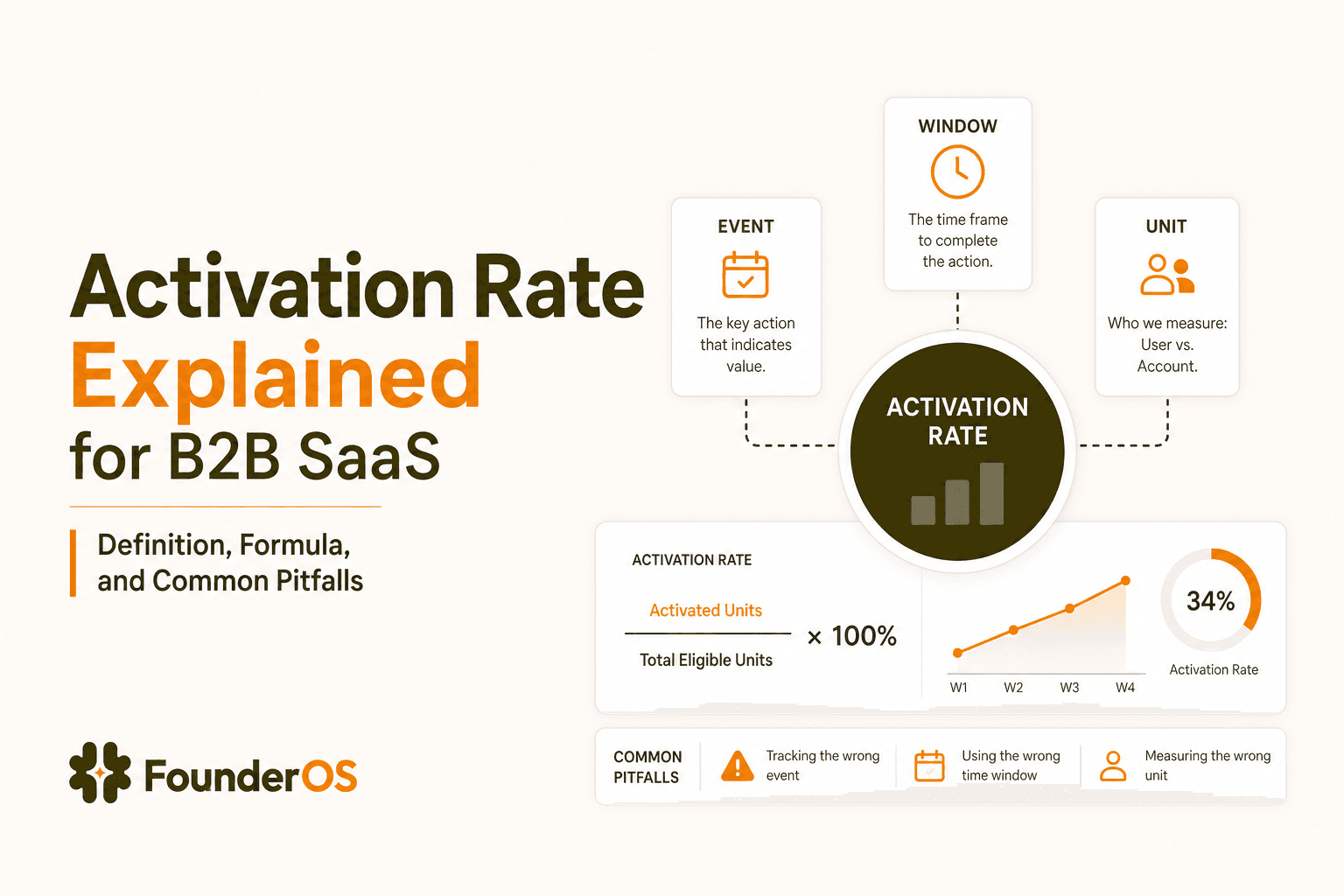
Activation Rate Explained for B2B SaaS, Definition, Formula, and Common Pitfalls
Learn what activation rate means in B2B SaaS, how to define the activation event, calculate it by cohort, and avoid common measurement pitfalls.
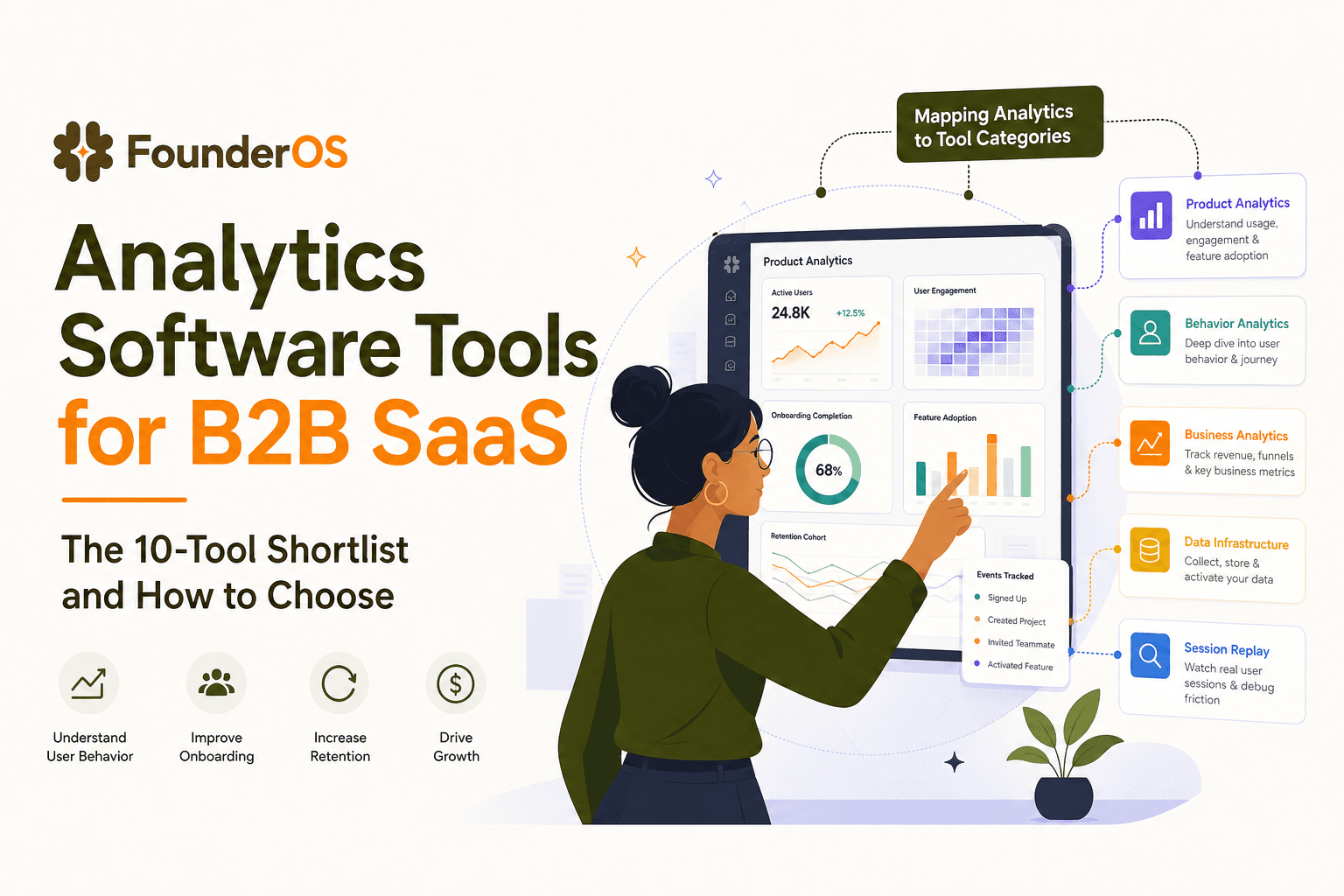
Analytics Software Tools for B2B SaaS - The 10-Tool Shortlist and How to Choose
A BOFU-ready shortlist of analytics software tools for B2B SaaS: 10 picks across categories plus a buyer rubric and rollout plan.
